 中文版
中文版




releaseTime:2025-12-03 08:43:18source:Mu TiannumberOfPageViews:0
The electrical selection for operating electric hoists must strictly follow the four core principles of environmental adaptability, safety protection, performance matching, and standard compliance. The following are specific principles and implementation points:
1、 Principle of environmental adaptability
Temperature adaptability
High temperature environment: Electrical components should be made of high-temperature resistant materials (such as H-grade insulated motors) and equipped with a cooling system (such as cooling fans and fins) to prevent performance degradation or damage caused by overheating of electrical components. For example, electric hoists used in tropical regions need to undergo a static load test at 125% rated load to ensure structural stability at high temperatures.
Low temperature environment: Use low-temperature lubricating oil (such as synthetic grease) to prevent the lubricating oil from solidifying and causing the transmission components to jam; Electrical components need to be insulated (such as adding heating belts) to ensure low-temperature starting performance. For example, electric hoists used in cold regions need to undergo a -20 ℃ low-temperature test to verify the resistance of metal components to brittle cracking.
Humidity and moisture resistance
Sealed design: The electrical control box adopts a protection level of IP55 or above to prevent moisture infiltration; The wiring terminals should be waterproof to avoid short circuits caused by humid environments.
Moisture prevention measures: In humid environments (such as coastal areas), regularly check the sealing performance of equipment and promptly deal with water leakage and seepage problems; Perform anti-corrosion treatment on metal components (such as galvanizing, painting) to extend their service life.
Dust and corrosion prevention
Dustproof design: Components such as motors and reducers adopt dust-proof sealing structures to reduce the entry of dust; Wear resistant materials (such as high chromium cast iron gears) are used for moving parts to reduce dust wear.
Anti corrosion measures: In salt spray environments (such as chemical and port), electrical components need to pass salt spray tests (such as GB/T 2423.17) to ensure the corrosion resistance of metal components; Regularly clean the surface dust of the equipment to prevent accumulation and affect heat dissipation.
Explosion-proof requirements
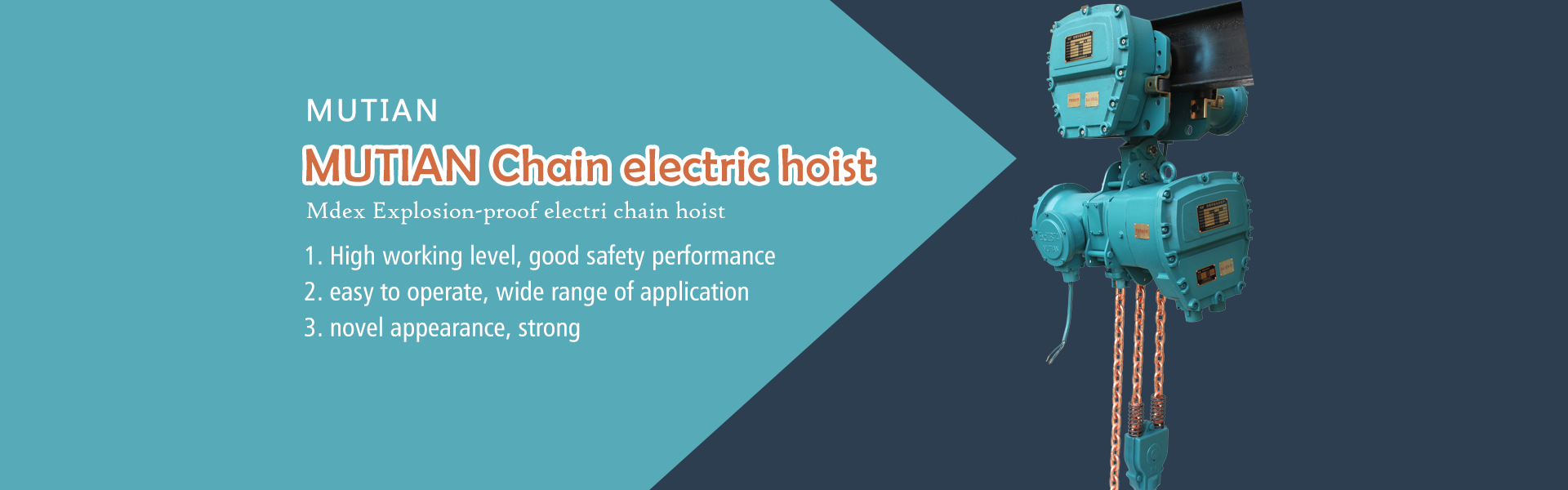
Explosion proof certification: In flammable and explosive environments such as mines and chemical workshops, electric hoists must be of explosion-proof type, and electrical components must comply with GB3836 standards and obtain an explosion-proof inspection certificate.
Explosion proof connection: The cable adopts heavy-duty rubber sheathed copper core multi strand cable with grounding core wire; No joints are allowed in the middle of the cable, and explosion-proof junction boxes should be installed if necessary; All electrical components must not be exposed to prevent explosions caused by electric sparks.
2、 Principles of Safety Protection
Electrical safety
Grounding protection: The equipment casing and metal structural components must be reliably grounded with a grounding resistance of ≤ 4 Ω; A leakage protection device is installed inside the electrical control box, with an operating current of ≤ 30mA and an operating time of ≤ 0.1s.
Insulation level: The insulation level of the motor shall not be lower than F level (155 ℃), and the insulation resistance of electrical components shall be ≥ 1M Ω (measured by a 500V megohmmeter) to ensure the safe operation of the electrical system.
Mechanical safety
Braking performance: The brake should be able to brake smoothly and reliably, and the static braking torque should meet the design requirements; Electric hoists with a rated lifting capacity greater than 5 tons need to be equipped with a dual braking system (working brake+safety brake).
Limit protection: equipped with upper and lower limit position switches, automatically cutting off power when the limit device fails; Do not repeatedly use the limiter as a travel switch to prevent equipment damage.
overload protection
Overload limiter: Install an overload limiter that automatically cuts off power when the load exceeds the rated value; Regularly verify the sensitivity of the overload limiter to ensure reliable operation.
Thermal protection device: The motor is equipped with a thermal protection switch, which automatically shuts off when the motor overheats, preventing the motor from burning out.
3、 Performance matching principle
Motor selection
Power matching: Calculate the motor power based on parameters such as lifting capacity, lifting height, and operating speed to ensure that the motor can meet the load requirements; The power of indoor cranes should be rounded according to the calculated value, while the power of outdoor cranes should be rounded by multiplying it by a factor of 1.1-1.3.
Speed matching: The rated speed of the motor should be matched with the drum speed and reduction ratio to ensure that the lifting speed meets the design requirements; Variable frequency speed regulating motors can achieve stepless speed regulation, improving operational flexibility.
Load duration rate: Select the motor load duration rate (Fc%) according to the working system (such as M5, M6) to ensure that the motor does not overheat under frequent start stop and reverse operating conditions.
Electrical Control
Control mode: Select the control mode according to operational requirements (such as pending control, remote control, PLC automation control) to improve operational convenience.
Speed regulation performance: In situations where high positioning accuracy is required (such as precision assembly and warehouse stacking), variable frequency speed regulation motors are selected to achieve low-speed precise positioning; For situations where speed requirements are not high, a dual speed motor (high speed+low speed) can be used.
4、 Standard compliance principles
national standard
Electric hoists must comply with national standards such as GB/T 14068-2008 "Technical Specification for Electric Hoists" and GB 6067-2010 "Safety Regulations for Lifting Machinery" to ensure that equipment design, manufacturing, inspection, and use meet regulatory requirements.
Explosion proof electric hoists must comply with the GB3836 "Electrical Equipment for Explosive Environments" standard, obtain an explosion-proof inspection certificate, and ensure safe operation of the equipment in flammable and explosive environments.
industry standards
Select electric hoists that comply with industry standards based on usage scenarios (such as bridge cranes and gantry cranes) to ensure compatibility between the equipment and the crane; For example, the electric hoist of a bridge crane must meet the JB/T 10742-2014 "Electric Hoist for Bridge Cranes" standard.
Certification requirements
Electric hoists need to pass CCC certification (China Compulsory Certification), CE certification (European Union Safety Certification), etc. to ensure that the equipment meets the requirements of domestic and foreign market access; Export equipment must comply with target market standards (such as UL certification in the United States and T Ü V certification in Germany).
The main equipment produced by Hebei Makita: stage electric hoist, electric chian hoist, wire rope electric hoist,Hand chain hoist, lever hoist, pneumatic hoist and other lifting equipment
 phone
phone
 service
 message
 e-mail
