 中文版
中文版





releaseTime:2025-08-01 08:46:16source:Mu TiannumberOfPageViews:0
Introduction to the characteristics, application scope, and operating rules of electric forklifts
1、 Product Features
1. Power system
Battery driven: High density lead-acid or lithium batteries are used as power sources to complete loading, unloading, stacking, and short distance transportation through an electric drive system.
Low noise and zero emissions: Compared to internal combustion forklifts, electric forklifts have low noise and no exhaust emissions during operation, which meets environmental requirements.
2. Operating comfort
Electric signal control: The electric steering system, acceleration control system, hydraulic control system, and braking system are all controlled by electric signals, greatly reducing the labor intensity of operators.
Humanized design: equipped with adjustable seats, spacious operating space, and a multifunctional dashboard, improving the driver's work comfort.
3. Maintenance costs
Low maintenance cost: Compared to internal combustion forklifts, electric forklifts have lower maintenance costs and longer maintenance cycles recommended by manufacturers.
Simplify maintenance process: Daily maintenance mainly includes cleaning the vehicle body, inspecting tires and hydraulic systems, lubricating key components, etc. The process is relatively simple.
4. Diversity of vehicle models
Rich specialized vehicle models: covering various specialized vehicle models such as four-way forklifts, balance weight forklifts, and forward moving forklifts, adapting to different work scenarios.
Customized solutions: We can provide customized vehicle models and configurations according to customer needs, such as explosion-proof models, low-temperature adaptive models, etc.
2、 Application scope
1. Warehousing and logistics
E-commerce warehouse and logistics center: suitable for pallet stacking and short distance transportation, improving warehousing efficiency.
Cold chain logistics: Some vehicle models have low-temperature adaptability and can be used for cold chain transportation of food, medicine, etc. to ensure the quality of goods.
2. Manufacturing industry
Workshop transportation: used for the transportation of raw materials, semi-finished products, and finished products, especially in industries such as sheet metal and ceramics, with successful application cases.
Production line matching: It can seamlessly integrate with the production line, achieve automated handling, and improve production efficiency.
3. Special environment
Explosion proof requirements: In industries such as chemical and textile, explosion-proof electric forklifts can be used to ensure operational safety.
Multi terrain adaptation: Off road electric forklifts can handle mild unpaved roads and expand outdoor use scenarios.
4. Other fields
Construction site: Suitable for handling lightweight building materials on construction sites, replacing some manual labor.
Retail industry: Low noise characteristics are suitable for indoor environments such as supermarkets and shopping malls, enhancing customer experience.
3、 Operation rules
1. Pre operation inspection
Battery system inspection: Confirm that the battery is fully charged, the electrolyte level is normal, and the connecting wires are securely fastened without looseness.
Safety device inspection: Test whether the horn, lights, brakes, emergency power-off function, etc. are normal.
Environmental confirmation: There is no standing water or obstacles in the work area, and the width of the passage meets the requirements.
2. Startup and Driving
Wear seat belt: Adjust the seat to the appropriate position, wear the seat belt to ensure driving safety.
Sound the horn before starting: Sound the horn before starting to warn and confirm that there are no people approaching in the surrounding area.
Control the driving speed: The driving speed should be controlled within a safe range, and the speed should be reduced when turning or entering or exiting the garage.
3. Cargo handling
Fork insertion into tray: The fork needs to be inserted into the tray to a certain depth to ensure the stability of the goods.
Control the height of the goods: The height of the goods above the ground should be controlled to avoid affecting the stability of the forklift.
Overloading and unbalanced loading are strictly prohibited: Overloading and unbalanced loading operations are strictly prohibited to ensure forklift balance.
4. Maintenance after operation
Standardized parking: park in designated areas, place the fork on the ground, turn off the power and remove the key.
Charging management: Charging should be carried out in a well ventilated designated area, avoiding open flames and static electricity.
Daily maintenance: Clean the vehicle body, check the tires and hydraulic system, lubricate key components, etc.
5. Emergency response
Troubleshooting: In case of a malfunction, immediately stop the vehicle, cut off the power, place a warning sign, and contact maintenance personnel.
Accident reporting: After an accident occurs, it is necessary to report to the supervisor within the prescribed time, protect the scene, and cooperate with the investigation.
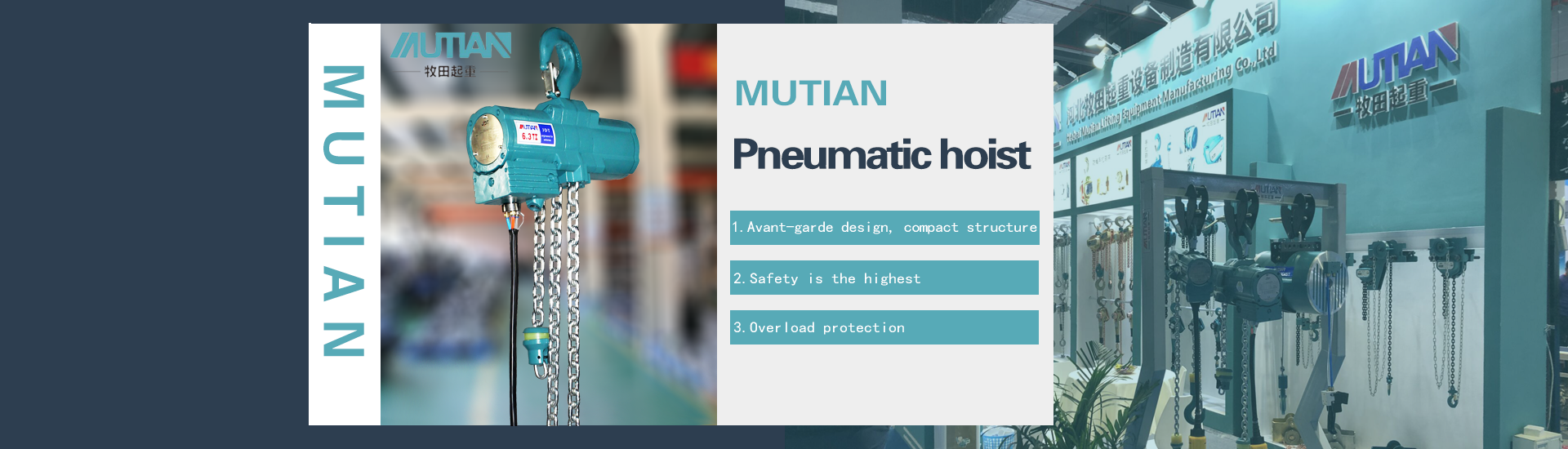
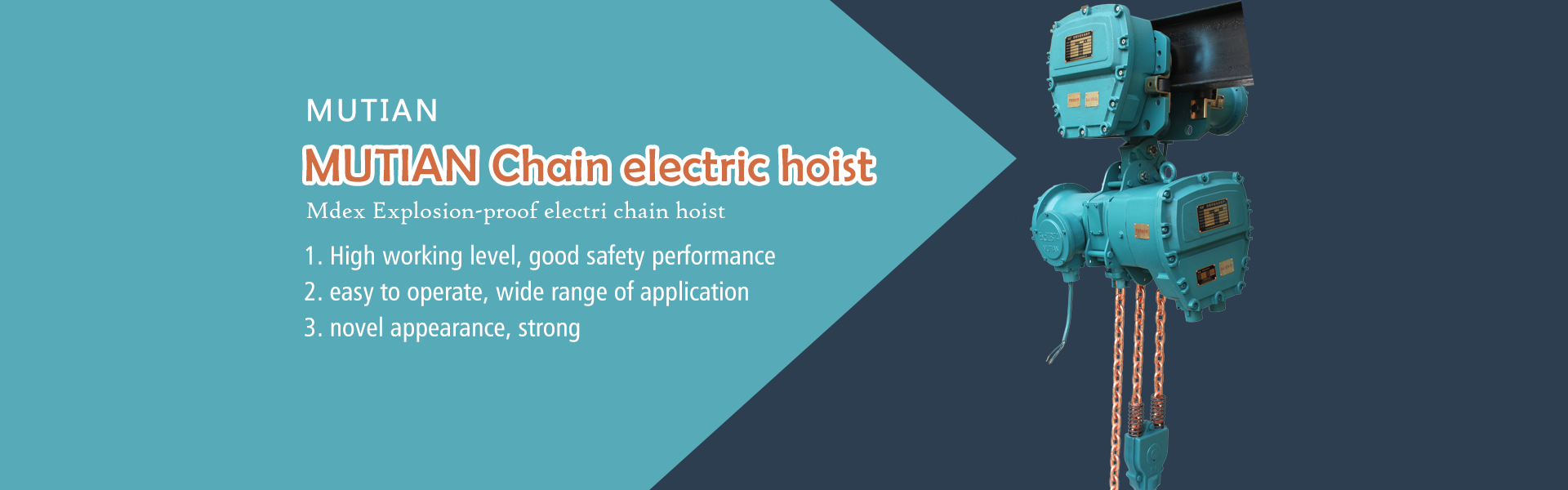
The main equipment produced by Hebei Makita: stage electric hoist, electric chian hoist, wire rope electric hoist,Hand chain hoist, lever hoist, pneumatic hoist and other lifting equipment
 phone
phone
 service
 message
 e-mail
