 中文版
中文版





releaseTime:2025-08-12 09:43:25source:Mu TiannumberOfPageViews:0
The operation, maintenance, and upkeep of manual hydraulic forklifts should revolve around safety operating standards, daily inspection procedures, regular maintenance plans, and fault handling mechanisms. The following are specific instructions:
1、 Operating standards and safety precautions
Single person operation principle
Only one person is allowed to operate, and when multiple people collaborate, a unified commander must be designated to avoid confusion during operation.
It is prohibited to carry people or use forklifts to slide down freely to prevent the risk of losing control.
Load management
Overloading is strictly prohibited: The weight of the goods must not exceed the rated load of the forklift (usually 1-3 tons), as overloading may cause damage or tipping of the hydraulic system.
Prohibition of unbalanced loading and single fork operation: The goods should be evenly distributed on two forks, and the length of the forks should be greater than or equal to the length of the pallet to avoid overturning caused by one-sided force.
Avoid overloading and static placement: It is forbidden to place the goods in a lifted state for a long time to prevent fatigue damage to the hydraulic cylinder.
Driving and handling requirements
Speed control: Drive at a speed of ≤ 3 kilometers per hour (close to adult walking speed), slow down when turning, and avoid sudden braking that may cause cargo to slip off.
Ramp operation: When transporting on slopes with a gradient greater than 7 °, the goods must be located in the direction of the top of the slope; The operator shall not stand directly in front of the forklift to prevent inertia from losing control.
Eye obstruction handling: When handling large volume goods that obstruct the line of sight, it is necessary to reverse and drive at low speed or be directed by a dedicated person.
Special scene taboos
Do not operate on muddy, uneven or sloping surfaces to prevent wheel slippage or rollover.
It is strictly prohibited to drop goods from a height onto a forklift to avoid impact damage to the forks or hydraulic system.
2、 Daily inspection and preparation before use
Hydraulic system inspection
Hydraulic cylinder leakage test: visually inspect the hydraulic cylinder for oil leakage and confirm good sealing.
Hydraulic oil level and quality: Check the oil level in the tank (when the fork is at its lowest, the oil level should be about 50mm above the surface of the tank), and the oil should be clear and free of impurities.
Operation test: Empty load lifting fork, confirm that the hydraulic system responds sensitively, without jamming or abnormal noise.
Inspection of forks and load-bearing components
Fork status: Check whether the fork is deformed, cracked, or excessively worn (thickness wear>10% needs to be replaced).
Chain/pull rod integrity: Confirm that the chain is not broken or stretched, and that the pull rod is securely connected.
Wheel set and moving parts inspection
Wheel rotation flexibility: Manually rotate the wheel to confirm that there is no jamming, abnormal noise, or deflection.
Foreign object cleaning: Remove debris (such as ropes, plastic bags) wrapped around the wheels to prevent obstruction during operation.
Brake function test: Gently push the forklift and press the brake to confirm that the brake is sensitive and effective.
Control system inspection
Handle operation test: Check if the functions of the handle, such as pressing, lifting, and center locking, are normal and not stuck or loose.
Load balancing: When unloaded, the forks should be able to lift and lower smoothly without tilting or shaking.
3、 Regular maintenance and upkeep plan
Daily maintenance
Cleaning and appearance inspection: Remove dirt and soil from the surface of the forklift, and check for scratches or cracked welds on the vehicle body.
Lubrication point maintenance: Apply lubricating grease to friction parts such as axles, sealing rings, and roller bearings to reduce wear.
Weekly maintenance
Fastener inspection: Check whether the axle nuts, bracket welds, caster fixing bolts, etc. are loose and tighten them in a timely manner.
Assessment of Wheel Wear: Visually inspect the surface wear of the wheels to confirm that there are no cracks, deformations, or excessive wear (if worn to less than 10% of the original diameter, replacement is required).
Monthly maintenance
Hydraulic oil replacement: Replace the hydraulic oil according to the frequency of use (such as every 500 hours or every 6 months) and clean the oil tank.
Filter replacement: Replace the hydraulic oil return filter to prevent impurities from entering the system.
Oil pump and control valve inspection: Check whether the oil pump has leaks or abnormal noise, and whether the control valve is flexible and not stuck.
Quarterly maintenance
Structural strength inspection: Confirm that the frame is not bent or deformed, and that the symmetry and straightness of the forks are normal.
Exhaust treatment: If the hydraulic system responds slowly, it is necessary to eliminate air (pull the handle to the landing position and make several back and forth air strikes).
4、 Fault handling and emergency measures
Common faults and their solutions
Hydraulic cylinder leakage: Replace the sealing ring or hydraulic cylinder assembly, and do not operate with defects.
Forks cannot lift: Check the hydraulic oil level, oil pump pressure, and control valve status, eliminate air or replace damaged parts.
Difficulty rotating the wheels: Remove foreign objects, replace bearings or add lubricating grease, adjust the tightness of the wheel axle.
Principles of emergency response
Immediate shutdown: When safety hazards such as hydraulic system leakage, fork deformation, and brake failure are discovered, the forklift must be immediately stopped from use.
Professional maintenance: Complex faults (such as oil pump damage, control valve failure) must be handled by professional maintenance personnel, and unauthorized personnel are prohibited from disassembling.
5、 Parking and storage requirements
Empty load fork lowering: When the forklift is not in use, the fork should be lowered to the lowest position to avoid long-term pressure on the hydraulic system.
Designated storage area: Park the forklift in a dry, flat designated location, away from corrosive liquids or high temperature environments.
Long term parking and maintenance: If the forklift is idle for a long time, it should be started and lifted regularly to prevent the hydraulic system from rusting or jamming.
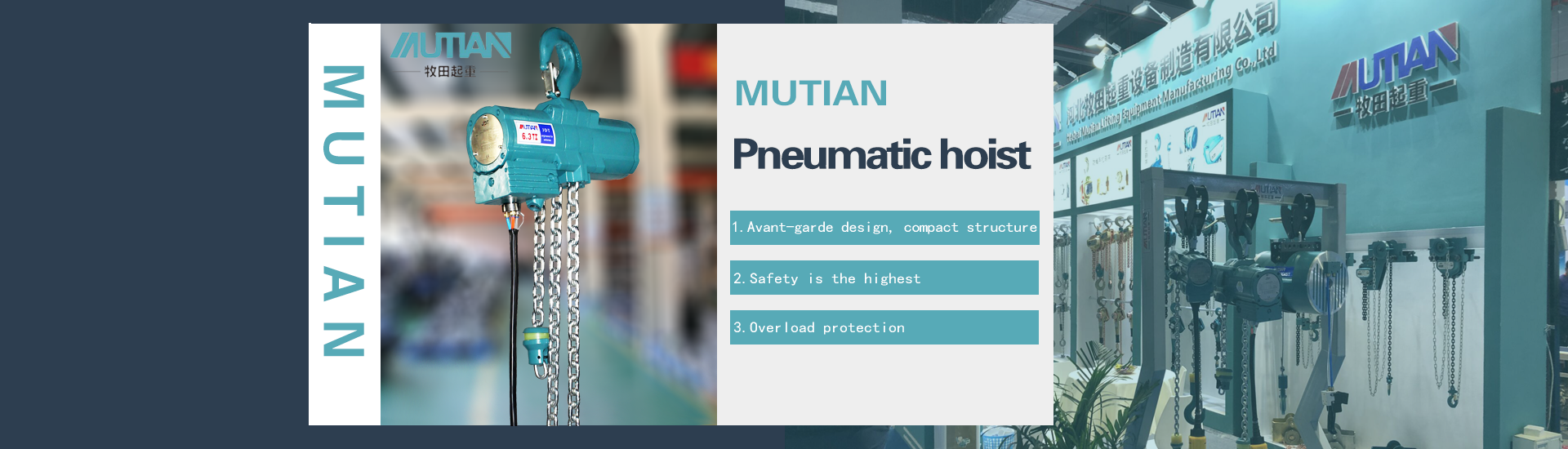
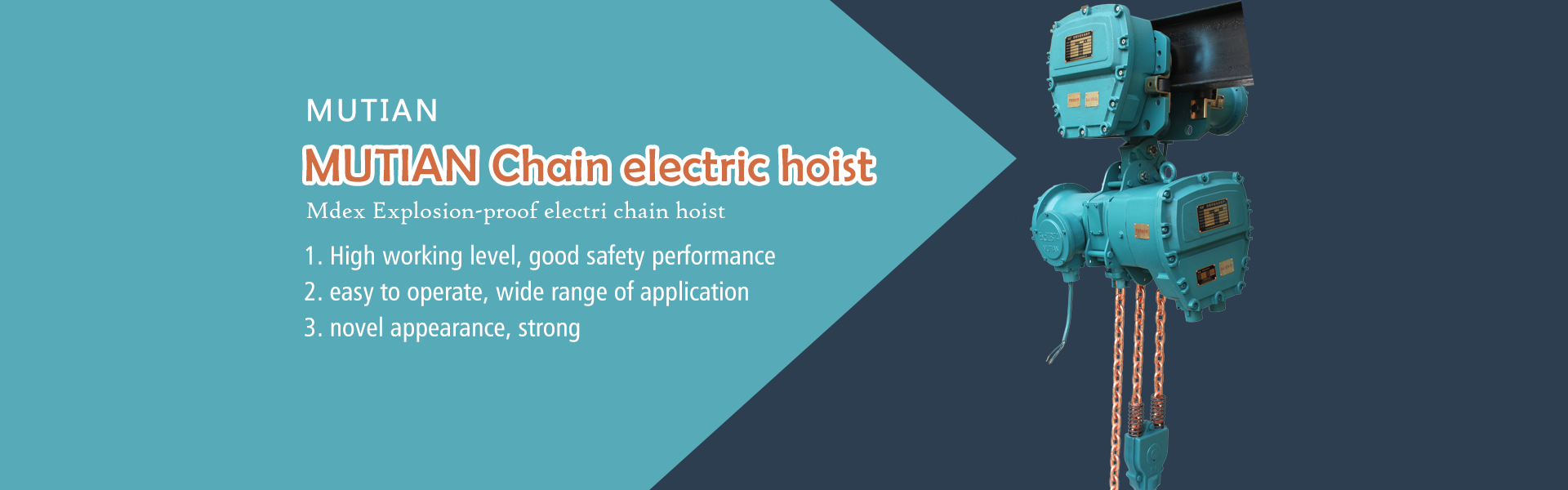
The main equipment produced by Hebei Makita: stage electric hoist, electric chian hoist, wire rope electric hoist,Hand chain hoist, lever hoist, pneumatic hoist and other lifting equipment
 phone
phone
 service
 message
 e-mail
