 中文版
中文版





releaseTime:2025-11-21 14:42:39source:Mu TiannumberOfPageViews:0
When using a running manual hoist (such as a chain hoist or a hand-operated hoist), it is necessary to strictly follow the operating specifications and safety guidelines to avoid the risk of accidents. The following is a detailed explanation of key precautions:
1、 Pre operation inspection
Equipment integrity check
Chain: Check if the chain is intact, without cracks, deformation, or excessive wear (the wear of the chain ring diameter should not exceed 10%).
Hook: Confirm that the hook has no cracks, sharp angles, or deformation of the opening (the opening degree does not exceed 5% of the original size), and is equipped with a safety lock buckle.
Brake: Test whether the brake is sensitive and reliable, and the braking distance during unloaded descent should not exceed 5% of the total length of the chain.
Gears and bearings: Check if the gear meshing is smooth and if the bearings have no abnormal noise or jamming.
Shell and protection: Ensure that the shell is not damaged and the protective device (such as dust cover) is intact.
Environmental Assessment
Space limitation: Confirm that there are no obstacles in the operating area to avoid collision or compression risks.
Ground conditions: Check if the ground is flat and solid to prevent equipment from overturning.
Dangerous area: Keep away from high voltage lines, flammable and explosive materials, and other hazardous sources.
Load confirmation
Check the load weight and strictly prohibit exceeding the rated lifting capacity of the hoist (usually leaving a safety margin of 10% -20%).
For loads with irregular shapes or center of gravity offset, a balance beam or auxiliary tool should be used.
2、 Standardized operation
Lifting operation
Trial lifting: Before formal lifting, lift the load 100-200mm off the ground and hold for 1-2 minutes to check the stability of the brake and chain.
Uniform lifting: Avoid sudden force or rapid pulling of the bracelet to prevent chain breakage or equipment loss of control.
Angle control: Keep the hook perpendicular to the center of gravity of the load, with a tilt angle of no more than 3 °. If the angle of inclination is too large, it may cause tipping.
Lowering operation
Slow release: By controlling the bracelet or lever, slowly release the load and prohibit free fall.
Braking test: Test the brake multiple times during the descent process to ensure that it can stop the load at any time.
Mobile and Positioning
Horizontal movement: If you need to move the load horizontally, you need to use a cart or pulley system to avoid directly dragging the hoist body.
Positioning and fixation: Once the load is in place, immediately fix and remove the hoist to avoid prolonged hovering.
Multi person collaboration
Unified command: When multiple people operate, a dedicated person commands to ensure synchronized actions.
Signal communication: Use clear gestures or walkie talkies to communicate and avoid misoperation.
3、 Safety taboos
Prohibited acts
Overload: It is strictly prohibited to exceed the rated load, otherwise it may cause chain breakage or equipment damage.
Diagonal pulling: Avoid diagonal pulling force, otherwise it will aggravate chain wear and increase the risk of rollover.
Throwing: It is forbidden to throw bracelets or gourds to prevent component damage or personal injury.
Standing position: During operation, personnel must not stand directly under the load or hoist, and must maintain a safe distance.
Modification: Unauthorized modification of the gourd structure or replacement of non original parts is not allowed.
Environmental restrictions
Corrosive environment: After use in humid, acidic, alkaline, or high-temperature environments, it is necessary to immediately clean and apply rust proof oil.
Flammable and explosive places: Use explosion-proof hoists and equip them with spark protection devices.
4、 Maintenance and upkeep
routine maintenance
Cleaning: Remove dirt and oil stains after each use, and keep the equipment dry.
Lubrication: Regularly apply lubricating oil (such as lithium based grease) to parts such as chains, gears, bearings, etc.
Inspection: Monthly check for chain wear, brake performance, hook deformation, and other conditions.
Long term storage
Moisture proof: Store in a dry and ventilated place to avoid chain corrosion.
Regular operation: When stored for a long time, perform no-load operation every 3 months to prevent component adhesion.
Professional maintenance
Regular inspection: A comprehensive inspection is conducted annually by a professional organization, and a qualified report is issued.
Component replacement: Chains, brake pads, hooks, etc. with excessive wear must be replaced immediately, and it is strictly prohibited to make do with them.
5、 Emergency response
Chain stuck
Immediately stop the operation, check if the chain is twisted or if any foreign objects are stuck, troubleshoot before continuing to use.
Brake failure
Quickly pull the emergency brake device on the bracelet (if available), or use a spare hoist to assist in securing the load.
Load falling
Immediately evacuate the dangerous area and set up a cordon to prevent others from entering.
personnel injury
Immediately stop the operation, provide first aid to the injured, and report to the higher-level safety department.
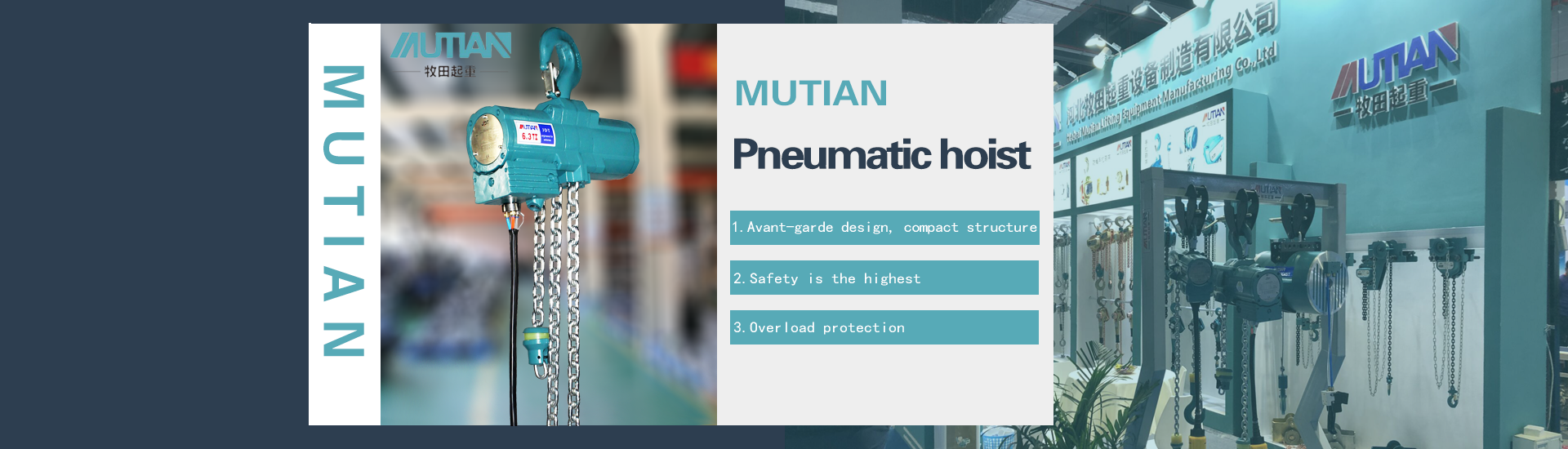
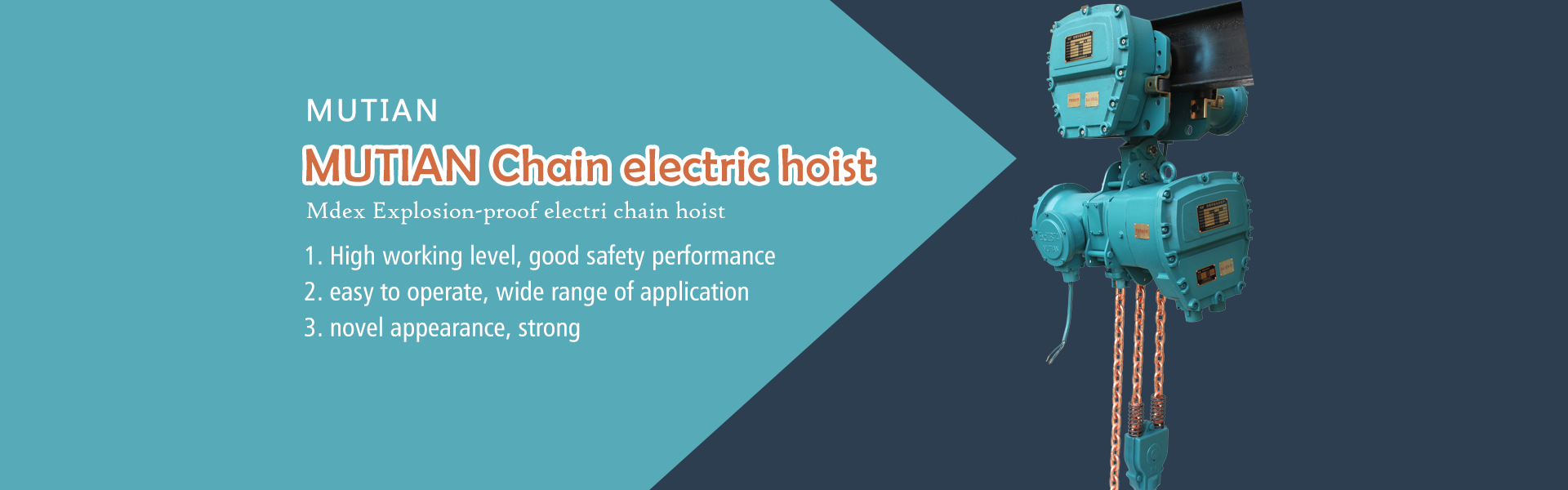
The main equipment produced by Hebei Makita: stage electric hoist, electric chian hoist, wire rope electric hoist,Hand chain hoist, lever hoist, pneumatic hoist and other lifting equipment
 phone
phone
 service
 message
 e-mail
