 中文版
中文版




releaseTime:2025-10-21 08:29:57source:Mu TiannumberOfPageViews:0
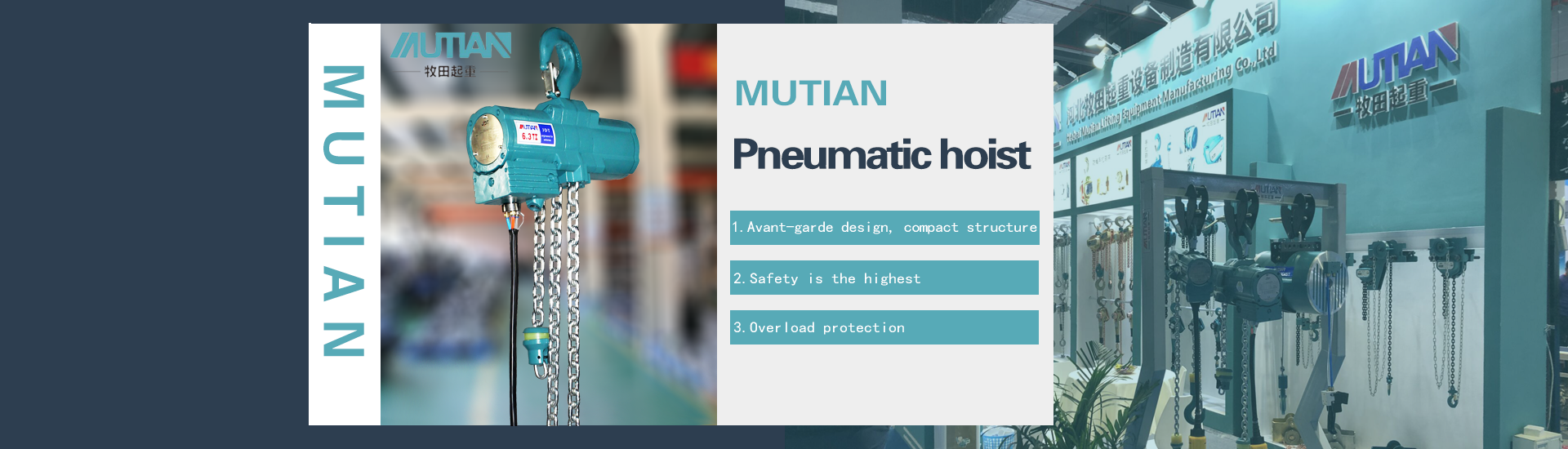
The Pneumatic Running Holist combines pneumatic drive technology with the function of a running car, demonstrating significant advantages in the field of industrial lifting. Its core advantages can be summarized into five aspects: safety, environmental adaptability, operational efficiency, economy, and maintenance convenience. The specific analysis is as follows:
1、 Intrinsic safety: the ideal choice for explosion-proof and spark free
Outstanding explosion-proof performance
Pneumatic hoists are powered by compressed air and do not generate electrical sparks during operation. They comply with Ex d Ⅱ C T4 explosion-proof standards and can be directly used in flammable and explosive environments such as petrochemicals, coal mines, and paint workshops.
Case: A refinery used a running pneumatic hoist instead of an electric hoist during the lifting operation in the storage tank area, completely eliminating the risk of explosion caused by electrical sparks.
Overload protection mechanism
Built in mechanical overload protection device, when the load exceeds the rated value, the pneumatic motor automatically stops running to prevent equipment damage or heavy objects from falling.
Data: The overload protection trigger threshold of a certain brand of pneumatic hoist is 120% of the rated load, and the response time is ≤ 0.3 seconds.
2、 Strong environmental adaptability: a reliable partner under extreme working conditions
High/low temperature resistance performance
The pneumatic system has no electrical components and can operate stably at extreme temperatures ranging from -20 ℃ to+50 ℃. It is suitable for scenarios such as cold storage and steelmaking workshops.
Comparison: Electric hoists experience a decrease in battery performance at low temperatures and the motor is prone to overheating at high temperatures, while pneumatic hoists do not have such limitations.
Moisture and dust resistance
The sealed structure design effectively blocks moisture and dust intrusion, and the protection level of the pneumatic motor reaches IP65, suitable for dusty environments such as cement plants and flour mills.
Maintenance suggestion: In humid environments, it is necessary to regularly drain the condensate water from the pneumatic system to prevent rusting.
Corrosion resistance performance
Key components such as chains and hooks are treated with stainless steel or galvanized, which can resist acid and alkali corrosion and extend their service life.
Case: A certain electroplating factory uses a stainless steel running pneumatic hoist, which has been continuously used for 5 years in a highly corrosive liquid environment without corrosion.
3、 High operational efficiency: precise control and flexible movement
Stepless speed regulation function
By adjusting the intake volume, a continuously variable speed of 0-17 meters per minute can be achieved, meeting the dual needs of precision assembly (such as engine assembly) and fast handling (such as logistics sorting).
Comparison: Electric hoists usually have gear speed regulation, and the speed regulation accuracy is lower than that of pneumatic hoists.
Running a car to achieve 3D homework
Equipped with a pneumatic sports car or track system, it can move horizontally along the X/Y axis, combined with Z-axis lifting, to achieve precise positioning in three-dimensional space.
Data: A certain automobile production line adopts a running pneumatic hoist, which shortens the single lifting cycle to 30 seconds and improves efficiency by 40%.
lightweight design
Pneumatic hoists weigh only 60% -70% of electric hoists of the same capacity, making them easy to install and move, especially suitable for temporary work sites.
Case: A certain shipbuilding factory uses lightweight pneumatic hoists to achieve rapid lifting inside the cabin through cantilever suspension tracks.
4、 Economic advantage: Lower long-term usage cost
Low energy cost
The energy consumption of the pneumatic system is only 50% -70% of that of the electric hoist. Taking 0.6MPa compressed air as an example, the energy consumption cost of a single operation is about 0.2 yuan, while the electric hoist is about 0.5 yuan.
Data: A logistics center has an annual lifting capacity of 100000 times, and after switching to pneumatic hoists, it saves 120000 yuan in electricity bills annually.
Low maintenance cost
The structure is simple (only 200-300 components), the failure rate is only one-third of that of electric hoists, and the maintenance cycle is extended to 2000 hours.
Maintenance content: Regularly replace air filters and lubricate chains without the need for professional electrical maintenance.
Long service life
The lifespan of pneumatic motors can reach 100000 cycles, which is 2-3 times that of electric hoists, and the total lifecycle cost is lower.
Case: The pneumatic hoist of a certain steel plant has been running continuously for 8 years, with a cumulative operation volume of over 500000 times, and still maintains stable performance.
5、 Maintenance convenience: Simplify the operation and maintenance process
modular design
Key components such as pneumatic motors and brakes adopt a quick disassembly structure, reducing maintenance time to within 1 hour.
Spare parts universality: Pneumatic components (such as cylinders and valves) are compatible with factory pneumatic systems, reducing spare parts inventory costs.
Fault self diagnosis function
Some high-end models are equipped with pressure sensors that can monitor the status of the pneumatic system in real time and provide early warning of leaks or blockages.
Case: A pneumatic hoist in an electronics factory avoided a major equipment failure by triggering an abnormal pressure alarm.
Easy operation training
The pneumatic control logic is intuitive, and operators can start working after 2 hours of training, reducing labor costs.
Comparison: Electric hoists require training on electrical safety knowledge, and the training period has been extended to one day.
6、 Application scenario expansion: from traditional to emerging fields
Traditional industries
Manufacturing industry: automobile assembly line, shipbuilding, mechanical processing;
Energy industry: oilfield equipment hoisting, nuclear power plant maintenance;
Logistics industry: warehouse stacking, container loading and unloading.
Emerging fields
Cleanroom: Cleanroom equipment lifting (pneumatic system without oil pollution);
Food industry: handling of raw materials in explosion-proof environments;
Aerospace: Precision component assembly (stepless speed regulation+high positioning accuracy).
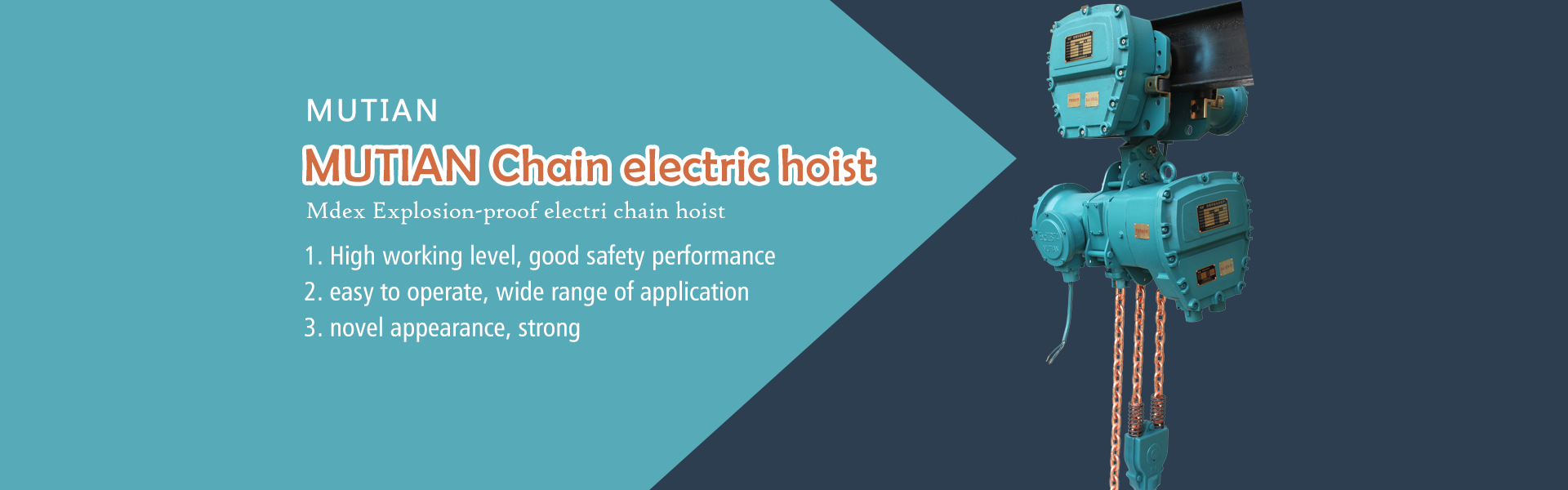
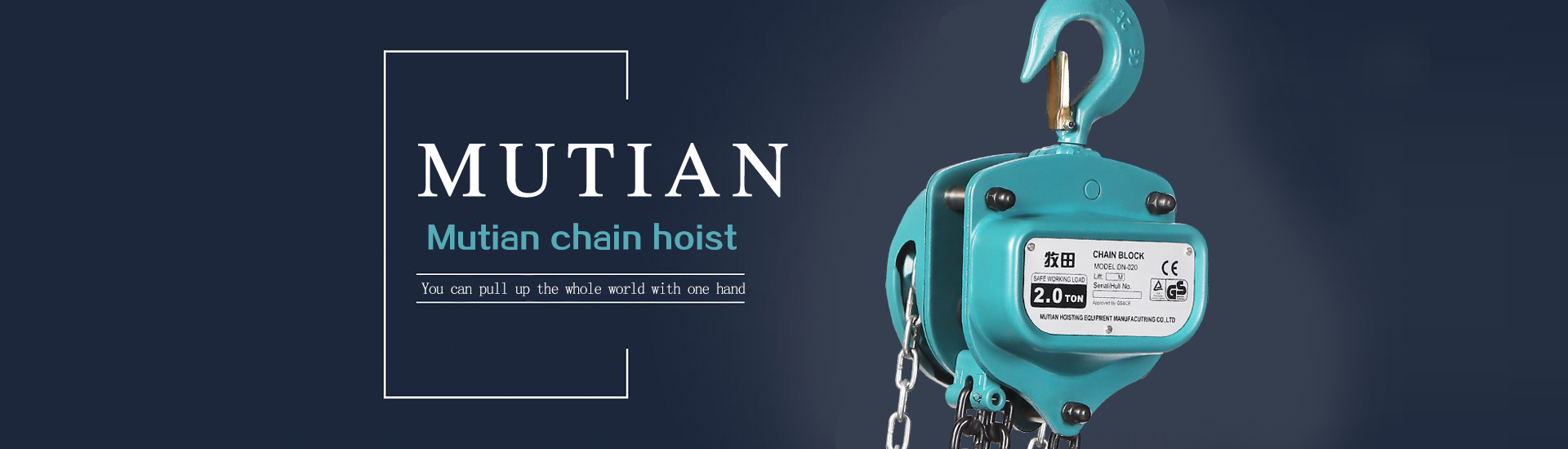
The main equipment produced by Hebei Makita: stage electric hoist, electric chian hoist, wire rope electric hoist,Hand chain hoist, lever hoist, pneumatic hoist and other lifting equipment
 phone
phone
 service
 message
 e-mail
