 中文版
中文版





releaseTime:2026-01-17 08:47:10source:Mu TiannumberOfPageViews:0
When operating a lever hoist for lifting operations, it is necessary to strictly follow the following 12 core precautions, covering the entire process before, during, and after the operation, and integrating international safety standards (such as ISO 4304-1, OSHA 1926.1401) and industry best practices to ensure safe and efficient operations:
1、 Pre operation inspection: risk pre control
Equipment status verification
Check the chain for cracks, twists, or excessive wear (with a chain ring diameter wear of ≤ 10%), ensure that the hooks are free from deformation, cracks, or welding defects, and that the brake system responds sensitively without jamming.
Test no-load operation: The ratchet pawl system should be smooth without any abnormal noise, and the brake should be reliably locked after the load is released.
Confirm that the overload protection device (such as mechanical overload limiter) is functioning properly and automatically locks when the load exceeds the rated value.
Environmental and load assessment
Ensure that the work area is free of obstacles and the ground is flat and solid; When working at heights, it is necessary to build a stable platform, wear safety belts, and connect to independent anchor points.
Assess the weight, center of gravity, and distribution of the load, and strictly prohibit overloading or eccentric loading; The load should be evenly distributed to avoid local stress concentration.
2、 Standard operation: precise control
Load operation process
Maintain a constant speed during lifting to avoid sudden acceleration or sudden stop; When descending, the speed is controlled by the braking system, and free fall is strictly prohibited.
It is strictly prohibited to place any part of the body under a load or on the path of chain movement; The operator should stand on the side of the lever handle to avoid facing the load directly.
When multiple people work together, clear command signals (such as gestures, walkie talkies) should be provided to avoid misoperation; It is prohibited to use neutral mode to adjust the chain length under load.
Direction and Mode Management
Adjust the direction of the pawl (lift/lower/neutral) according to the homework requirements. The neutral mode is only used for adjusting the chain length under no-load conditions.
Avoid switching the direction of the pawl under load to prevent chain loss of control or equipment damage.
3、 Maintenance and upkeep: Extend lifespan and ensure safety
Key points of daily maintenance
Regularly clean the oil and dust on the chain, ratchet, and pawl; Apply specialized lubricating grease (such as lithium based grease) to the friction parts of the chain guide, ratchet teeth, and brake system to reduce wear.
Chain storage should be hung in a dry and ventilated place to avoid moisture or corrosion; Avoid excessive stretching or relaxation and maintain moderate tension.
Regular professional maintenance
The annual inspection involves professional personnel dismantling the equipment and inspecting internal components such as gearboxes, bearings, and springs; Replace parts with excessive wear and tear (such as chain links, claws, brake pads).
Using techniques such as magnetic particle testing and ultrasonic testing to perform non-destructive testing on key components (such as hooks and chains) to ensure no cracks or fatigue damage.
4、 Emergency response: risk management
Emergency measures for faults
Chain stuck: Stop operation immediately and check if the chain is stuck by foreign objects or if the guide rail is deformed; Use a specialized tool (such as a chain wrench) to slowly release the load.
Brake failure: Activate the backup brake system (such as manual emergency brake valve); If the backup system fails, slowly reduce the load to the ground to avoid sudden drops.
Load falling: evacuate surrounding personnel and set up a warning area; Use backup equipment (such as a jack) to re lift the load and check the cause of equipment failure.
Emergency response for personnel injury
Pinch/compression injury: Immediately stop the operation, perform preliminary treatment on the wound (such as hemostasis and bandaging), and avoid moving the injured person; Call the emergency number.
High altitude falling: Activate the emergency plan for high-altitude falling and use buffering devices such as safety nets and air cushions; Conduct a preliminary examination of the injured and avoid moving them around at will.
5、 Industry norms and standards
International standards: Follow ISO 4304-1 "Cranes - Wire ropes - Selection, maintenance and use" and OSHA 1926.1401 "Safety standards for cranes and lifting equipment".
Domestic standards: follow GB/T 14736-2009 "lever type chain block" and GB 6067.1-2010 "Safety regulations for lifting equipment".
Manufacturer's Guide: Strictly follow the operation manual and maintenance manual provided by the equipment manufacturer, and regularly participate in training and certification organized by the manufacturer.
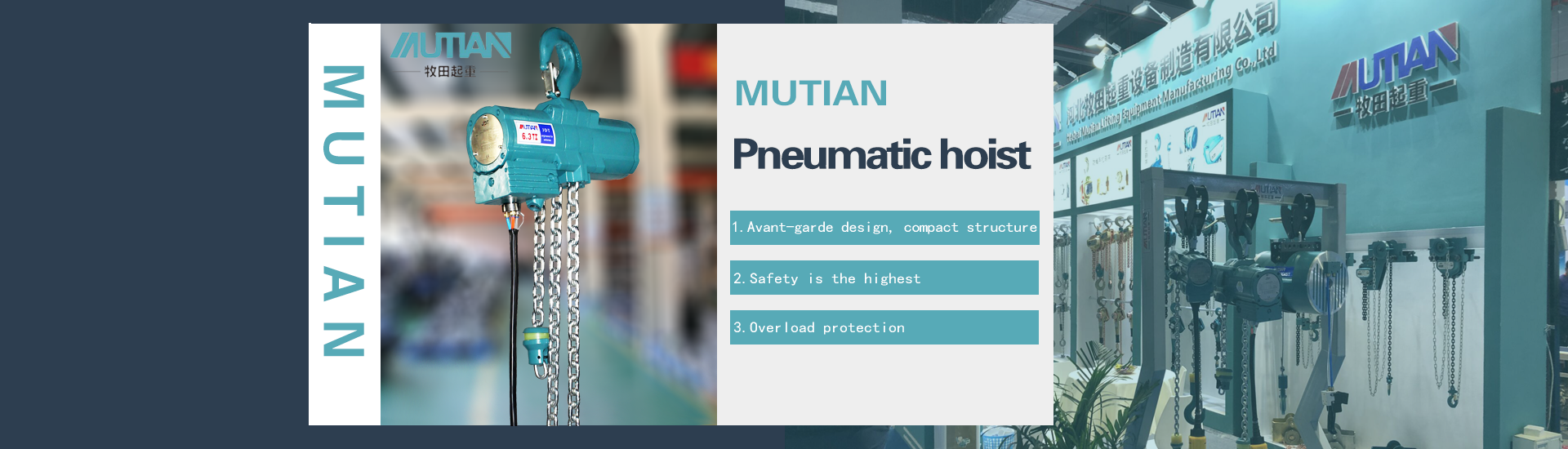
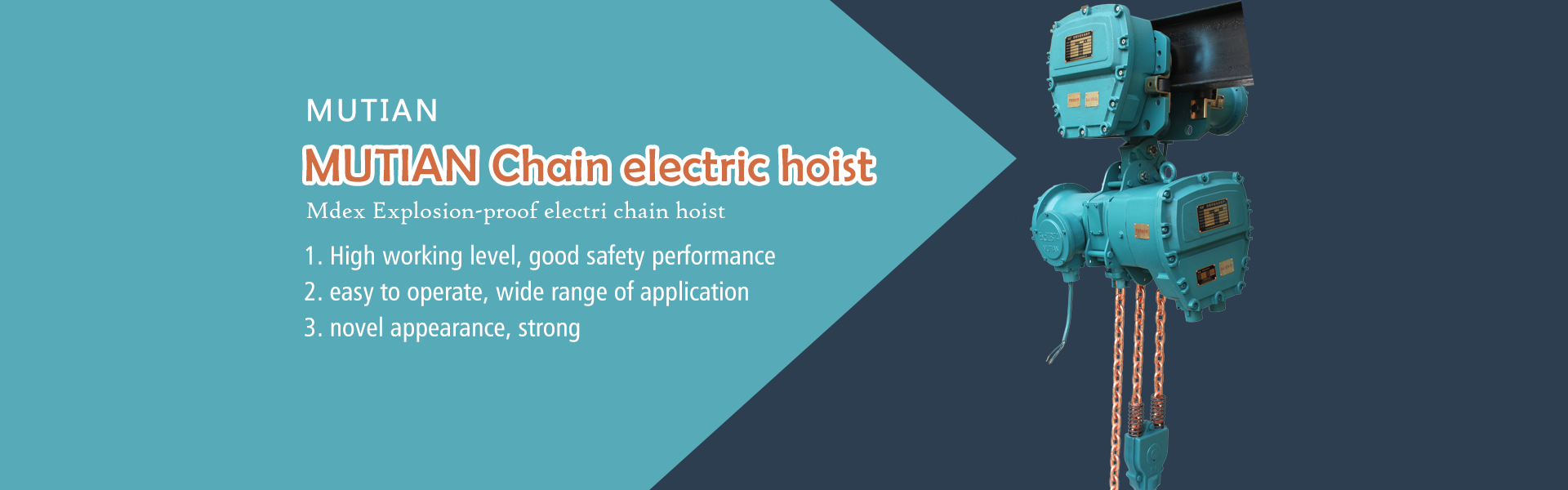
The main equipment produced by Hebei Makita: stage electric hoist, electric chian hoist, wire rope electric hoist,Hand chain hoist, lever hoist, pneumatic hoist and other lifting equipment
 phone
phone
 service
 message
 e-mail
