 中文版
中文版




releaseTime:2025-10-09 09:48:18source:Mu TiannumberOfPageViews:0
When operating an emulsion lifting hoist (commonly used in mining, metallurgy, and heavy industries), several critical aspects must be considered to ensure safety, efficiency, and equipment longevity. Below is a structured breakdown of key considerations:
1. Safety Compliance & Operational Standards
Adherence to Regulations
Follow national/industry standards (e.g., China’s GB/T 3811-2008 for cranes, ISO 4301 for lifting devices).
Ensure compliance with mine safety regulations (e.g., China’s AQ 1029-2019 for coal mines).
Certification & Inspection
Verify that the hoist has type approval certificates (e.g., MA/KA marks in China for mining equipment).
Conduct periodic inspections (e.g., monthly for critical components, annual for full certification).
2. Load Management & Capacity Control
Rated Working Load (RWL)
Never exceed the hoist’s rated capacity (marked on the nameplate). Overloading can cause chain failure or structural collapse.
Use load cells or digital indicators to monitor real-time loads.
Dynamic Load Factors
Account for shock loads (e.g., sudden starts/stops) by derating the hoist’s capacity (typically by 20–30%).
Avoid side loading or oblique pulling, which increases stress on the chain and sprockets.
3. Chain & Sprocket Maintenance
Chain Inspection
Check for elongation (replace if >3% of original length).
Look for cracks, corrosion, or broken pins using magnetic particle inspection (MPI) or visual checks.
Sprocket Condition
Ensure sprockets are free of wear, grooves, or misalignment.
Replace sprockets if tooth profiles are damaged (e.g., "hooked" or "pointed" teeth).
Lubrication
Use emulsion-compatible lubricants (e.g., water-based greases) to prevent chain corrosion.
Apply lubrication before each shift in dusty environments.
4. Emulsion System Management
Emulsion Quality
Maintain proper emulsion concentration (typically 3–5% oil in water) to ensure lubrication and cooling.
Test emulsion pH levels (7.5–8.5) and anti-corrosion properties regularly.
Pressure & Flow Control
Monitor pump pressure (e.g., 10–20 MPa for mining hoists) to avoid over-pressurization.
Ensure filter cleanliness to prevent clogging (use 10–25 µm filters).
Leak Prevention
Check hoses, fittings, and seals for leaks, which can reduce hydraulic efficiency and cause environmental hazards.
5. Environmental & Working Conditions
Temperature Extremes
Avoid operating in temperatures below -20°C (chain brittleness) or above 60°C (lubricant degradation).
Use heat-resistant chains (e.g., nickel-plated) in high-temperature zones.
Humidity & Corrosion
In humid environments (e.g., underground mines), use stainless steel chains or corrosion inhibitors.
Implement dehumidification in storage areas.
Dust & Debris Control
Clean chains and sprockets regularly to remove coal dust, metal shavings, or abrasive particles.
6. Operator Training & Safety Protocols
Certified Operators
Ensure operators hold valid hoist operation certificates (e.g., China’s "Special Equipment Operator License").
Provide refresher training on emergency procedures (e.g., chain breakage, emulsion leaks).
Pre-Use Checks
Conduct daily inspections of chains, hooks, and emulsion lines before operation.
Test emergency stop buttons and limit switches before each shift.
Safe Working Practices
Never stand under suspended loads.
Use taglines to control load swing in windy conditions.
7. Emergency Preparedness
Failure Modes & Responses
Develop protocols for chain breakage, emulsion leaks, and overload alarms.
Equip hoists with dual braking systems (mechanical + hydraulic) for redundancy.
Spare Parts & Tools
Stock critical spares (e.g., chains, sprockets, seals) for rapid replacement.
Carry portable emulsion pumps for emergency repairs.
8. Documentation & Record-Keeping
Maintenance Logs
Record inspection dates, repairs, and lubrication intervals in a digital or physical logbook.
Track chain usage hours to predict fatigue life.
Incident Reports
Document any near-misses or failures for root-cause analysis (e.g., using the "5 Whys" method).
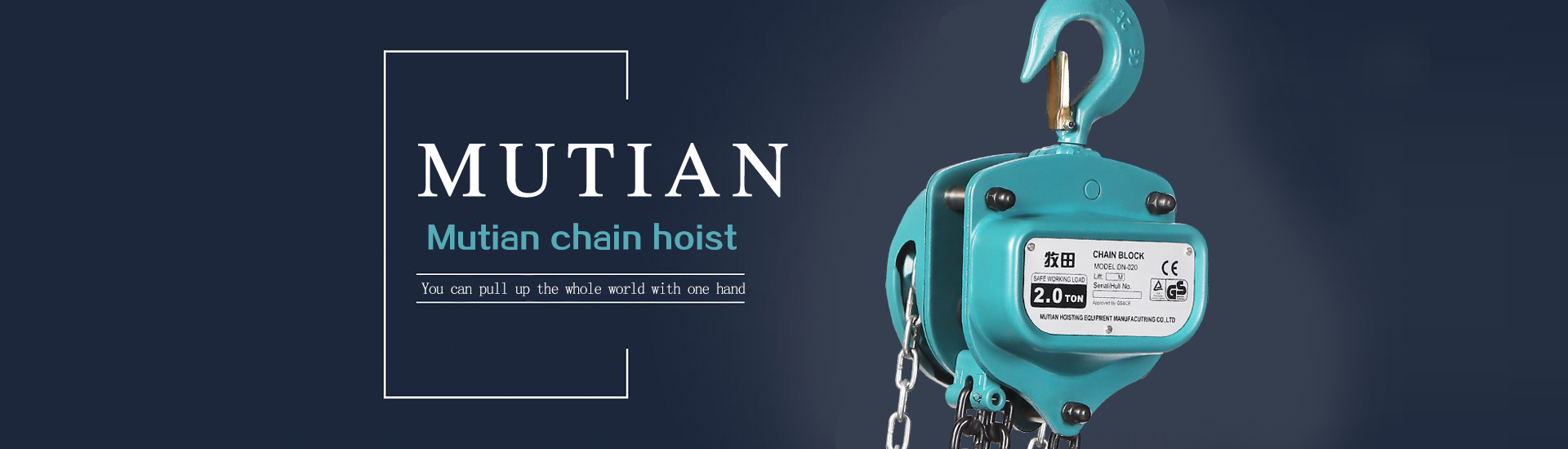
The main equipment produced by Hebei Makita: stage electric hoist, electric chian hoist, wire rope electric hoist,Hand chain hoist, lever hoist, pneumatic hoist and other lifting equipment
 phone
phone
 service
 message
 e-mail
