 中文版
中文版




releaseTime:2026-01-14 10:04:39source:Mu TiannumberOfPageViews:0
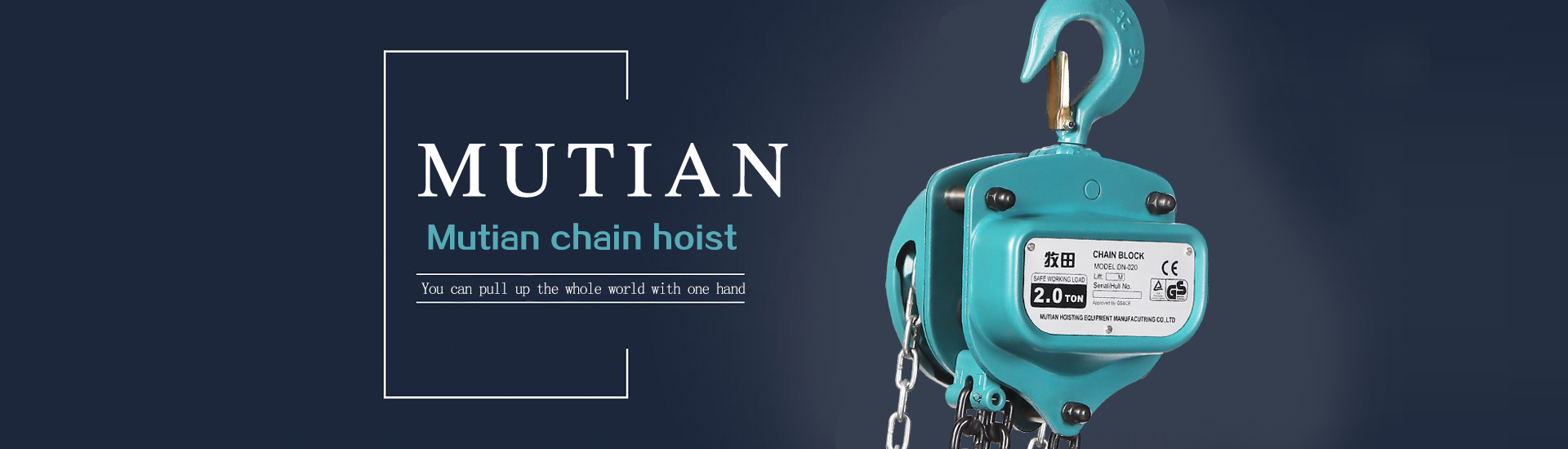
The main causes of gear failures in manual hoists (chain hoists) are wear, breakage, jamming, and brake failure. The specific reasons and solutions are as follows:
1. Gear wear
Cause:
Foreign object intrusion: Metal particles, dust, and sand particles enter the meshing area of the tooth surface, causing abrasive wear; Lubricating oil containing hard impurity particles or corrosive substances exacerbates wear.
Insufficient lubrication: Low speed overload, high temperature, high surface roughness (such as tooth surface ripples), or insufficient viscosity of lubricating oil can lead to dry friction, adhesive wear, and burns.
Design/assembly defects: low machining accuracy of tooth surface (such as end contact bias), misalignment of axis, coupling wear or torsional resonance, causing local stress concentration.
Consequences: Thinning of tooth thickness, deformation of tooth profile, increase in backlash, leading to increased vibration, noise, and even tooth breakage.
Solution: Regularly clean the gears and apply specialized lubricating oil (at least once every quarter); Replace gears with wear ≥ 30%; Adjust the gear mesh clearance to ensure alignment.
2. Gear fracture
Cause:
Overload and fatigue: Long term overload or impact load leads to fatigue crack propagation; The broken teeth are irreversible and need to be replaced immediately.
Material/process defects: Poor quality steel (insufficient hardness), inadequate pre-treatment structure (such as nitriding cracks), quenching defects or welding repairs leading to a decrease in strength.
Maintenance deficiency: Failure to regularly inspect or inspect before use, and defects not detected in a timely manner (such as cracks, chain wear ≥ 10%).
Case: In the Fushun Iron and Steel Company accident, a 5-ton chain hoist broke due to a defective chain link, resulting in casualties; Jinxi Chemical Plant was revoked due to the replacement of M8 bolts by the original factory, resulting in a tooth breakage accident.
Solution: Overloading is prohibited; When replacing broken gears, original or equivalent specifications of accessories must be used; Welding repair is prohibited.
3. Gear stuck/jammed
Cause:
Chain issues: Chain knots, twisting, detachment from sprocket grooves, or chain ring diameter wear ≥ 10% causing chain jamming.
Foreign objects and lubrication: Iron filings, oil stains, or dust entering the gear; Friction plate oil failure; The long axis screw is too tight or corroded.
Braking system: Wear, deformation or spring fatigue of ratchet/pawl, resulting in self-locking failure; Brake pad wear or improper adjustment.
Solution: Loosen the chain knot and replace the worn chain; Clean up foreign objects inside gears/ratchet wheels and lubricate transmission components; Adjust the brake clearance and replace worn brake pads.
4. Braking and connection faults
Brake failure: Insufficient braking force caused by brake pad wear, spring fatigue, or oil contamination; Claw jamming or spring failure can cause chain slippage.
Connection issue: Hook wear>10% or breakage; Loose or broken bolts cause structural instability.
Solution: Regularly inspect the braking system and replace worn parts; Tighten the connecting bolts and replace the broken hook.
The main equipment produced by Hebei Makita: stage electric hoist, electric chian hoist, wire rope electric hoist,Hand chain hoist, lever hoist, pneumatic hoist and other lifting equipment
 phone
phone
 service
 message
 e-mail
