 中文版
中文版





releaseTime:2026-01-16 09:29:27source:Mu TiannumberOfPageViews:0
Chain hoist (commonly known as chain block or chain hoist) is a lightweight and small lifting equipment widely used in industries, construction, mining, and other fields. The following is a systematic analysis from five aspects: classification, structure, purpose, safe operation, and industry standards:
1、 Classification system
By driving mode
Manual chain hoist: driven by manually pulling the chain, such as a chain hoist (lifting capacity 5-200kN), suitable for short distance lifting, equipment adjustment, bundling and fixing scenarios.
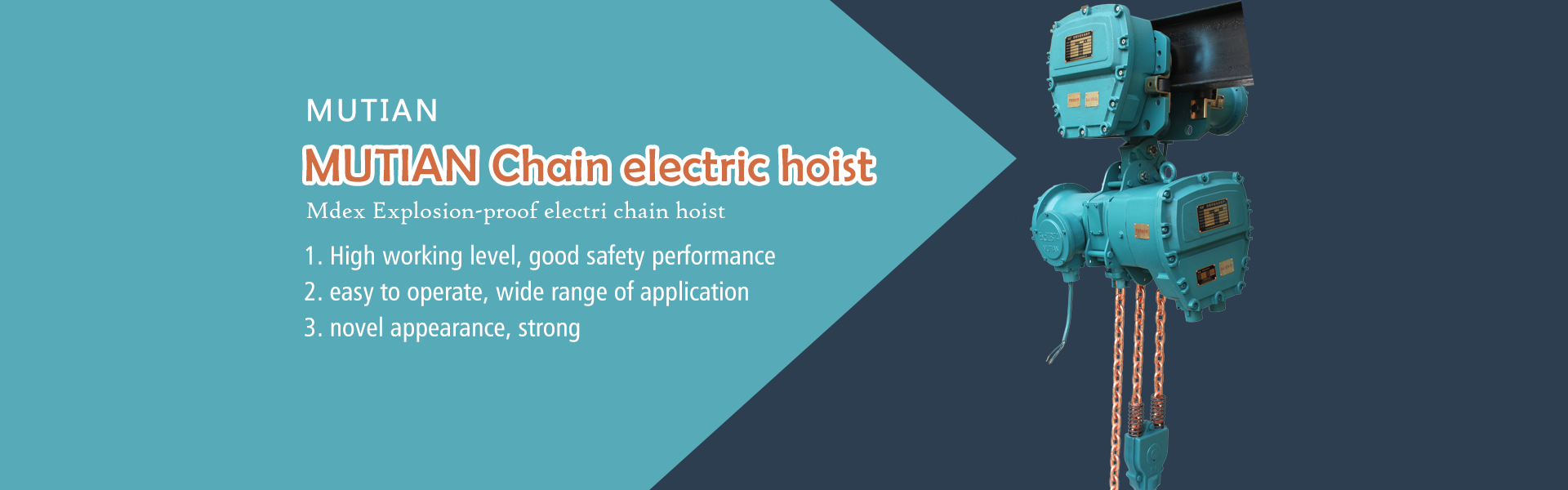
Electric/Hydraulic Chain Crane: The electric type uses a motor to drive a gear set, while the hydraulic type uses hydraulic cylinders to achieve lifting and lowering. The lifting capacity can reach hundreds of tons and is commonly used in mining, ports, factories, and other scenarios that require large loads.
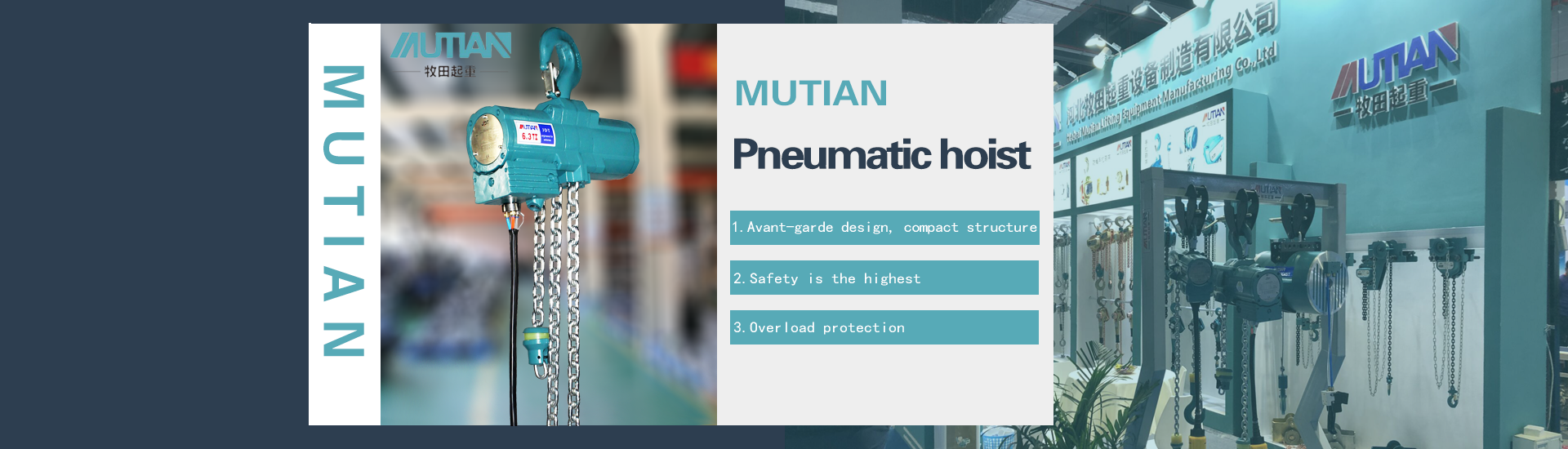
Pneumatic chain hoist: powered by compressed air, suitable for explosion-proof environments or places without power supply.
According to structural characteristics
Transmission mode: divided into worm gear type (low efficiency, easy to wear, less commonly used) and gear type (such as planetary gear, SH type, WA type). The planetary gear transmission can lift up to 200kN, with high efficiency and reliable self-locking.
Chain types: circular chain (in accordance with GB/T 1243-2006 standard, meeting minimum breaking load requirements), welded chain, etc. Some models adopt double chain or multi chain design to enhance load-bearing capacity.
Special structures: such as chain bridge cranes (main beam+lifting trolley, connected to hooks through chains), hydraulic chain cranes (dual speed/single speed lifting, suitable for mining and construction sites).
By usage scenario
Industrial field: equipment installation, maintenance, and relocation, such as lifting equipment in factories and leveling and aligning tower equipment.
Construction and Mining: Lifting of construction site components, transportation of mining equipment, and lifting of heavy objects during mining operations.
Warehousing and Logistics: Warehouse cargo handling, container loading and unloading, lifting of ship components at yacht docks and shipyards.
Special scenarios: such as using a mast crane in conjunction with a chain hoist for high-altitude operations, or for tightening cable wind ropes and securing large equipment.
2、 Structure and Working Principle
Core components: bracelet, sprocket, transmission device (gear/worm gear), lifting chain, upper and lower hooks, brake (ratchet+friction plate self-locking mechanism), housing, etc.
Working principle: Manually pull the chain to drive the sprocket to rotate, amplify the torque through the gear set, and drive the lifting chain to rise and fall; The brake is self-locking through a ratchet and friction plate to prevent heavy objects from falling. The electric/hydraulic type is driven by an electric motor or hydraulic cylinder, combined with a control system to achieve precise lifting.
3、 Safety operation standards
Check before use
Confirm that the chain has no broken joints or cracks, the hook, brake, pin and other components are intact, and the rotating parts are flexible and not stuck.
Check if the lifting chain is twisted and adjust it to a straight state if necessary; It is strictly prohibited to use it when overloaded or the weight is unknown.
Operation requirements
The direction of the zipper should be consistent with the sprocket to avoid chain jamming or falling off; When operating with multiple people, it is necessary to coordinate and exert force, and it is forbidden to increase the number of people arbitrarily.
When hanging heavy objects, ensure that the center of gravity is stable, the binding is firm, and padding is added at the edges and corners; Personnel are prohibited from standing under heavy objects or lifting arms.
When hanging heavy objects for a long time, the bracelet should be tied to the lifting chain to prevent self-locking failure; If there are any abnormalities (such as abnormal noises or lagging) during homework, immediately stop and check.
maintenance
Regularly lubricate rotating components (such as sprockets and gears) to avoid corrosion; Severely worn, broken or cracked chains need to be scrapped and replaced.
Adhere to the "Ten No Lifting" principle: Do not lift when overloaded, do not lift when tied securely, do not lift when the command is unclear, do not lift when people stand on the workpiece, and do not lift when the edges and corners are not cushioned.
4、 Industry standards and specifications
National standards: such as GB/T 1243-2006 "Circular Chain for Chain Cranes", which specifies the material, size, strength, and surface quality of the chain; GB/T 3811-1983 "Code for Design of Cranes" guides structural design; GB 5972-1986 "Practical Code for Inspection and Scrapping of Steel Wire Rope for Lifting Machinery" specifies the scrap standards for steel wire ropes.
Industry standards: covering the entire process of equipment manufacturing, installation, testing, and safe operation, such as the "Safety Regulations for Cranes" (GB/T 6067-2010) emphasizing that operators must hold certificates, equipment must undergo regular inspections, and emergency response measures must be taken.
5、 Application Cases and Advantages
Typical scenarios: hoisting steel structural components on construction sites, equipment maintenance and relocation in factories, ore lifting in mines, loading and unloading containers at ports, etc.
Advantages and features: compact structure, easy to carry, simple operation, and low cost; Manual type does not require power supply and has strong adaptability; Electric/hydraulic models can achieve high load and efficient operation, and some models support remote control or automated operation.
The main equipment produced by Hebei Makita: stage electric hoist, electric chian hoist, wire rope electric hoist,Hand chain hoist, lever hoist, pneumatic hoist and other lifting equipment
 phone
phone
 service
 message
 e-mail
