 中文版
中文版





releaseTime:2026-01-16 09:34:18source:Mu TiannumberOfPageViews:0
In industrial plants, chain hoists (such as chain hoists and electric/hydraulic chain hoists) are representative of light and small lifting equipment, and their functions are highly adapted to high-frequency operation scenarios such as equipment installation, maintenance, and material handling in the plant. The specific functions and advantages can be systematically summarized into the following five dimensions:
1. Core function: Precise lifting and displacement control
Equipment installation and debugging: In the deployment of production lines, equipment updates, or technological transformations, chain hoists can accurately lift heavy equipment such as machine tools, motors, pumps, and valves to designated positions, and cooperate with level gauges or laser calibrators to achieve equipment leveling and alignment, ensuring installation accuracy. For example, in the final assembly workshop of an automobile manufacturing plant, chain hoists are commonly used for precise positioning of components such as engines and transmissions.
Equipment maintenance and relocation: During equipment troubleshooting or daily maintenance, chain hoists can quickly lift equipment enclosures, motors, gearboxes, and other components, providing operating space for maintenance personnel. For example, in the maintenance of rolling mills in steel plants, chain hoists can assist in lifting the rollers for replacement or grinding.
Material handling and turnover: Within warehouses, logistics centers, or production workshops, chain hoists can handle raw materials, semi-finished products, finished products, and other materials, achieving the "last mile" handling of logistics within the workshop. For example, next to the SMT production line in an electronics factory, a chain hoist can assist in transporting PCB board racks or SMT machine material rolls.
2. Structural adaptability: Compact design and flexible deployment
High space utilization: Chain cranes have a compact structure, light weight, and can be easily suspended on I-beams, crane tracks, or dedicated brackets in factories without occupying ground space, making them particularly suitable for factory environments with limited space.
Multi scenario adaptation: Manual chain hoists do not require power and are suitable for scenarios without power or explosion-proof requirements; Electric/hydraulic chain cranes can achieve high load and high efficiency operations, suitable for frequent lifting or large tonnage operation needs.
Adjustable angle and height: By adjusting the length of the chain or using hooks of different specifications, the chain hoist can achieve flexible adjustment of lifting height and angle to meet different operational needs.
3. Security performance: Multiple protection and standardized operation
Self locking braking system: The chain hoist is equipped with a ratchet and friction plate self-locking brake, which can automatically lock in case of power failure or operational errors, preventing heavy objects from falling and ensuring operational safety.
Overload protection: Some high-end models are equipped with overload protection devices that automatically cut off power when the load exceeds the rated value, preventing equipment damage or accidents.
Operation norms and training: In industrial plants, it is necessary to strictly implement the safety operation norms of chain hoists, such as the "Ten No Lifting" principle (no lifting if overloaded, not lifting if not tied firmly, not lifting if unclear command, etc.), and regularly provide professional training and assessment to operators to ensure safe operations.
4. Cost effectiveness: economically efficient and easy to maintain
Low purchase cost: Compared with large lifting equipment such as bridge cranes and gantry cranes, chain cranes have low purchase costs and high cost-effectiveness, especially suitable for small and medium-sized enterprises or factories with limited budgets.
Low maintenance cost: Chain cranes have a simple structure and are easy to maintain. Regular lubrication of rotating parts and inspection of chain and hook wear are sufficient, resulting in lower maintenance costs.
Easy to operate: The manual chain hoist is easy to operate and does not require professional skill training to get started; The operation interface of the electric/hydraulic chain hoist is friendly, and the operation method can be quickly mastered.
5. Industry application cases and expanded functions
Typical application scenarios: In mechanical processing plants, chain hoists are used to lift machine tool beds, spindle boxes, and other components; In chemical plants, it is used for lifting equipment such as reaction vessels and storage tanks; In food factories, it is used to lift equipment such as mixing tanks and packaging machines.
Additional functions: Some chain hoists can be equipped with specialized lifting devices (such as balanced lifting beams and rotating hooks) to achieve the lifting of special shaped equipment; Or equipped with remote control devices to achieve remote operation and automation control, improving work efficiency and safety.
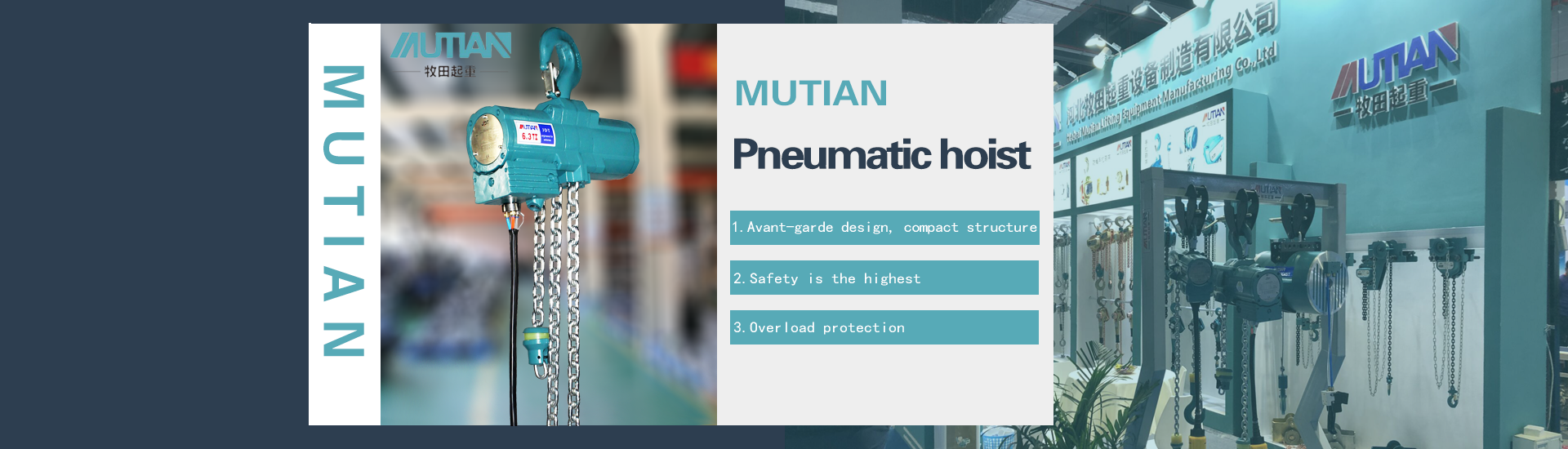
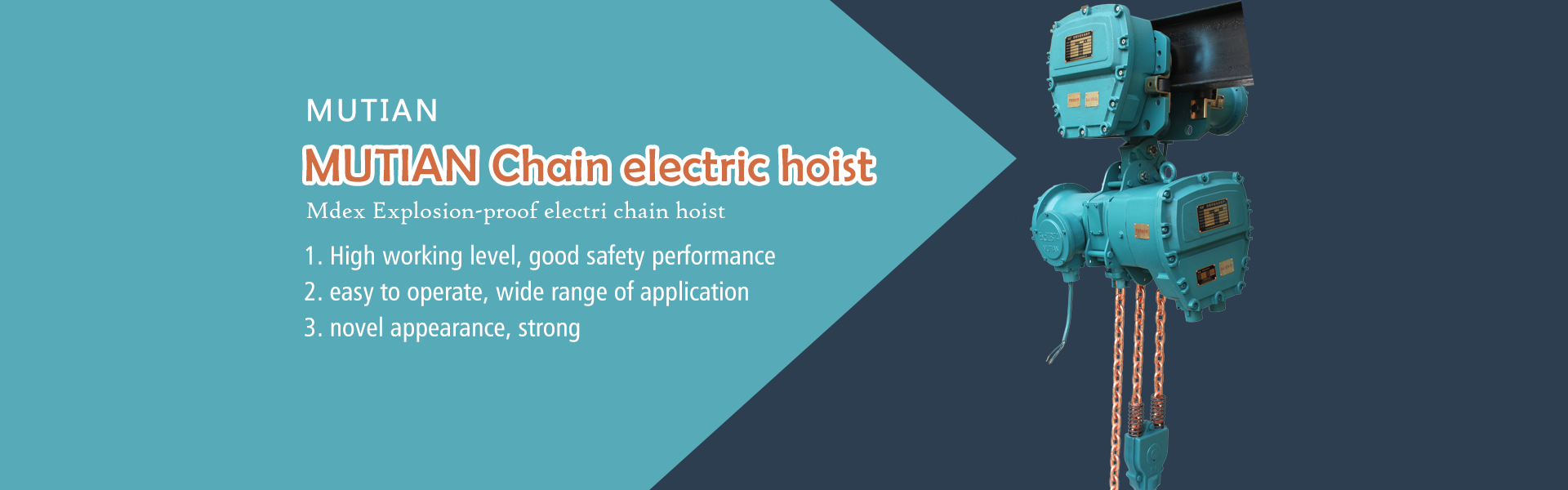
The main equipment produced by Hebei Makita: stage electric hoist, electric chian hoist, wire rope electric hoist,Hand chain hoist, lever hoist, pneumatic hoist and other lifting equipment
 phone
phone
 service
 message
 e-mail
