 中文版
中文版






releaseTime:2025-12-01 08:43:39source:Mu TiannumberOfPageViews:0
To ensure the safe and efficient operation of a running electric hoist, a systematic approach involving preparation, installation, testing, and ongoing maintenance is essential. Below is a structured guide on how to properly make a running electric hoist ready for use:
1. Pre-Installation Preparation
Select the Right Hoist:
Choose an electric hoist that matches your load capacity, lift height, and speed requirements.
Consider environmental factors (e.g., temperature, humidity, corrosive substances) to select a hoist with appropriate protection (e.g., explosion-proof, dust-proof).
Inspect the Hoist:
Check for visible damage to the hoist body, hooks, chains, or ropes.
Verify that all safety devices (e.g., overload limiters, limit switches, emergency stops) are intact and functional.
Ensure the hoist is accompanied by a valid inspection certificate and user manual.
Prepare the Installation Site:
Clear the area of obstacles and ensure a stable, level surface for installation.
For overhead hoists, ensure the supporting structure (e.g., beam, gantry) is strong enough to bear the load.
Provide adequate lighting and ventilation for the workspace.
2. Installation Process
Mount the Hoist:
For fixed hoists: Securely attach the hoist to the supporting structure using bolts or clamps, ensuring alignment and levelness.
For mobile hoists: Install the hoist on a trolley or track system, ensuring smooth movement and proper alignment.
Connect Electrical Components:
Follow the manufacturer's wiring diagram to connect the power supply, control cables, and remote control (if applicable).
Use appropriate cable sizes and protective measures (e.g., conduit, cable trays) to prevent damage.
Ensure all electrical connections are tight and insulated to prevent short circuits or electric shocks.
Install Safety Devices:
Mount limit switches at the upper and lower travel limits to prevent overtravel.
Install overload limiters to protect against excessive loads.
Ensure emergency stop buttons are easily accessible and functional.
3. Pre-Operation Testing
Functional Testing:
Conduct a no-load test to verify that the hoist operates smoothly in both directions (up and down).
Check the responsiveness of the control buttons or remote control.
Test the limit switches to ensure they stop the hoist at the designated positions.
Load Testing:
Gradually increase the load from a light test load to the rated capacity, observing for any abnormal noises, vibrations, or malfunctions.
Verify that the overload limiter activates when the load exceeds the rated capacity.
Check the braking system to ensure the hoist can hold the load securely when stopped.
4. Operation Guidelines
Operator Training:
Ensure operators are trained in the proper use of the hoist, including control operations, safety procedures, and emergency responses.
Provide operators with the user manual and safety guidelines for reference.
Safe Operation Practices:
Never exceed the rated capacity of the hoist.
Avoid side pulling or oblique lifting, as this can cause uneven loading and damage the hoist.
Keep the load stable and avoid sudden starts or stops to prevent shock loads.
Use appropriate slings or lifting devices to secure the load.
Maintain a safe distance from the load and avoid standing under suspended loads.
Monitoring During Operation:
Continuously monitor the hoist for any signs of malfunction (e.g., abnormal noises, vibrations, overheating).
If any issues are detected, immediately stop the hoist and investigate the cause before resuming operation.
5. Maintenance and Inspection
Regular Maintenance:
Follow the manufacturer's recommended maintenance schedule for lubrication, cleaning, and component replacement.
Keep the hoist clean and free of debris to prevent damage to moving parts.
Check and tighten all bolts and connections regularly to prevent loosening.
Periodic Inspections:
Conduct thorough inspections of the hoist at regular intervals (e.g., monthly, quarterly) to check for wear, damage, or corrosion.
Pay special attention to critical components such as the hook, chain/rope, brake system, and electrical connections.
Replace any worn or damaged parts immediately to prevent further damage or safety hazards.
Record-Keeping:
Maintain detailed records of all maintenance activities, inspections, and repairs.
Use these records to track the hoist's performance and identify any recurring issues that may require attention.
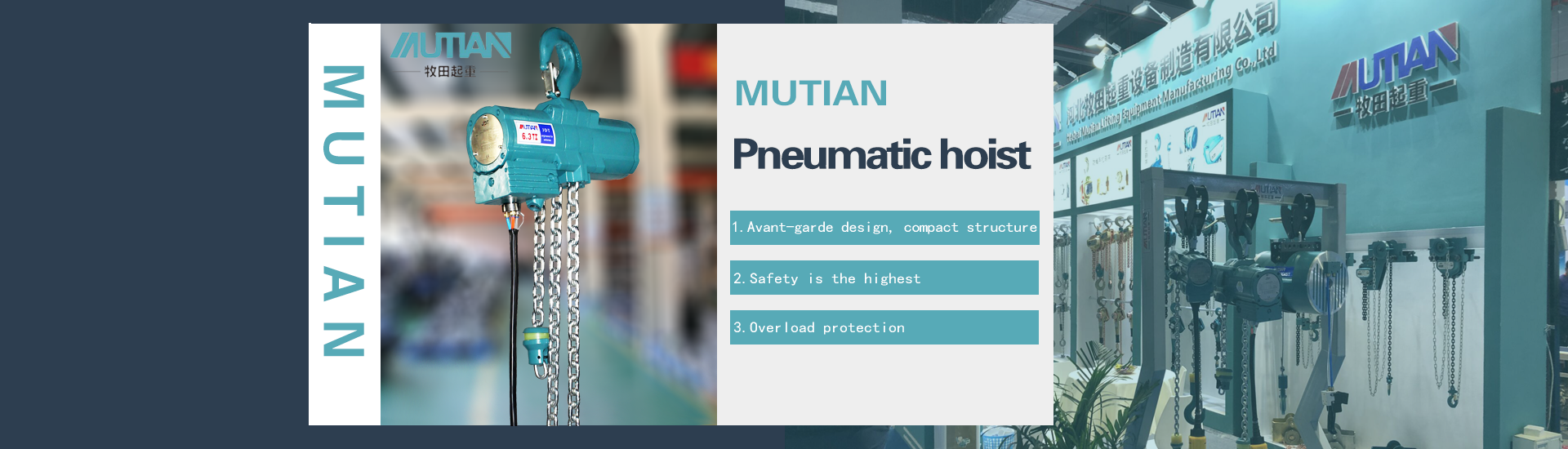
The main equipment produced by Hebei Makita: stage electric hoist, electric chian hoist, wire rope electric hoist,Hand chain hoist, lever hoist, pneumatic hoist and other lifting equipment
 phone
phone
 service
 message
 e-mail
