 中文版
中文版





releaseTime:2025-10-17 08:48:26source:Mu TiannumberOfPageViews:0
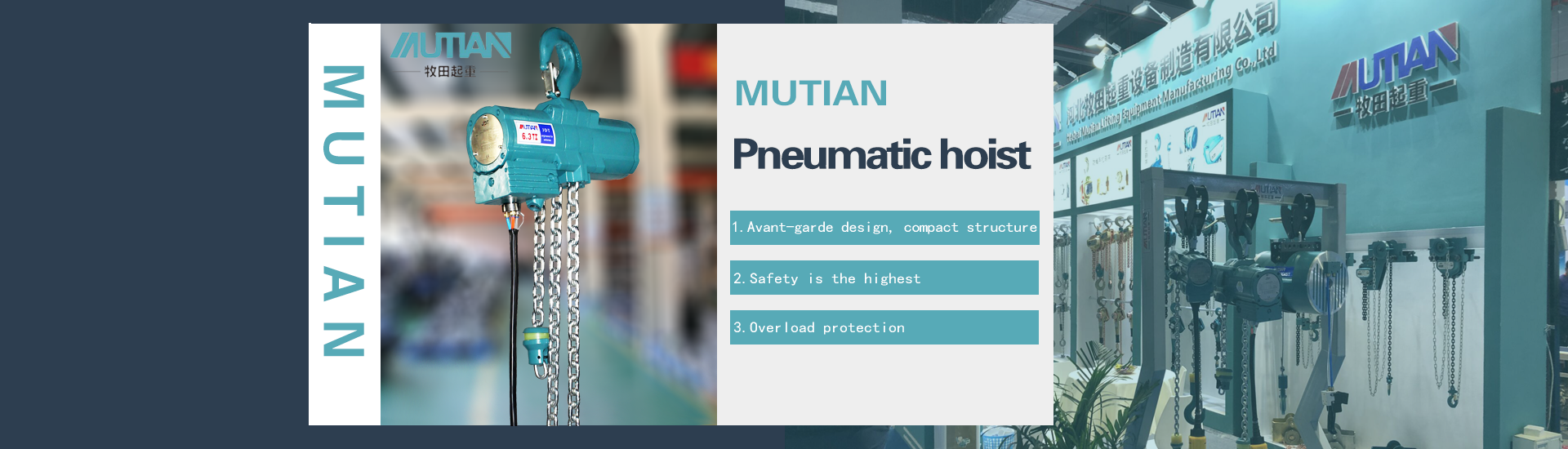
To ensure the safe operation of pneumatic hoists during operation, a safety system needs to be constructed from five dimensions: equipment inspection, operating standards, environmental control, personnel management, and emergency response. Here are the specific operation guidelines:
1、 Pre operation safety check
Equipment body inspection
Appearance integrity: Check the gourd shell, hook, chain/wire rope for cracks, deformation, or severe wear.
When the wear of the hook exceeds 10% of the original height or the opening degree increases by more than 15%, replace it immediately.
When the chain undergoes plastic deformation, cracks, or the diameter wear of the chain links exceeds 5%, it needs to be scrapped.
Gas system: Confirm that the trachea is not aged or broken, and that the joints are securely fastened without any air leakage; The compressed air pressure is within the range of 0.4-0.6MPa and has been filtered and lubricated.
Braking system: Test the sensitivity of the brake to ensure that it can immediately stop running when power or air is cut off.
Safety device: Check whether the limiter, overload protection device, and anti decoupling device are effective.
Work environment inspection
Site conditions: Confirm that the ground is flat and solid, without obstacles or potholes; No personnel are stranded within the lifting range.
Environmental factors: Avoid direct use in high temperatures (over 300 ℃), humidity (humidity>60%), corrosive gases, or flammable and explosive environments (protective measures should be taken).
Lighting and ventilation: Ensure sufficient lighting and good ventilation in the work area to prevent operational errors caused by unclear visibility or polluted air.
2、 Safety regulations for operation process
payload control
Overloading is strictly prohibited: operate strictly according to the rated load of the hoist (such as 250kg to 30 tons), and it is forbidden to increase the load capacity by adding counterweights or modifying the structure.
Uniform lifting: Before lifting, confirm that the center of gravity of the load is stable to avoid uneven loading or diagonal pulling; Maintain a constant speed during lifting, and prohibit sudden acceleration or emergency stop.
Height limit: The lifting height usually does not exceed 80cm, and when encountering obstacles, the maximum height should not exceed 3m. It is strictly prohibited to cross over personnel's heads.
Running trajectory control
Horizontal movement: Control the direction of the hoist's movement through traction ropes or manual guidance to avoid collision with fixed objects.
Vertical lifting: Keep the hook vertical to prevent lateral tension from causing equipment overturning or hook breakage.
Hover management: It is strictly prohibited to hover the load for a long time. If a temporary stop is required, the load should be lowered to the ground or a safe height.
Multi person collaboration standard
Command signal: When multiple people are operating, a dedicated person will command and use standard gestures or walkie talkies to transmit signals.
Operation synchronization: Ensure coordinated actions of each operation point to avoid equipment imbalance caused by inconsistent actions.
3、 Personnel safety requirements
Qualifications and Training
Operators need to undergo professional training, be familiar with the structure, performance, and safety operating procedures of gourds, and hold certificates before taking up their posts.
Regularly organize safety drills to simulate scenarios such as gas outages, overloading, and equipment failures, in order to enhance emergency response capabilities.
personal protection
Wear protective equipment such as safety helmets, anti slip shoes, and cut resistant gloves, and if necessary, wear goggles and dust masks.
Do not wear loose clothing or jewelry to prevent getting caught up in equipment.
behavioral taboo
It is strictly prohibited to operate under the influence of alcohol or fatigue.
It is forbidden to adjust the load or overhaul the equipment during lifting.
Do not insert your hands or body parts between the hook and the load.
4、 Environment and equipment maintenance
regular maintenance
Lubrication management: Apply rust proof grease to gears, bearings, chains, and other parts according to the instructions to reduce wear and corrosion.
Cleaning and maintenance: Regularly remove dust and oil stains from the surface of the equipment to prevent impurities from entering the air path or moving parts.
Component replacement: Replace severely worn components such as hooks, chains, and brake pads in a timely manner, and it is strictly prohibited to use scrapped parts.
environmental control
Humidity management: Install dehumidifiers or ventilation fans in humid environments to maintain the humidity below 60%.
Temperature control: Insulation materials should be used to wrap the gourd in high-temperature areas, or cooling devices should be added to prevent equipment from overheating.
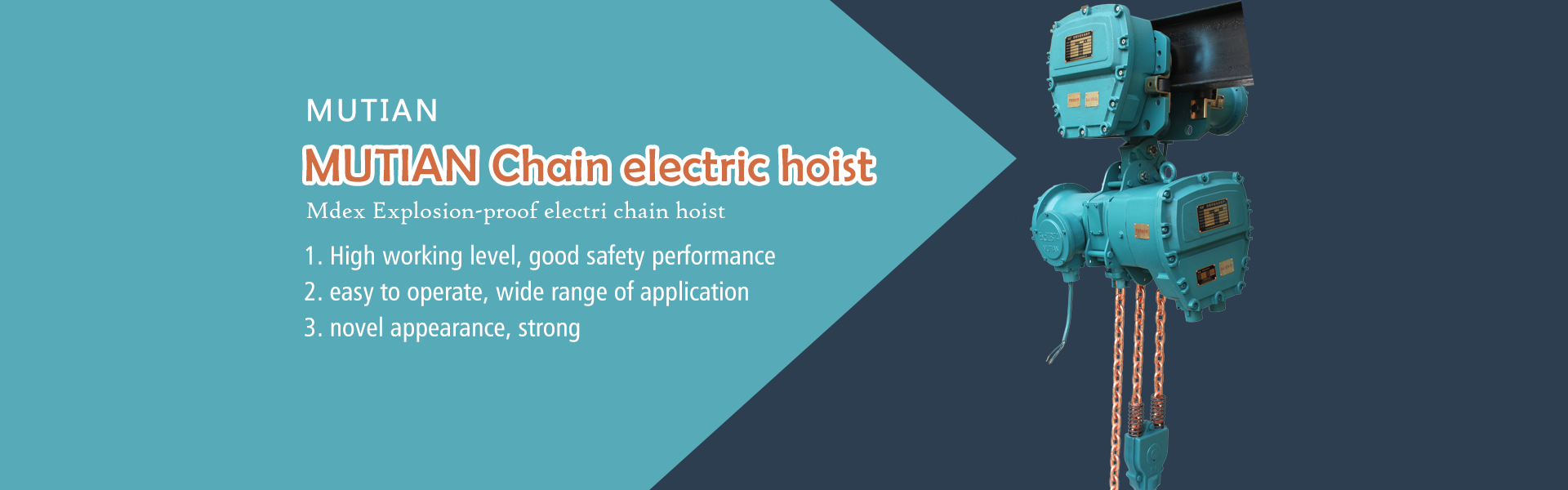
Explosion proof measures: Use explosion-proof pneumatic hoists in flammable and explosive environments, and ensure that there is no static electricity generated in the gas system.
5、 Emergency response and troubleshooting
Common fault response
Gas interruption protection: If the gas source is interrupted, the hoist will automatically brake. At this time, the load should be slowly released to avoid impact caused by emergency stop.
Overload alarm: Upon hearing the overload alarm, immediately reduce the load to the rated range.
Brake failure: If the brake fails, immediately cut off the air source and use a manual braking device (if any) or guide the load to a safe area.
Accident reporting process
In the event of equipment damage, personnel injury, or near miss accidents, immediately shut down the machine and protect the scene.
Report accidents according to company regulations, cooperate in investigating and analyzing the causes, and develop corrective measures.
6、 Safe operation mnemonic
Three checks and two confirmations ": check the equipment, environment, and personnel before operation; Confirm the load and signal before lifting.
Five no lifts ": do not lift when overloaded, do not lift when inclined, do not lift when signals are unclear, do not lift when bundling is not secure, and do not lift when safety devices fail.
Three steps of shutdown: power off, gas off, and hanging up (with warning signs).
The main equipment produced by Hebei Makita: stage electric hoist, electric chian hoist, wire rope electric hoist,Hand chain hoist, lever hoist, pneumatic hoist and other lifting equipment
 phone
phone
 service
 message
 e-mail
