 中文版
中文版





releaseTime:2025-11-27 09:05:20source:Mu TiannumberOfPageViews:0
Introduction to the characteristics, application scope, and operating specifications of electric hoists in operation
1、 Core characteristics of electric hoist
High Efficiency and Energy Saving
Adopting conical rotor brake motor or variable frequency motor, it provides stable power output while reducing energy consumption, supports frequent start stop, and is suitable for continuous operation needs in industrial scenarios.
Compact structure, modular design
Integrated design of core components such as motors, reducers, and drums, with small size and light weight, making it easy to install on single beam cranes, cantilever cranes, or fixed I-beam tracks.
Modular components such as wire ropes, hooks, and rope guides can be quickly replaced, reducing maintenance costs.
Double security guarantee
Mechanical braking: The conical rotor motor comes with brake friction plates, which automatically lock when power is cut off to prevent heavy objects from sliding down.
Electrical protection: Equipped with overload limiters, upper and lower limit switches, and emergency stop buttons, the power supply is immediately cut off in case of overload or abnormality.
Precise control and multi speed adjustment
Support single speed, dual speed, or variable frequency speed regulation to meet the lifting speed requirements of different scenarios (such as slow speed for precision assembly and fast logistics handling).
Wireless remote control or hanging button operation enhances operational flexibility.
Durability and environmental adaptability
The steel wire rope has undergone heat treatment and anti-corrosion coating treatment, making it wear-resistant and corrosion-resistant; Sealing design of cast iron or alloy steel gear reducer, dustproof and anti fouling.
The working temperature range is wide (-25 ℃ to+40 ℃), but it is necessary to avoid corrosive gases or high humidity environments (relative humidity ≤ 85%).
2、 Application scope
industrial manufacturing
Lifting heavy components such as engines and vehicle bodies on automobile production lines; Mechanical processing plants handle machine tools and molds; Electronic factory assembly line conveying precision equipment.
Logistics and Warehousing
Warehouse cargo loading and unloading, stacking; Terminal container handling; Vertical conveying of materials in automated three-dimensional warehouses.
Architecture and Engineering
Lifting steel bars and concrete during construction; Install prefabricated components during bridge construction; Lifting ore or equipment during mining operations.
Customized applications for special scenarios
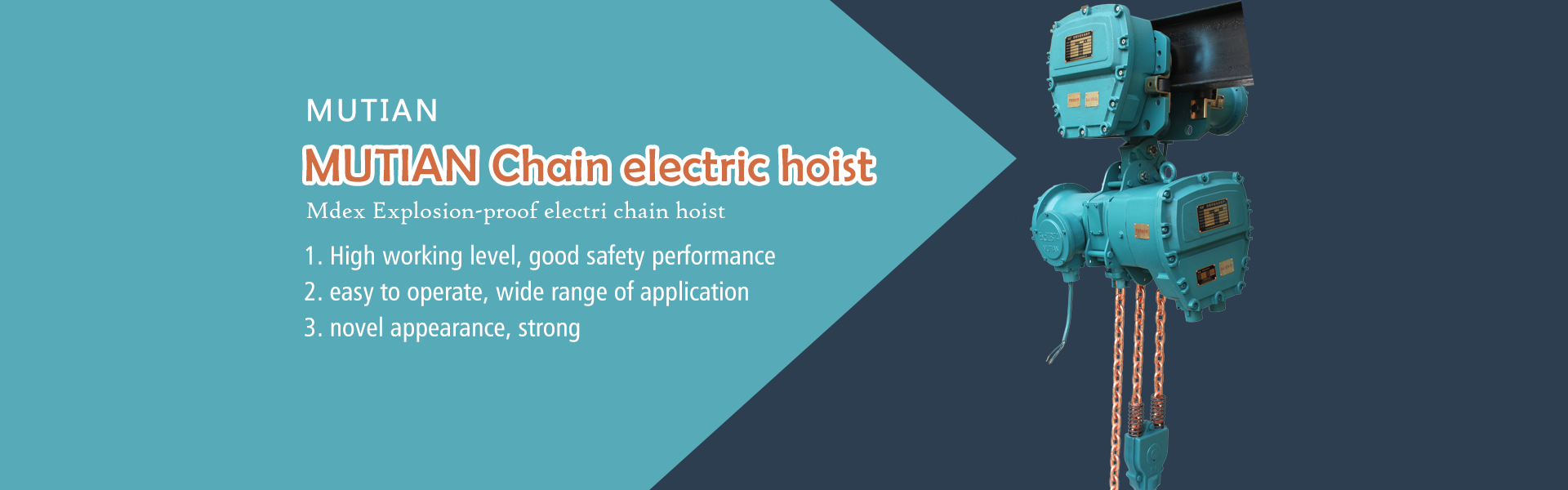
Explosion proof type: used in flammable and explosive environments such as petrochemicals and oil and gas extraction.
Anti corrosion type: suitable for clean workshops that require anti-corrosion in food processing, pharmaceuticals, and other industries.
Low clearance type: Optimized structural design for places with limited space, such as underground mines.
3、 Operating standards and safety guidelines
Pre operation inspection
Equipment inspection: Confirm that the steel wire rope is not broken or twisted, the hook anti detachment device is intact, and the brake is sensitive and reliable.
Electrical inspection: Test the functions of control buttons and limit switches, and check that the insulation layer of the power cord is not damaged.
Environmental inspection: Remove track obstacles, ensure that there are no personnel lingering in the work area, and that the ground is free of water or oil stains.
Safety requirements during operation
Overloading is strictly prohibited: the lifting weight shall not exceed 80% of the rated load (when using the JC40% heavy-duty working system, the rating shall be reduced).
Vertical lifting: Avoid diagonal pulling to prevent the steel wire rope from slipping out of the groove or the equipment from overturning; The center of gravity of the suspended object should be aligned with the center of the hook.
Smooth operation: Maintain a constant speed during lifting, lowering, or horizontal movement, and prohibit emergency stop and start; The height of the suspended object from the ground is ≤ 1.5 meters.
Personnel protection: Operators should wear safety helmets and non slip shoes, and are prohibited from staying or walking under suspended objects.
emergency response
Power outage or malfunction: Immediately release the button, cut off the power, hang warning signs, and prohibit unauthorized maintenance.
Wire rope jumping: Stop the operation and use professional tools to reset. It is strictly prohibited to directly move the wire rope by hand.
Loss of control of heavy objects: Use emergency stop buttons or limiters to brake, and if necessary, slowly release the load to unmanned areas.
Maintenance and Care
Daily maintenance: Clean the equipment every shift, check the lubrication of the steel wire rope, and tighten loose parts.
Regular maintenance: Check the sensitivity of the limit switch weekly, lubricate the gearbox and bearings monthly, and conduct a comprehensive inspection by a professional organization every year.
Shutdown management: After completing the task, raise the hook to a safe height (≥ 2 meters), cut off the power, and fill in the operation record.
4、 Typical application cases
Automobile manufacturers: use dual speed electric hoists (fast lifting of the vehicle body, slow precise docking of assembly lines).
Chemical warehouse: Explosion proof electric hoist is used to lift flammable chemical drums, and stainless steel lifting equipment is equipped to prevent sparks from being generated.
High rise building construction: Low clearance electric hoist lifts building materials in narrow spaces and achieves micro speed movement through variable frequency control.
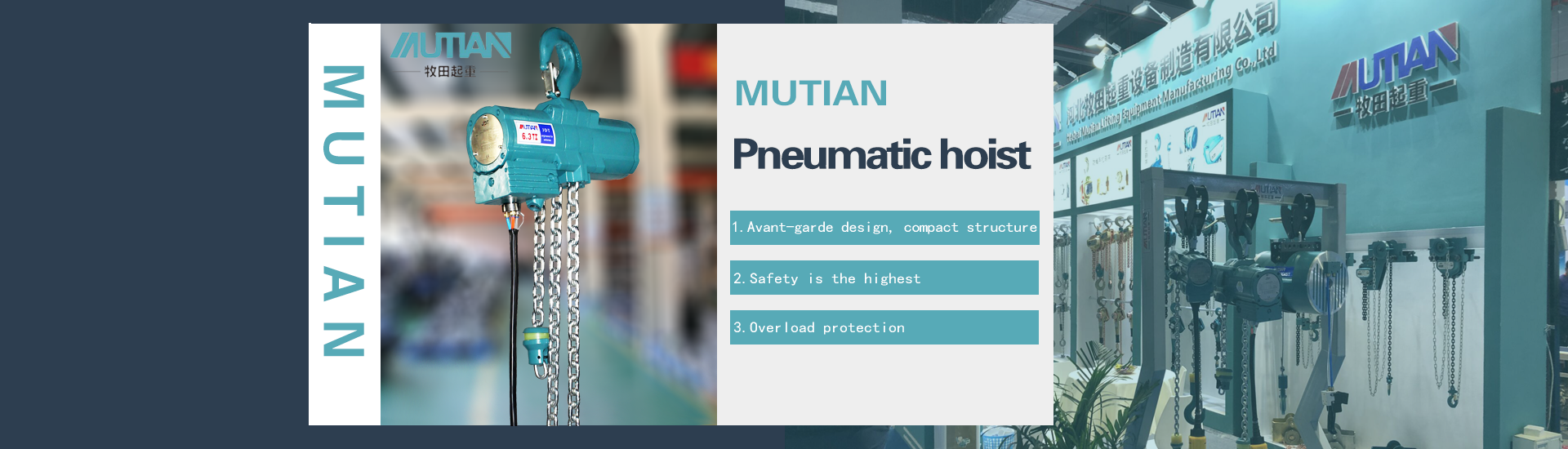
The main equipment produced by Hebei Makita: stage electric hoist, electric chian hoist, wire rope electric hoist,Hand chain hoist, lever hoist, pneumatic hoist and other lifting equipment
 phone
phone
 service
 message
 e-mail
