 中文版
中文版





releaseTime:2025-12-22 08:32:31source:Mu TiannumberOfPageViews:0
The operation and maintenance of manual push up forklifts (which can be understood as manually operated stacking and handling equipment, with some scenarios intersecting with the concept of small manual forklifts) need to revolve around core processes such as cleaning, fastening, lubrication, adjustment, inspection, and replacement of vulnerable parts. The following are the specific contents:
1、 Daily maintenance
cleaning work
Thoroughly remove dirt, soil, and debris from the surface of the equipment, especially from key parts such as the fork frame, door frame slide, generator and starter, battery electrode fork column, water tank, air filter, etc.
Cleaning work can reduce the wear and tear of mechanical components, lower the consumption of oil and materials, and prepare for subsequent inspections, reinforcement, adjustments, and lubrication.
Tightening inspection
Check the fastening condition of all parts, especially the fork support, lifting chain tightening screws, wheel screws, wheel fixing pins, brakes, steering gear screws and other key parts.
Ensure that all nuts and bolts are tightened to prevent safety hazards such as oil leakage and component detachment caused by looseness.
Steering gear inspection
Check the reliability and flexibility of the steering gear to ensure that the forklift can accurately respond to operating instructions during driving.
Leakage inspection
Focus on checking the leakage of various pipe joints, diesel tank, engine oil tank, brake pump, lifting cylinder, tilting cylinder, water tank, water pump, engine oil pan, torque converter, transmission, drive axle, main reducer, hydraulic steering gear, steering cylinder and other parts.
Timely identify and address leakage issues to prevent equipment failures and safety hazards caused by oil leaks.
Tire inspection
Check if the tire pressure has reached the specified value and confirm that the tire is not leaking.
Check for any damage to the tire contact surface and sides, as well as any deformation of the wheel rim, to ensure that the tire is in good condition.
Oil inspection
Check whether the brake fluid, water level, engine oil level, hydraulic oil, electrolyte and other fluids are within the specified range.
Timely add or replace oil to ensure the normal operation of the equipment.
Pedal inspection
Step on the brake pedal, micro pedal, clutch pedal, handbrake, etc., and check for any abnormal sluggishness or jamming.
Ensure that the pedal works properly and improve operational safety.
2、 Regular maintenance
first-level maintenance
Usually, it is carried out after the equipment has been running for a certain period of time (such as 100 hours or 150 hours).
In addition to daily maintenance items, it is also necessary to add checks on cylinder pressure or vacuum, check and adjust valve clearances, check whether the thermostat is working properly, check whether the multi way directional valve and various oil cylinders and gear pumps are working properly, check whether the transmission shifting is working properly, check and adjust the gap between the brake pads and brake drums of the hand and foot brakes, replace the oil in the oil pan and clean the oil filter and diesel filter element, check whether the generator and starter motor are installed firmly and the wiring heads are clean and firm, check whether the carbon brush and commutator are worn, check the tightness of the fan belt, check whether the wheel installation is firm and whether the tire pressure meets the requirements, and remove debris embedded in the tire surface.
secondary maintenance
Usually carried out after the device has been running for a longer cumulative time (such as 450 hours or 500 hours).
In addition to the first level maintenance items, it is also necessary to clean each fuel tank, filter screen, and pipeline and check for corrosion and cracking, clean the torque converter and gearbox and check for part wear and replace with new oil, disassemble and adjust and lubricate the front and rear wheels and perform half shaft rotation, clean the brake and adjust the gap between the brake drum and brake shoe friction plate, clean the steering gear and check the free rotation of the steering wheel, disassemble and clean the gear oil pump and check the wear of the gears, housing, and bearings, disassemble the multi way valve and check the gap between the valve stem and the valve body, check for damage and cracks in the steering joint, and check for the fit between the steering axle main pin and the steering joint. Disassemble and inspect the wear of the longitudinal and transverse tie rods and steering arm joints. Remove rust and paint the tires and rims, inspect the inner and outer tires, cushion belts, and rotate them, and inflate them according to regulations Check the connection and fastening of the hand brake components, adjust the working stroke of the hand brake rod and foot brake pedal, check the specific gravity of the battery and remove it for charging (if it does not meet the requirements), clean the water tank and oil radiator, check whether the shelves and frames are deformed, and remove the rollers and accessories for reliable fixation (if necessary, add welding firmly), remove and inspect the lifting cylinder, tilting cylinder, and steering cylinder, and replace worn seals, check various instrument sensors, fuses, and switches (adjust if necessary), and other items.
3、 Special maintenance
Maintenance after long-term disuse
For new forklifts or forklifts that have been out of service for a long time, within the first two weeks of use, for bearings that should be lubricated, when adding oil for lubrication, new oil should be used to squeeze out all the old oil and lubricate them twice or more.
At the same time, pay attention to removing dirt from the oil cap, oil plug, and oil nozzle to prevent dirt from falling into the interior of the mechanism; When using a grease gun to inject lubricant, it should be injected until the lubricant is squeezed out at the joint of each component; Seasonal lubricants (such as engine oil) should be replaced during summer or winter.
Reserve and replacement of vulnerable parts
For some vulnerable parts, such as seals, they should be stored in small quantities during operation.
In emergency situations, if the cause of the malfunction can be determined by oneself and vulnerable parts need to be replaced, it can be handled by oneself to reduce downtime.
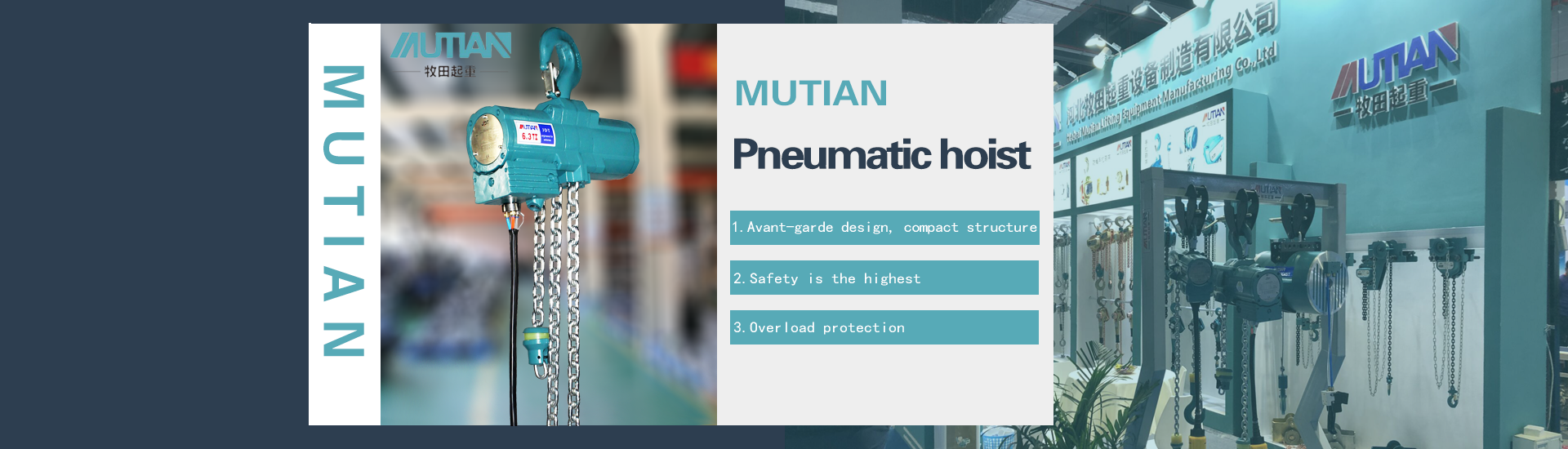
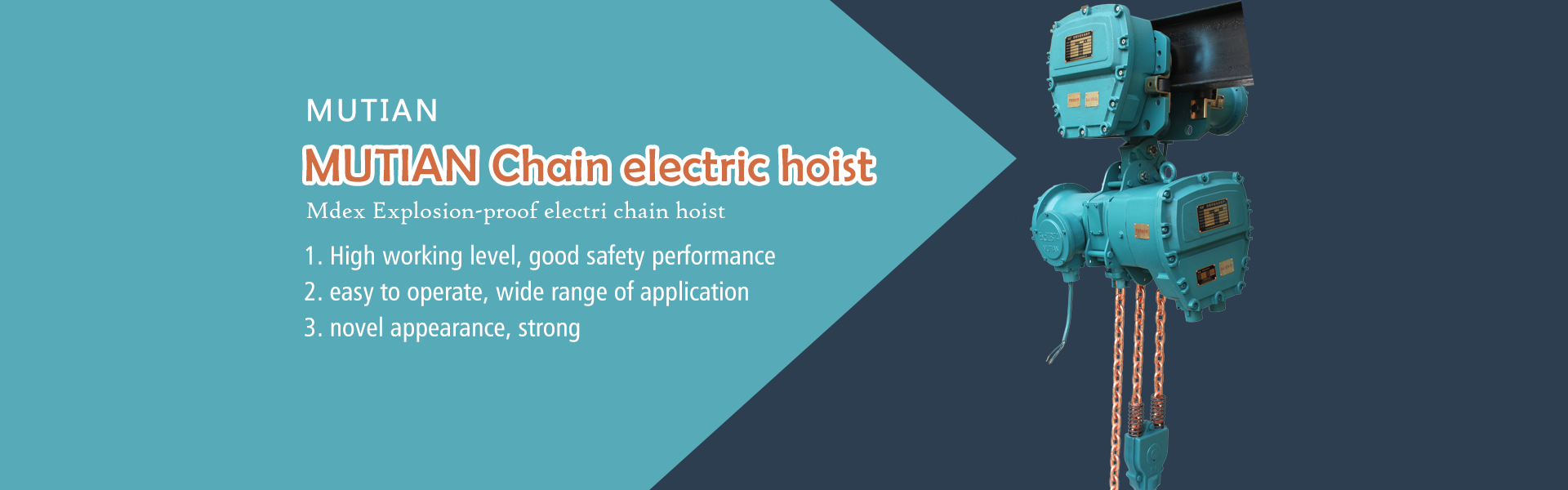
The main equipment produced by Hebei Makita: stage electric hoist, electric chian hoist, wire rope electric hoist,Hand chain hoist, lever hoist, pneumatic hoist and other lifting equipment
 phone
phone
 service
 message
 e-mail
