 中文版
中文版






releaseTime:2025-09-26 09:13:34source:Mu TiannumberOfPageViews:0
Targeted preventive measures should be taken for hydraulic winches at different stages of use, including installation and commissioning, daily operation, long-term parking, and regular maintenance, as follows:
1、 Installation and debugging phase
Base stability and protection
The base should be stable and sturdy, and a reliable operating shed should be set up to ensure that operators can clearly observe the commanding personnel and lifting objects.
Protective caps and covers should be installed on rotating parts such as exposed shafts, tape, gears, and drums to prevent twisting accidents.
Trial operation inspection
After installation, conduct a no-load test run to check the stability of the equipment, the connection of mechanical components, the integrity of braking and safety protection equipment, and the insulation of electrical circuits.
Confirm that the visual conditions of the venue meet the requirements and that the trial operation is qualified before it can be put into use.
Wire rope management
The steel wire rope should be led out from below the drum, and the direction of the rope should be parallel to the ground as much as possible. The middle position of the drum should be perpendicular to the centerline of the guide pulley.
The steel wire ropes on the drum should be arranged neatly, avoiding disorderly layers or being higher than the sides, to prevent skipping or slipping.
When the wire rope breaks more than 10%, it must be replaced. The safety factor of the new rope should be greater than 5 and the quality should be qualified.
2、 Daily operation phase
Operating Specifications
Overloading is prohibited, and direct lifting of high-temperature or angular objects is not allowed (protective plates must be added).
When lifting heavy objects, the operation should be gentle and stable, avoiding raising or rapidly lowering, and avoiding emergency braking in the air as much as possible.
Operators need to concentrate, see signals clearly, obey commands, and are not allowed to leave their posts during operation.
Load and speed control
Strictly follow the rated load and rated closing times per hour (120 times), and prohibit use in environments where it is not allowed.
When the speed significantly decreases under load, check the viscosity of the hydraulic oil, balance valve, and oil replenishment to prevent the motor from sucking out or the load from slipping uncontrollably.
exception handling
If there are abnormal sounds, brake failure, or excessive temperature rise of the reducer bearings during operation, the machine should be stopped immediately for inspection and troubleshooting.
Prohibit working with "illness" to avoid mechanical or personal accidents.
3、 Long term parking phase
Shutdown operation
When resting or experiencing a power outage, objects or hanging cages should be lowered to the ground. In the event of a power outage, the power should be cut off to prevent heavy objects from being suspended in the air.
When parked for a long time, each component should be treated separately according to three categories: scrap, repair, and usable, to avoid small parts causing major problems.
Environmental protection
The equipment should be stored in a dry place, and all components should be protected against moisture and corrosion to prevent aging or rusting.
When used outdoors, a sunshade and rain shelter should be installed above, but it should not obstruct operation or visibility.
4、 Regular maintenance phase
Graded maintenance
Daily maintenance: clean equipment, check wiring, lubricate transmission devices, observe the status of brakes and clutches.
First level maintenance (after 100-300 hours of operation): Thoroughly clean the machinery, re lubricate, inspect and adjust the brakes, and replace the gearbox lubricating oil.
Second level maintenance (after 600 hours of operation): measure the insulation resistance of the motor, dismantle and inspect the gearbox and brake, and check the wear of the steel wire rope and drum.
Key component inspection
Hydraulic pumps, motors, valves, and other components need to be regularly inspected to ensure that there are no leaks, abnormal noises, or overheating.
Electrical components (such as distribution boxes and control cabinets) need to be checked for overheating, rust, and dust accumulation, and the contacts should be clean and undamaged.
Overhaul and improvement
When the machine is idle or used infrequently each year, disassemble the entire machine for thorough maintenance.
Replace worn bearings and other vulnerable parts, analyze operational data to optimize construction plans and resource allocation.
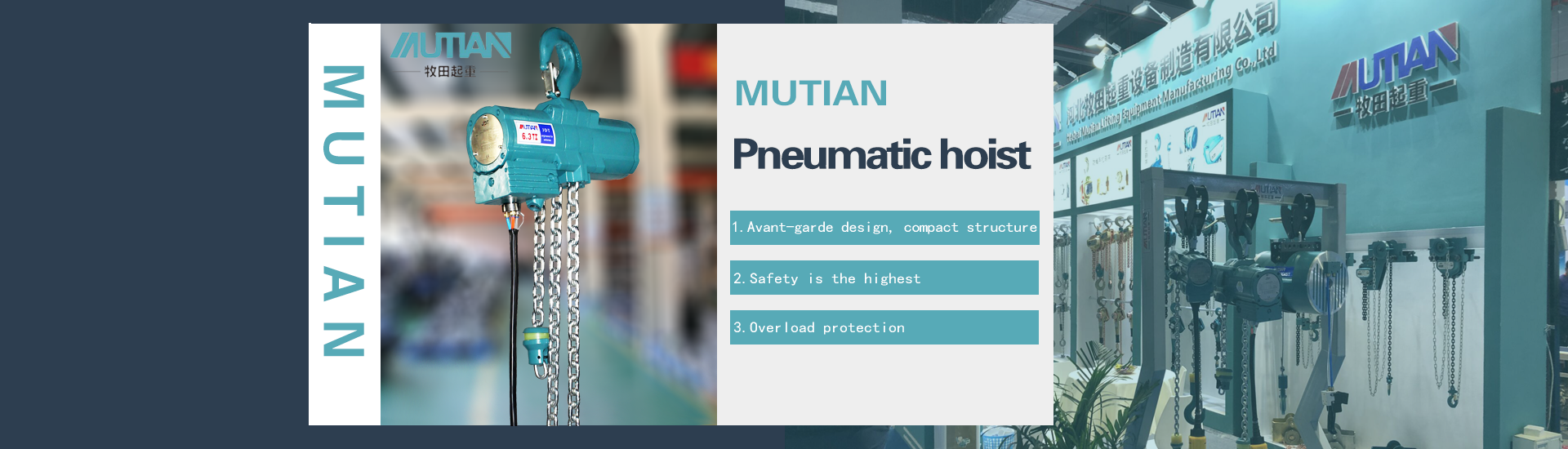
The main equipment produced by Hebei Makita: stage electric hoist, electric chian hoist, wire rope electric hoist,Hand chain hoist, lever hoist, pneumatic hoist and other lifting equipment
 phone
phone
 service
 message
 e-mail
