 中文版
中文版





releaseTime:2025-11-20 08:46:07source:Mu TiannumberOfPageViews:0
When operating a chain hoist (manual or electric), preventive measures should be taken from multiple aspects such as equipment inspection, operating standards, environmental management, and personnel qualifications to ensure operational safety. The following are specific precautions:
1、 Comprehensive inspection before use
Equipment body inspection
Appearance integrity: Check for cracks, deformation, or severe rust on the gourd shell to ensure that the protective cover, hook, chain, and other components are intact and undamaged.
Chain/wire rope: Confirm that the chain is not broken, twisted, or severely worn (if the total number of broken wires reaches 10% or the diameter decreases by 7%, it needs to be scrapped); The end fixation of the steel wire rope needs to be checked for firmness, looseness or broken wires.
Braking device: Test brake sensitivity to ensure that heavy objects can reliably stop during lifting or lowering, avoiding accidental falls.
Limit device: The electric hoist needs to check whether the upper and lower limit devices are effective to prevent the chain from over winding or slipping out of the groove.
Electrical system (electric hoist): Check the insulation performance of motors, control buttons, and cables to ensure there is no risk of leakage or short circuit; The grounding wire needs to be reliably connected.
Inspection of lifting equipment and accessories
Hook: Check if the opening exceeds 15% of the original size, and if there are any cracks, deformations, or wear on the surface; The safety buckle (anti unhooking device) should be able to close normally.
Lifting rings/shackles: Confirm that the load-bearing capacity matches the lifted object without deformation or cracks.
Balance beam/pulley system: Check whether the connection parts are firm, whether the rotation is flexible, and avoid jamming or unbalanced load.
Environmental adaptability inspection
Homework space: Ensure that there are no obstacles (such as pipelines, equipment, personnel) within the lifting range to avoid collision or compression risks.
Ground conditions: Check if the ground bearing capacity is sufficient to prevent equipment from overturning; Mobile gourds should be placed on a level surface to avoid tipping over.
Weather factors: When encountering strong wind above level 6, rainstorm, dense fog or thunder and lightning weather, outdoor operation is prohibited; Adjust the operation time and strengthen equipment lubrication in high temperature (≥ 35 ℃) or low temperature (≤ -20 ℃) environments.
2、 Operating standards and skills
Overloading and diagonal pulling are strictly prohibited
Overload restriction: Strictly operate according to the rated load indicated on the equipment, and prohibit overloading (such as lifting 1.2 tons instead of 1 ton).
Vertical lifting: Chain hoists must be used to lift heavy objects vertically, and diagonal pulling and lifting are prohibited. Otherwise, it may cause uneven force on the chain, shaking of heavy objects, and even equipment overturning or chain breakage.
Trial lifting and slow operation
Trial lifting procedure: Before lifting, lift the heavy object 200-300mm off the ground, stay for 10-30 seconds, check the force on the lifting device, equipment stability, and braking performance, and confirm that there are no abnormalities before slowly lifting.
Smooth operation: Lifting, lowering, and turning should be smooth, and sudden acceleration, stop, or sudden directional changes are prohibited; Electric hoists should avoid frequent tapping operations to prevent motor overheating.
Multi gourd collaborative operation
Synchronous control: When using multiple hoists to lift the same heavy object at the same time, it is necessary to ensure that the models and specifications of each hoist are consistent, and coordinate the actions through synchronous devices or dedicated personnel command to avoid overloading or overturning.
Load distribution: Based on the weight and shape of the heavy object, allocate the bearing capacity of each hoist reasonably to ensure even force distribution.
3、 Security monitoring during operation
Real time observation of device status
Operators need to closely monitor the operation of the chain/wire rope, and immediately stop the operation and inspect if any jumping, jamming, or abnormal noise is found.
Pay attention to the suspension status of heavy objects and avoid prolonged suspension; When interrupting work, it is necessary to lower heavy objects to the ground or take temporary fixing measures (such as using jacks or sleepers for support).
Prevent personnel from entering hazardous areas
It is strictly prohibited to stand under heavy objects and within the rotation range of the crane arm; Operators need to maintain a safe distance from heavy objects to prevent collision or compression.
When the electric hoist is running, it is forbidden to touch the control buttons or cables to prevent accidental operation or electric shock.
Emergency response measures
Develop emergency plans and clarify response measures (such as emergency braking and evacuation routes) in case of unexpected situations (such as chain breakage or equipment loss of control).
Equip necessary emergency tools (such as spare chains, jacks, fire extinguishers) and regularly practice emergency procedures.
4、 Maintenance and upkeep requirements
Regular maintenance plan
Daily inspection: Check key components such as chains, hooks, and braking devices before each use, and record any abnormal situations.
Monthly maintenance: tighten bolts, lubricate gears and bearings, clean equipment dust; Check the insulation performance of the electrical system.
Annual maintenance: Entrust a professional organization to conduct a comprehensive inspection of the equipment, replace worn parts (such as chains and brake pads), and ensure that the equipment meets safety standards.
Storage and Preservation
When not in use for a long time, retract the chain and apply anti rust oil, and store it in a dry and ventilated place; Electric hoists need to be powered off to avoid moisture or corrosion.
Avoid exposing equipment to extreme environments such as high temperatures and highly corrosive gases to prevent performance degradation.
5、 Personnel Qualification and Training
Operator Qualification
Operators must hold relevant operating certificates (such as special equipment operator certificates) and be familiar with the operating principles and safety regulations of the equipment.
Unauthorized personnel are prohibited from operating or directing lifting operations.
Safety training and drills
Regularly organize safety training, covering equipment operation, hazard identification, emergency response, etc; Strengthen security awareness through case analysis.
Conduct simulation exercises (such as trial lifting, troubleshooting, emergency evacuation) to enhance the emergency response capabilities of operators.
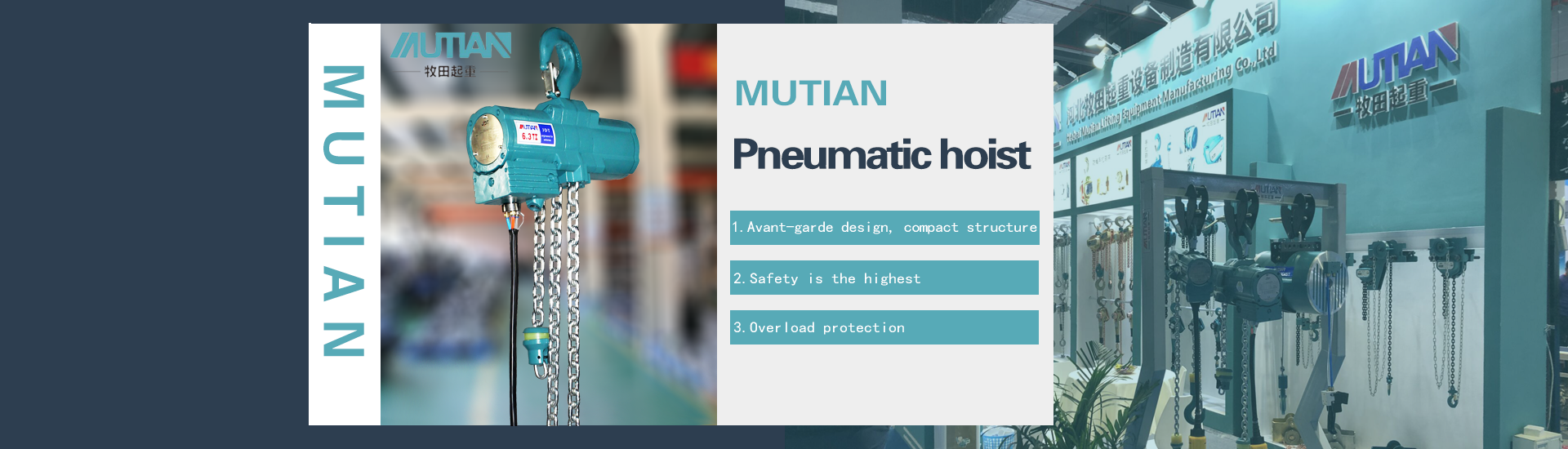
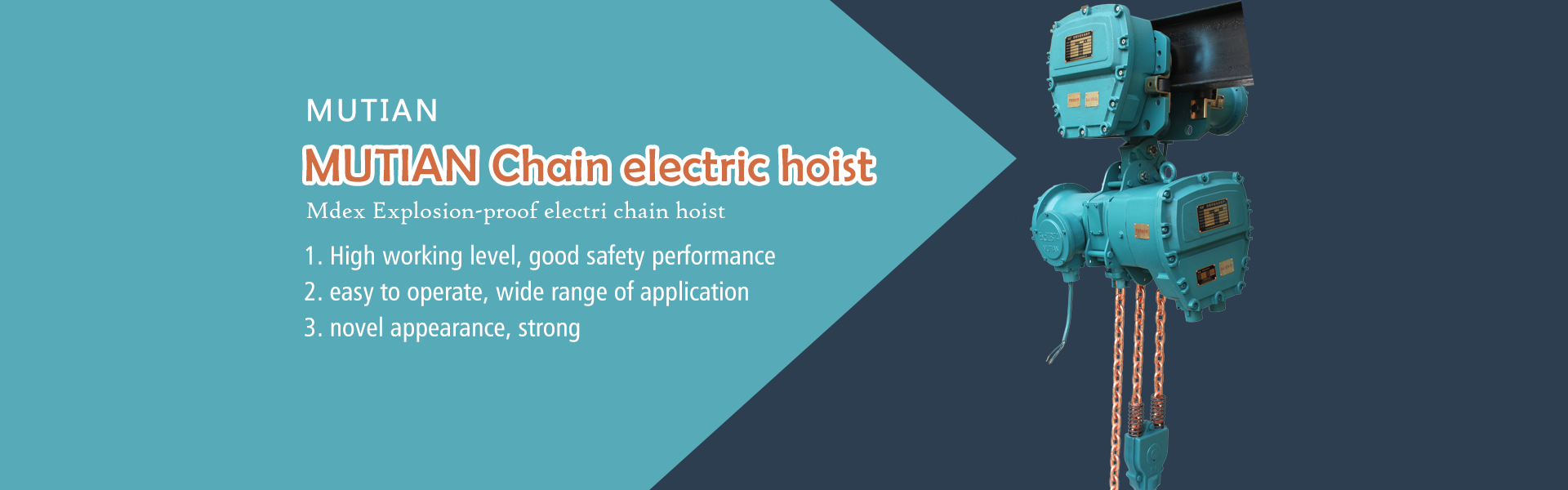
The main equipment produced by Hebei Makita: stage electric hoist, electric chian hoist, wire rope electric hoist,Hand chain hoist, lever hoist, pneumatic hoist and other lifting equipment
 phone
phone
 service
 message
 e-mail
