 中文版
中文版





releaseTime:2025-12-30 09:07:05source:Mu TiannumberOfPageViews:0
The lever chain hoist, with its unique mechanical design and mechanics principles, has demonstrated six core advantages in industrial, construction, logistics and other fields, which can be refined into 20 specific manifestations, supplemented by practical scenarios to verify its value:
1、 Mechanical efficiency and force amplification: scientific design with small gains
The principle of lever balance: Through the lever effect of "power arm x power=resistance arm x resistance", the input force is multiplied. For example, when the length of the power arm is three times that of the resistance arm, only one-third of the force is needed to balance the same load, significantly reducing the demand for manpower or power input. In ship maintenance, workers can lift equipment weighing several tons through short lever operation, reducing physical exertion.
Mechanical benefits of pulley system: Multi stage pulley system can further reduce the required tension, for example, n-section load-bearing rope can reduce the tension to 1/n of the weight of the object. Combined with lever system, a dual force amplification effect is formed. In high-rise building glass installation, by using 4-section pulley system+2:1 lever arm, only 50kg force is needed to lift 200kg of glass and improve work efficiency.
2、 Precise control and safety self-locking: the core guarantee of operational safety
Gear set self-locking and braking system: Ratchet, worm gear and other gear sets achieve precise control of lifting and lowering, coupled with normally closed brakes (automatically locked in case of power failure), to prevent heavy objects from accidentally falling. In the installation of power equipment, the brake can ensure that the transformer is stable and does not slide during the lifting process, avoiding equipment damage.
Clutch and torque limitation: The clutch controls the engagement and disengagement of power transmission, achieving precise operation; The torque limiter monitors the load in real-time and blocks the output and alarms when it exceeds the rated value. For example, in steel structure hoisting, when the load exceeds 10% of the rated value, the torque limiter immediately triggers a shutdown to avoid structural overload.
3、 Space adaptability and homework flexibility: full scene coverage from narrow to wide
Dynamic adjustment of rotation radius: Adapt to different work scenarios through arm extension, elevation angle changes, or hydraulic system adjustments. In the installation of warehouse shelves, operations can be carried out in narrow passages by reducing the rotation radius (such as adjusting from 5 meters to 3 meters); At the port terminal, the rotation radius can be expanded to 15 meters to cover a larger operating area.
The three-point arc principle: The equipment lifting point, base center, and foundation center are located on the same arc to ensure the stability of the center of gravity during rotating lifting. In bridge construction, this principle can achieve precise lifting of the beam body, with a deviation controlled within 5mm, improving lifting accuracy.
4、 Structural Strength and Durability: Reliable Support for High Load Operations
Application of high-strength materials: using high-strength steel or alloy materials, with a tensile strength of ≥ 800MPa, to ensure structural rigidity and durability. In the hoisting of mining equipment, the chain can withstand repeated impact loads and has a service life of over 5 years.
Modular design: For example, the arm length of a crawler crane can be extended to 52 meters (such as the QUY50 model), and multiple standard arms can be connected through pin shafts to enhance adaptability; Welding, bolt connection or pin connection shall comply with engineering standards to avoid stress concentration or fatigue failure. In the installation of wind power equipment, modular arm supports can be quickly assembled to meet the needs of different wind turbine models.
5、 Cost effectiveness and maintenance convenience: an economically efficient long-life solution
Low maintenance cost: Compared to electric or hydraulic systems, lever chain cranes have a relatively simple structure and lower maintenance costs. For example, the lubrication cycle of the gear set is 6 months, while the electric hoist requires monthly inspection of the motor, reducing long-term usage costs by more than 30%.
Easy to operate: driven by manpower or simple power, low operating threshold, and low training cost. In the logistics warehouse, new employees can operate independently after 2 hours of training, reducing labor costs.
6、 Safety Standards and Compliance: Reliable Assurance of International Certification
Multiple safety devices: overload limiter, torque limiter, wind speed sensor, etc. monitor and warn potential risks in real time, comply with international/domestic safety standards (such as ISO 4306, GB/T 3811), and pass CE, UL and other certifications. In the hoisting of chemical equipment, explosion-proof motors and anti-corrosion coatings ensure safe operation in flammable and explosive environments.
Stability verification: By designing counterweights and optimizing pivot positions, ensure that the total torque does not exceed the safety threshold. For example, when the counterweight is 4 meters away from the fulcrum and weighs 3 tons, the maximum lifting amplitude of 10 meters can estimate the load capacity to prevent overturning accidents.
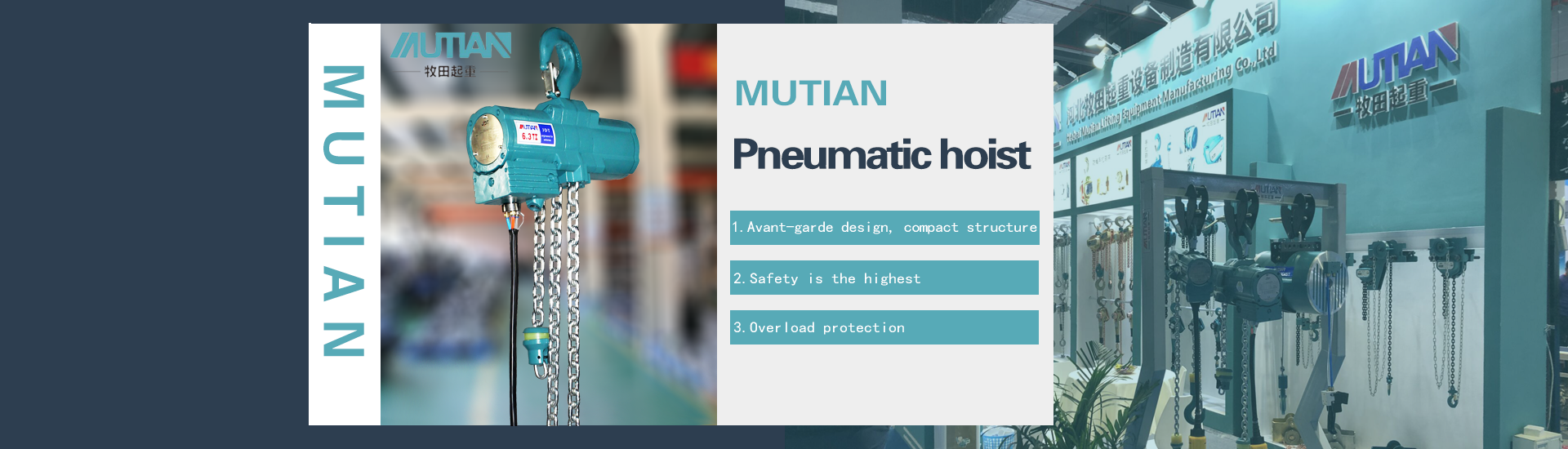
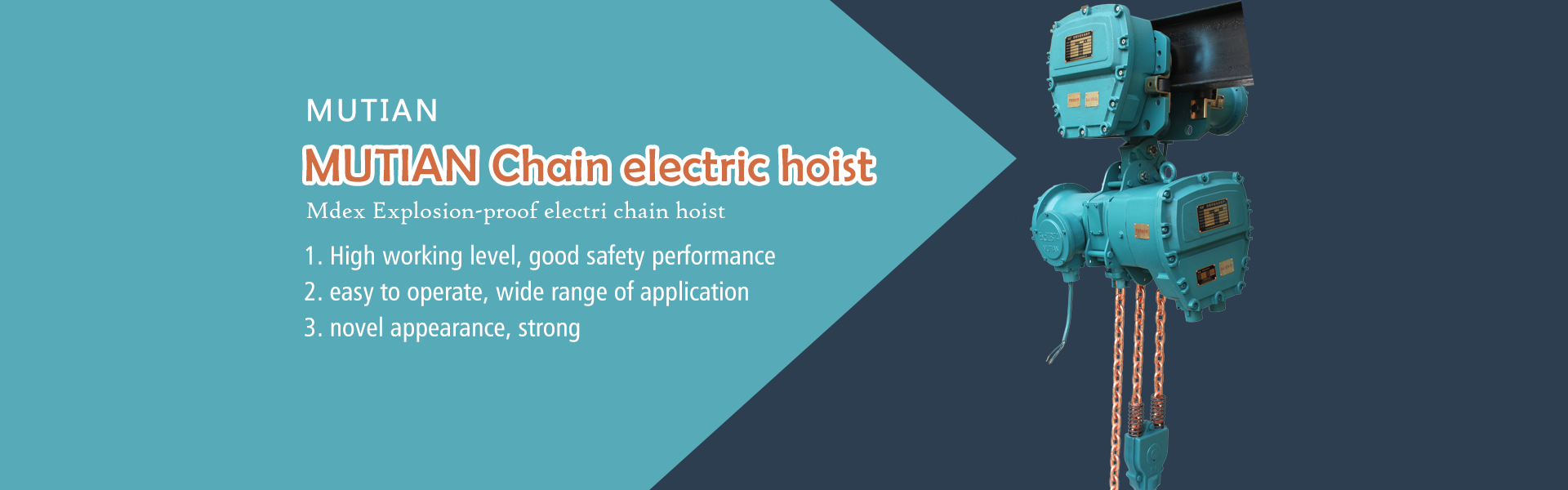
The main equipment produced by Hebei Makita: stage electric hoist, electric chian hoist, wire rope electric hoist,Hand chain hoist, lever hoist, pneumatic hoist and other lifting equipment
 phone
phone
 service
 message
 e-mail
