 中文版
中文版




releaseTime:2025-12-30 09:10:59source:Mu TiannumberOfPageViews:0
When using a lever chain crane, it is necessary to comprehensively consider five dimensions: safe operation, load management, environmental adaptation, maintenance, and compliance standards. Specific attention should be paid to the following 20 key issues, which can significantly improve operational safety and efficiency when combined with practical scenarios:
1、 Safety operation standards
Comprehensive inspection before operation
Confirm that the chain is not broken, stuck or severely worn (if the chain link wear exceeds 10%, it needs to be replaced); The gear set (such as ratchet, worm) is well lubricated and has no abnormal noise or slipping.
Check if the brake is sensitive: Normally closed brakes should automatically lock when powered off, and if the brake wheel/friction plate wear exceeds 1-2mm, it should be replaced immediately.
Verify that safety devices such as limit switches, torque limiters, and overload alarms are functioning properly to avoid accidents caused by device failure.
Standardize operational procedures
Overloading is strictly prohibited: The load must not exceed the rated value. When lifting multiple machines, load distribution must be coordinated to avoid local overloading.
Avoid sudden stop and start: Sudden start or stop may cause the chain to break due to impact, and slow acceleration/deceleration should be applied.
Prohibit diagonal pulling and hard pulling: The chain should be subjected to vertical force, and a diagonal angle exceeding 5 ° may cause the chain to derail or break.
2、 Load and stability management
Accurately calculate the rotation radius
The rotation radius (horizontal distance from the center of the hook to the center of rotation) needs to be dynamically adjusted: the radius should be reduced in narrow spaces (such as 3 meters), and expanded to 15 meters in open areas, but it is necessary to ensure that the total torque (G_load × L_load) does not exceed the counterweight torque (G_counterweight × L_counterweight).
The weight and position of the counterweight need to be strictly checked: for example, when the counterweight is 4 meters away from the fulcrum and weighs 3 tons, the maximum lifting amplitude of 10 meters needs to verify the safety threshold of the total torque to avoid overturning.
The three-point arc principle
The lifting point of the equipment, the center of the base, and the center of the foundation must be located on the same arc to ensure the stability of the center of gravity during rotating lifting, with a deviation controlled within 5mm, and to improve lifting accuracy.
3、 Environmental adaptability
Temperature and humidity control
Anticoagulant hydraulic oil should be used in low-temperature environments (such as below -20 ℃) to avoid oil solidification; High temperature environments require enhanced heat dissipation to prevent motor overheating.
In humid or corrosive environments (such as chemical and offshore platforms), anti-corrosion coatings and rust proof chains should be used, and the corrosion of metal components should be regularly inspected.
Ground support and stability
The ground should be flat and solid, and the supporting legs, rollers, or tracks should be in full contact with the ground to avoid local suspension and overturning.
Soft soil foundation requires the laying of steel plates or roadbed boxes to expand the effective support area and enhance stability.
4、 Key points of maintenance and upkeep
Regular lubrication and inspection
Chains, gear sets, and pulley sets need to be regularly coated with lithium based grease to reduce wear and tear; The lubrication cycle is adjusted according to the frequency of use (such as lubricating every 3 months for high-frequency use).
Check whether the bolts, pins, and other connecting components are loose, and tighten or replace damaged parts in a timely manner.
Key component replacement standards
The radial wear of the pulley groove reaches 1/4 of the rope diameter and needs to be replaced; Brake wheel wear exceeding 1-2mm or rim thickness wear exceeding 40% requires immediate replacement.
The tensile strength of the chain should be ≥ 800MPa, and if the wear between the chain links exceeds 10%, the entire chain should be replaced to avoid the risk of local fracture.
5、 Compliance standards and emergency response
Comply with international/domestic standards
It must comply with standards such as ISO 4306 and GB/T 3811, and pass certifications such as CE and UL to ensure compliance in design, manufacturing, and testing processes.
Operators need to hold certificates, receive professional training, and be familiar with equipment performance and emergency response procedures.
Emergency response measures
In case of sudden situations such as chain jamming or brake failure, immediately press the emergency stop button, cut off the power supply, and evacuate surrounding personnel.
Regularly organize emergency drills to simulate scenarios such as overloading and chain breakage, and enhance the emergency response capabilities of operators.
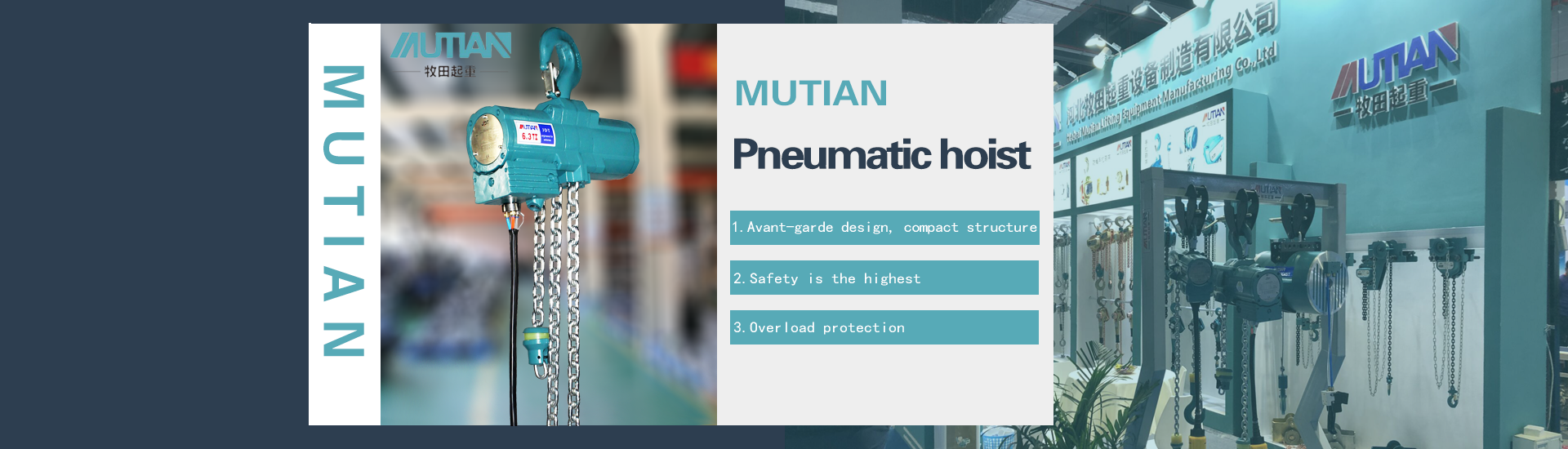
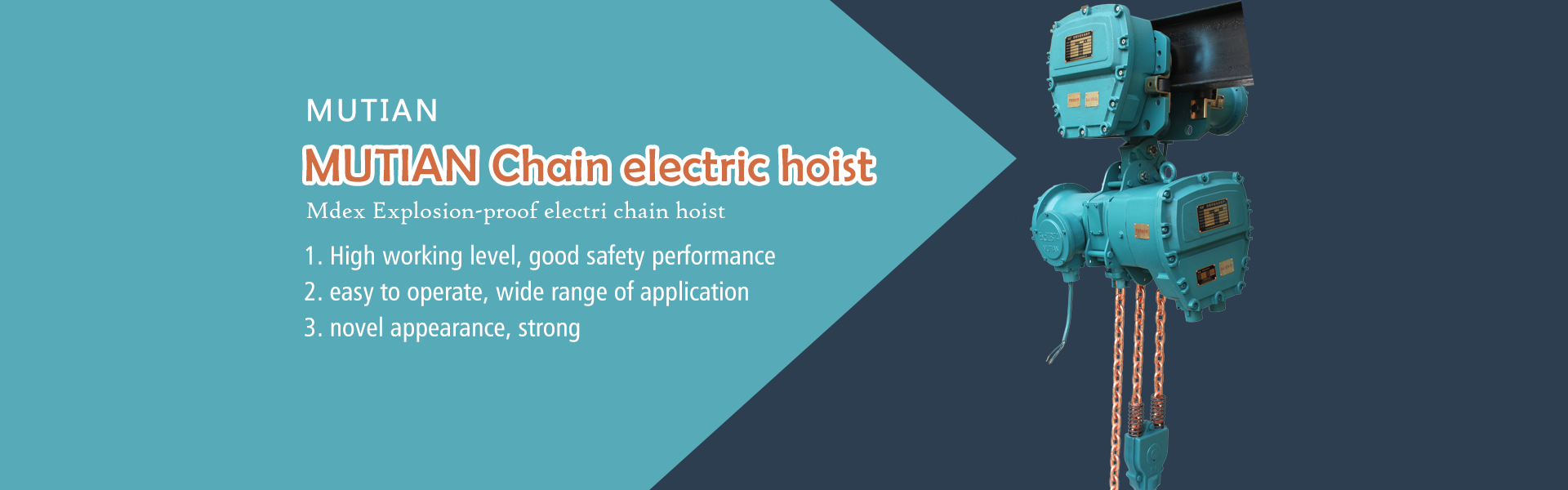
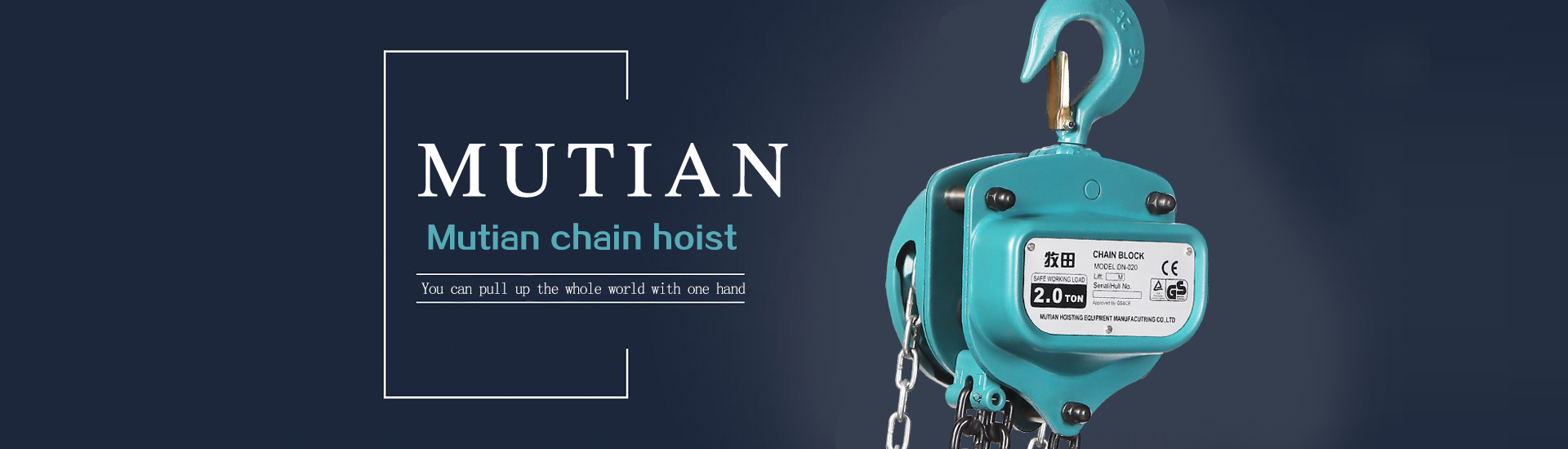
The main equipment produced by Hebei Makita: stage electric hoist, electric chian hoist, wire rope electric hoist,Hand chain hoist, lever hoist, pneumatic hoist and other lifting equipment
 phone
phone
 service
 message
 e-mail
