 中文版
中文版





releaseTime:2026-01-13 08:53:55source:Mu TiannumberOfPageViews:0
A chain hoist is a mechanical lifting device designed to lift, lower, or pull heavy loads vertically with minimal effort, leveraging mechanical advantage through gears and chains. Below is a detailed breakdown of its concept, components, operation, and applications:
1. Core Definition & Purpose
What it is: A chain hoist (also called a chain block, manual hoist, or electric hoist) uses a system of gears, chains, and pulleys to amplify human or motor-generated force, enabling the lifting of loads that exceed manual capability.
Primary Use: Vertical lifting in industrial, construction, manufacturing, and maintenance settings. It can also pull or position loads horizontally/angled (via lever hoists or specialized setups).
2. Key Components
Load Chain: High-tensile alloy steel chain that directly bears the load. Often plated or stainless steel for corrosion resistance.
Hand Chain (Manual Hoist): Pulled by the operator to actuate the gears; does not bear the load. Electric hoists replace this with a motor.
Gear System: Pinion gears engage the hand chain, while reduction gears multiply force (e.g., a 12:1 ratio means 12x force amplification).
Lift Wheel/Drum: Winds the load chain to lift the load.
Brake System: Automatically engages to lock the gears and prevent load slippage (friction-based, electromagnetic, or dynamic brakes).
Hooks & Latches: Robust hooks with safety latches to secure the load; designed to deform under overload (rather than snap) for safety.
3. Working Principle
Mechanical Advantage: The gear system reduces the input force required. For example, pulling 24 links of hand chain (via a 24-tooth gear driving a 20-tooth gear) lifts the load by 2 links (12:1 advantage).
Braking Mechanism: Engages when lifting stops, using friction or electromagnetic forces to hold the load.
Vertical Lifting: Designed primarily for vertical lifts; angled/horizontal lifting requires lever hoists or trolley mounts.
4. Types of Chain Hoists
Manual Chain Hoist: Hand-operated via hand chain; ideal for stationary, low-frequency lifting (e.g., engine blocks in auto shops).
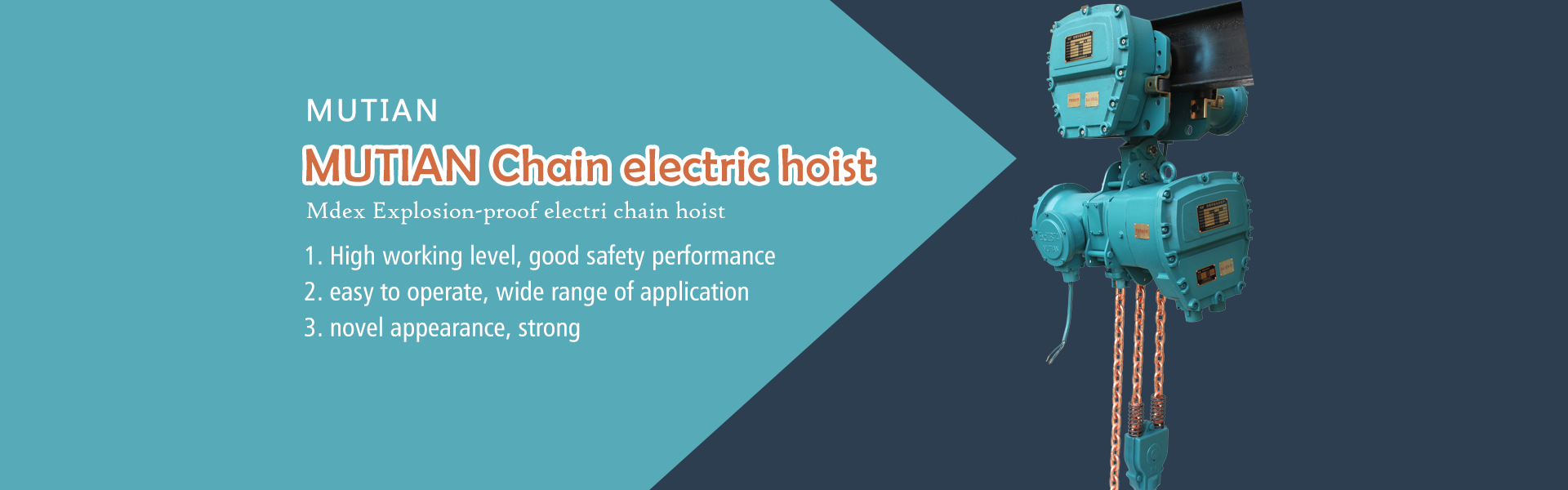
Electric Chain Hoist: Motor-driven with pendant/remote controls; suited for repetitive, high-duty-cycle tasks (e.g., assembly lines).
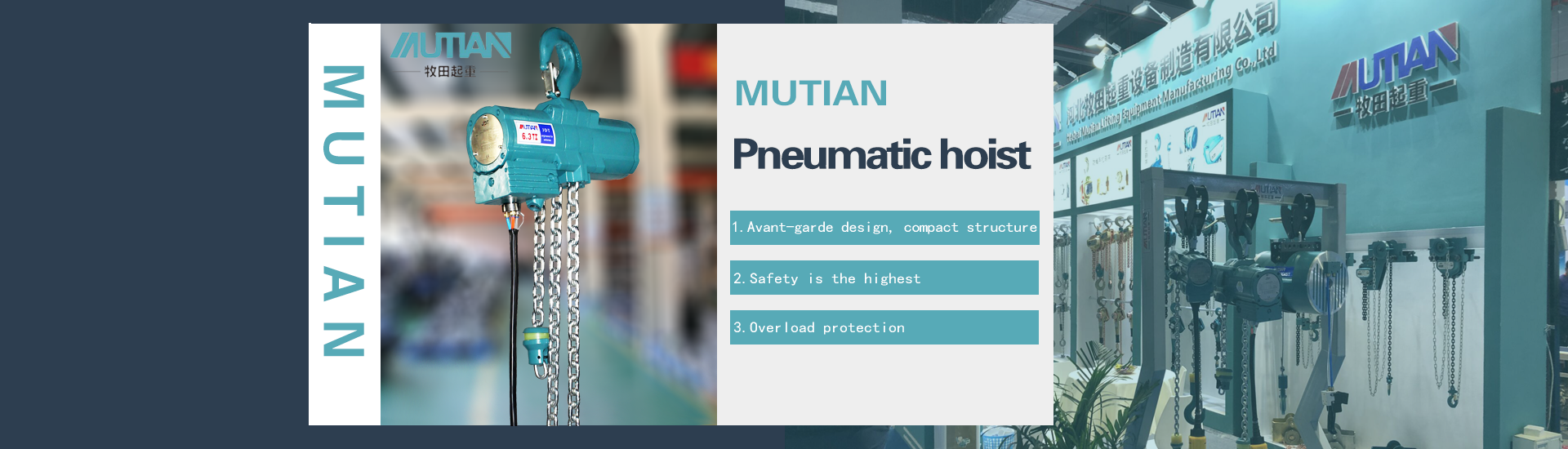
Pneumatic/Hydraulic Hoists: Used in hazardous/explosive environments or for ultra-heavy loads.
Lever Hoist: Compact, portable, and capable of multi-directional lifting/pulling (vertical, horizontal, angled).
5. Applications
Industrial: Steel mills, paper mills, shipyards, slaughterhouses, and renewable energy installations.
Construction & Maintenance: Lifting machinery, equipment, or materials on sites.
Entertainment: Theaters, film sets, and live events (compliant with ANSI E1.6-3 standards).
Ancillary Use: Paired with beam clamps, shackles, or slings for load connection; used below-the-hook on cranes for precise adjustments.
6. Safety Features & Standards
Safety Standards: Compliance with ANSI E1.6-3 (entertainment industry), OSHA, and ISO guidelines.
Critical Safety Practices:
Never exceed rated capacity (safety factor typically 4:1).
Inspect before use (check chain wear, hook integrity, brake responsiveness).
Lift vertically to avoid dangerous side loads.
Use appropriate mounting (fixed point or trolley for horizontal movement).
Follow manufacturer instructions for operation and maintenance.
Design Safeguards: Double pawl systems, asbestos-free friction discs, overload protection, and emergency stop controls (electric models).
7. Mathematical Basis
The mechanical advantage is derived from gear ratios. For instance, a gear with 24 teeth driving a 20-tooth gear yields a 12:1 advantage, meaning the operator needs only 1/12th of the load’s weight to lift it.
8. Additional Considerations
Portability & Mounting: Manual hoists are often fixed, while electric models may be portable or mounted on trolleys for movement.
Environmental Adaptation: Stainless steel chains for corrosive/food-grade environments; custom lift heights for tight spaces.
Duty Cycle: Electric hoists have rated duty cycles (e.g., H4 for frequent use), whereas manual hoists are limited by operator fatigue.
The main equipment produced by Hebei Makita: stage electric hoist, electric chian hoist, wire rope electric hoist,Hand chain hoist, lever hoist, pneumatic hoist and other lifting equipment
 phone
phone
 service
 message
 e-mail
