 中文版
中文版




releaseTime:2026-01-07 09:45:54source:Mu TiannumberOfPageViews:0
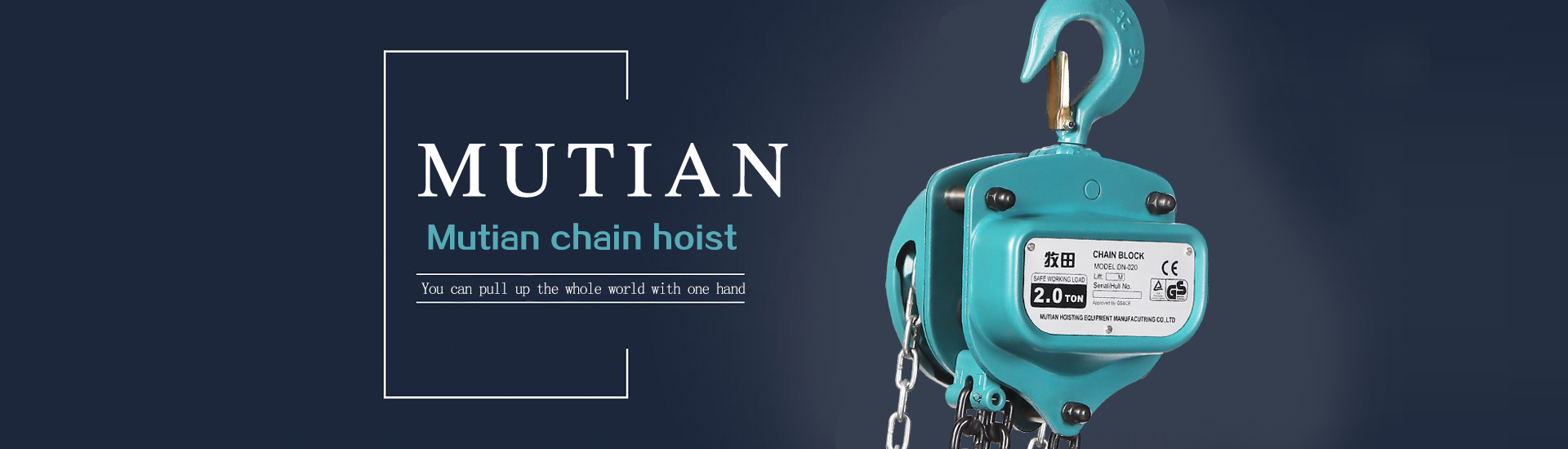
Choosing a lever chain hoist (hand pulled hoist) requires a comprehensive consideration of six core dimensions: rated load matching, brake system reliability, chain and gear quality, environmental adaptability, maintenance convenience, and safety certification. The specific selection points are as follows:
1. Matching rated load with usage scenario
Accurate matching requirements: Select the hoist model based on the actual lifting weight, and overloading is strictly prohibited (overloading by more than 10% will significantly increase the risk of chain breakage and hook deformation). For example, 5-ton class hoists are suitable for 4-5 ton heavy objects. If frequent lifting of heavy objects close to the ultimate load is required, it is recommended to choose a higher grade model (such as 6-ton class) to leave a safety margin.
Dynamic load consideration: If there is an impact load (such as sudden falling of heavy objects or pulling of chains), an additional evaluation of the dynamic load factor is required. It is usually recommended to choose a hoist with a rated load of 1.5-2 times and equipped with a safety rope or buffer device.
2. Performance verification of braking system
Dual brake configuration priority: High quality hoists are usually equipped with a main brake (such as a friction pad brake) and an auxiliary brake (such as a ratchet and pawl mechanism). The main brake provides basic braking force, while the auxiliary brake locks in emergency mode when the main brake fails to prevent heavy objects from sliding down.
Braking performance test: When purchasing, you can request on-site testing of the braking sliding distance (when the chain is tightened and released under no load, the sliding distance ≤ 50mm is qualified), or refer to third-party testing reports (such as CMA/CNAS certified 1.25 times static load test and 1.1 times dynamic test data).
3. Quality assessment of chains and gears
Chain material and process: High strength alloy steel (such as FEC G80 grade) chains are preferred, and the surface is galvanized or nickel hardened for corrosion resistance and wear resistance; Check whether the chain links are uniform and whether the clearance between the pin shaft and the roller is appropriate (loose links can easily cause the chain to fall off, and tight links can increase transmission resistance).
Gear design: Multi stage gear reduction and torque increase design (such as two-stage spur gears and planetary gears), with a transmission ratio of ≥ 35:1, ensuring effortless manual operation; The surface of the gear needs to be quenched to achieve high tooth hardness and good wear resistance.
4. Environmental adaptability and protective design
Corrosion resistance: When used in damp, high temperature or corrosive environments (such as chemical workshops, beaches), choose aluminum alloy shell (lightweight and fast heat dissipation), stainless steel chain or coated with rust proof gourd, and regularly apply rust proof oil.
Dustproof and Waterproof Rating: If the environment is dusty or working outdoors, attention should be paid to the dustproof and waterproof rating of the hoist (such as IP54 or above) to prevent dust and rainwater from entering the transmission system and affecting lubrication and braking performance.
5. Maintenance convenience and accessory support
Easy to maintain design: Choose a modular design for the hoist, with key components such as chains, gears, and brake friction pads that are easy to disassemble and replace; Equipped with transparent windows or chain boxes for easy observation of chain status and lubrication.
Accessories and after-sales support: Confirm whether the brand provides original accessories (such as chains, brake springs, gears) and has a professional maintenance team or authorized repair point to ensure timely regular maintenance (such as monthly lubrication, semi annual inspection) and fault repair.
6. Safety certification and brand reputation
Authoritative certification: Prioritize selecting gourds that have passed ISO 9001 quality management system certification, CE EU safety certification, and GB/T national standard testing to ensure that their design and manufacturing comply with safety regulations.
Brand reputation: Choose well-known brands (such as Harrington, Kito, Koni, Hugong, etc.), which usually have long-term market validation, comprehensive after-sales service, and reliable quality assurance, to avoid choosing unbranded or low-priced inferior products.
The main equipment produced by Hebei Makita: stage electric hoist, electric chian hoist, wire rope electric hoist,Hand chain hoist, lever hoist, pneumatic hoist and other lifting equipment
 phone
phone
 service
 message
 e-mail
