 中文版
中文版





releaseTime:2025-09-10 09:00:33source:Mu TiannumberOfPageViews:0
The protection and inspection of hydraulic cranes need to be systematically promoted from four dimensions: daily maintenance, regular inspection, special testing, and safety protection. The specific methods are as follows:
1、 Daily maintenance: the core of preventive protection
Hydraulic system inspection
Oil management: Check the hydraulic oil level daily to ensure it is within the marked range; Check the quality of the oil (such as viscosity, acid value, moisture) every 6 months or 1000 working hours. If the oil turns black, has an odor, or contains impurities, it should be replaced immediately.
Leakage investigation: Before operation, check whether there is any leakage in the oil cylinder, pipeline, and joints, with a focus on observing the high-pressure hose (which is prone to aging and cracking) and seals (such as O-rings). If any damage is found, replace them in a timely manner.
Component status: Check if there is any abnormal noise (such as metal friction noise) during the operation of the hydraulic pump and motor. If the noise exceeds 85 decibels, the machine should be stopped for maintenance; Observe whether the hydraulic cylinder moves smoothly and whether there is any crawling or jamming phenomenon.
Mechanical component maintenance
Wire rope inspection: Check the wire rope daily for broken wires (if the single strand wire breakage exceeds 10%, it needs to be replaced), wear (if the diameter decreases by more than 7%, it needs to be scrapped), or deformation, with a focus on inspecting the contact parts with pulleys and drums.
Bolt tightening: Check the connecting bolts of structural components (such as leg and boom bolts) weekly for looseness, and tighten them with a torque wrench to the standard torque (such as M24 bolt tightening torque of 710-830N · m).
Lubrication and maintenance: Add lubricating grease (such as No.2 lithium grease) to pulleys, bearings, gears, and other parts every 200 hours to reduce wear and tear; Check the brake clearance every 500 hours to ensure it is within the range of 0.8-1.2mm.
Electrical system testing
Circuit inspection: Check the electrical circuit for damage and aging every month, with a focus on checking whether the wiring terminals inside the control cabinet are loose; Weekly testing of safety devices such as overload limiters and limiters to ensure sensitive and reliable operation.
Grounding protection: Check the grounding resistance every six months to ensure it is ≤ 4 Ω and prevent electric shock accidents caused by leakage.
2、 Regular maintenance: systematic investigation of hidden dangers
Monthly maintenance
Replace the inlet filter element (every 500 hours) and return filter element (every 1000 hours) to prevent impurities from entering the hydraulic system; Clean the hydraulic oil tank and remove the sediment at the bottom.
Check the performance of the brake and verify the braking distance through a no-load test (e.g. the braking distance of the lifting mechanism should be ≤ 0.1V, where V is the rated speed); Adjust the brake clearance to ensure smooth braking.
Annual major overhaul
Thoroughly inspect the hydraulic system and replace vulnerable parts such as high-pressure hoses and seals; Check the volumetric efficiency of hydraulic pumps and motors (if the pump efficiency is below 80%, repair or replacement is required).
Perform non-destructive testing (such as ultrasonic testing) on metal structures, with a focus on inspecting key parts such as the main beam and boom for cracks; Measure the deformation of structural components (such as the arch of the main beam should be ≥ 0.9S/1000, where S is the span).
Replace worn parts (such as pulleys and drums), repair or replace corroded parts (such as legs and chassis), and apply anti rust paint (such as epoxy zinc rich primer+polyurethane topcoat) to prevent rusting.
3、 Special testing: targeted security assurance
load test
Load test: Under rated load, each mechanism runs 3 times to verify whether the limit device, buffer, brake and other functions are normal; Check for leaks in the hydraulic system (such as oil stains on the piston rod of the oil cylinder).
Static load test: Lift 1.25 times the rated load, hover 100-200mm above the ground for 10 minutes, and check whether the structural components have permanent deformation (such as the deflection of the main beam should be ≤ S/700); Visually inspect the connection for looseness and paint peeling after the experiment.
Dynamic load test: Lift 1.1 times the rated load, and all mechanisms work together to verify the performance of the brake (such as braking distance should be ≤ 0.2V) and structural stability.
stability test
Under unfavorable working conditions such as maximum working range and maximum lifting height, lift the rated load and check whether the crane overturns; Monitor the actual lifting torque through a torque limiter to ensure that it does not exceed 90% of the rated torque.
noise test
Measure noise with a sound level meter under maximum load conditions such as lifting, rotation, and amplitude. If the noise exceeds 90 decibels, investigate the cause (such as hydraulic pump wear or poor gear meshing).
4、 Security protection: multi-level risk reduction
Operating Specifications
Overloading operations are strictly prohibited. Overloading limiters should be installed and calibrated regularly (such as using standard weights every six months); Maintain a stable load during operation to avoid hydraulic shock caused by sudden start and stop.
Ensure that the ground is flat and solid during leg operation (such as when the ground pressure of a crawler crane is ≤ 80kPa), and fully extend and lock the legs; When operating a mobile crane, keep the tires off the ground to prevent tipping.
environmental adaptation
Preheat the hydraulic oil before winter homework (such as raising the oil temperature to above 20 ℃ through an electric heater) to prevent abnormal system pressure caused by high oil viscosity; Strengthen heat dissipation during high temperatures in summer to avoid oil temperatures exceeding 80 ℃.
After working in humid and corrosive environments (such as coastal areas), dry electrical components with compressed air and apply rust proof oil; Use explosion-proof electrical components and lighting fixtures in flammable and explosive environments, such as chemical plants.
emergency response
Develop emergency plans, such as using a backup pump or manual device to slowly unload the load in case of hydraulic system failure; In the event of a overturning accident, immediately cut off the power supply and set up warning signs to prevent secondary injury.
Equipped with emergency equipment such as first aid kits and fire extinguishers, operators receive regular safety training (such as once every quarter) to master first aid skills and fire extinguishing methods.
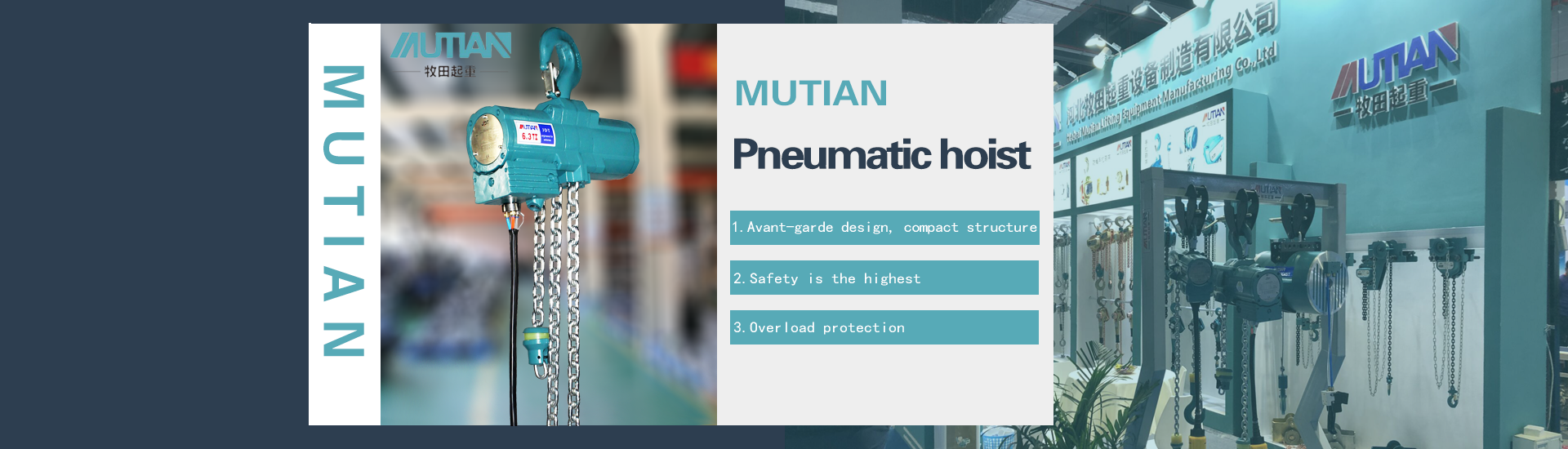
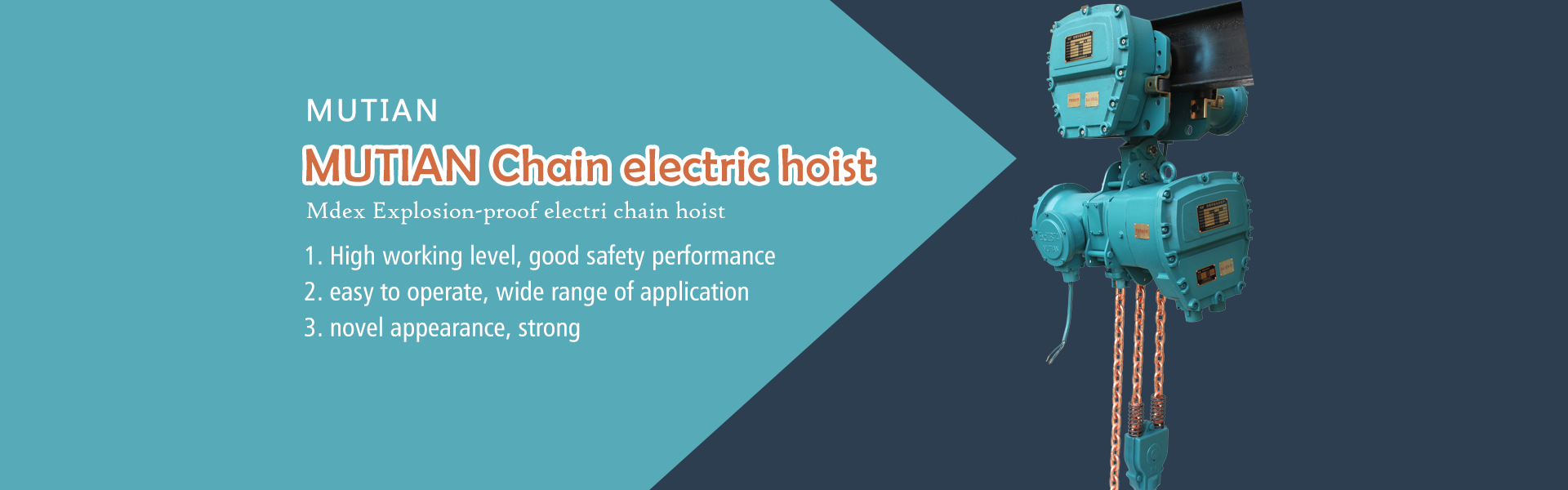
The main equipment produced by Hebei Makita: stage electric hoist, electric chian hoist, wire rope electric hoist,Hand chain hoist, lever hoist, pneumatic hoist and other lifting equipment
 phone
phone
 service
 message
 e-mail
