 中文版
中文版




releaseTime:2026-01-05 09:35:33source:Mu TiannumberOfPageViews:0
When choosing a manufacturer of leverage chain cranes, a comprehensive evaluation should be conducted from six dimensions: technical strength, quality control, safety certification, service support, cost-effectiveness, and industry reputation, to ensure that the equipment is safe, reliable, adaptable to needs, and has controllable long-term usage costs. The following core aspects should be considered:
1. Technical parameters and adaptability verification
Rated load and dynamic performance: Clearly define the lifting capacity range (such as 0.5 tons to 50 tons), verify static load testing (125% rated load without permanent deformation), dynamic load testing (110% rated load operation without abnormalities), and breaking load (4-8 times the rated load). For example, mining chains must comply with the MT/T 99-1997 standard and have a tensile strength of ≥ 1200MPa; Short body models should be selected for low clearance scenarios, and long chain extension requirements should be considered for port operations.
Environmental adaptability: Evaluate the equipment's ability to withstand extreme temperatures (such as low temperature resistance of -50 ℃ or high temperature resistance of 200 ℃), humidity, and corrosive media (such as salt spray and chemicals). Stainless steel chains are suitable for marine environments, galvanized chains are suitable for general outdoor scenes, and heat-resistant alloy steel should be selected for high temperature scenes.
2. Safety certification and quality control system
Authoritative certification: Priority should be given to products that have passed ISO 9001, CE, ASME B30, OSHA 1910.179, special equipment manufacturing license (such as China TSG 07), and industry specific certification (such as DNV-ST-N001 offshore equipment standard). The EU CE certification requires equipment to comply with the Machinery Directive 2006/42/EC, covering the safety design of electrical, mechanical, and hydraulic systems.
Materials and processes: The chain material should be made of high-strength alloy steel (such as 20Mn2) and stainless steel (304/316), and the surface should be treated with heat treatment, salt spray test, galvanizing or Dacromet anti-corrosion treatment. Key components such as gears and bearings require precision machining (dimensional accuracy ≤ ± 0.1mm), and welding processes require non-destructive testing (ultrasonic/radiographic testing, magnetic particle testing).
Braking and safety devices: The braking system should be reliable, such as ratchet braking and friction pad braking, to ensure that the sliding distance of heavy objects is ≤ 50mm and the braking time is ≤ 0.5 seconds. Some high-end models are equipped with overload protection, emergency stop buttons, and load monitoring sensors.
3. Comprehensive strength evaluation of manufacturers
Production capacity and R&D innovation: examine whether the manufacturer has advanced equipment such as fully automatic welding assembly lines, laser cutting machines, CNC rolling machines, as well as the proportion of annual R&D investment (such as ≥ 5%), the number of patents (such as anti sway control, intelligent frequency conversion technology), and industry university research cooperation cases (such as joint development with universities). Large scale production manufacturers can reduce operating costs by 15-20% by optimizing their supply chain, such as an annual production capacity of 12000 tons and an inventory turnover rate of 8 times per year.
Customization capability: Confirm whether non-standard product customization is supported (such as special dimensions, load capacity, explosion-proof/anti-corrosion requirements), as well as case verification (such as a 67% decrease in chain failure rate for a certain shipyard).
After sales service system: Evaluate the response time of pre-sales plan design (such as ≤ 2 hours), after-sales response speed (such as 48 hours to arrive at the site), parts supply guarantee (such as sufficient inventory of commonly used parts), and "three guarantees" service terms (such as 1-3 years warranty for the whole machine and 5 years warranty for the main components).
4. Cost of use and ease of maintenance
Full life cycle cost: comprehensive calculation of equipment procurement price, transportation cost, installation and commissioning cost, annual maintenance cost (such as lubricating oil and chain replacement), and energy consumption (if manual operation has no energy consumption, electric auxiliary models need to consider power cost).
Maintenance and upkeep: Confirm whether the equipment is equipped with lubrication point markings, replacement guidelines for vulnerable parts, and regular inspection plans (such as checking chain wear and braking performance every quarter). Some intelligent models support IoT monitoring, providing real-time feedback on load and wear data to achieve predictive maintenance.
Operation training and safety regulations: Ensure that manufacturers provide operation manuals, safety training videos, and on-site guidance. Operators must hold certificates (such as special equipment operator certificates) and strictly adhere to the "Ten No Lifting" principle (such as overloading, diagonal pulling, unmanned command, etc.).
5. Industry reputation and case verification
Market position and brand reputation: refer to authoritative industry rankings (such as "China Machinery Industry Quality Brands"), customer evaluations, and case studies. Benchmark enterprises such as Shandong Hongmao have been selected for five consecutive years, and mining chains have won the "Provincial Manufacturing Industry Single Champion" with a market share of 32%.
Compliance records and environmental requirements: Confirm that the manufacturer has no major safety accidents or quality complaints, has passed ISO 14001 environmental management system certification, and complies with environmental regulations such as low emissions and recyclable materials.
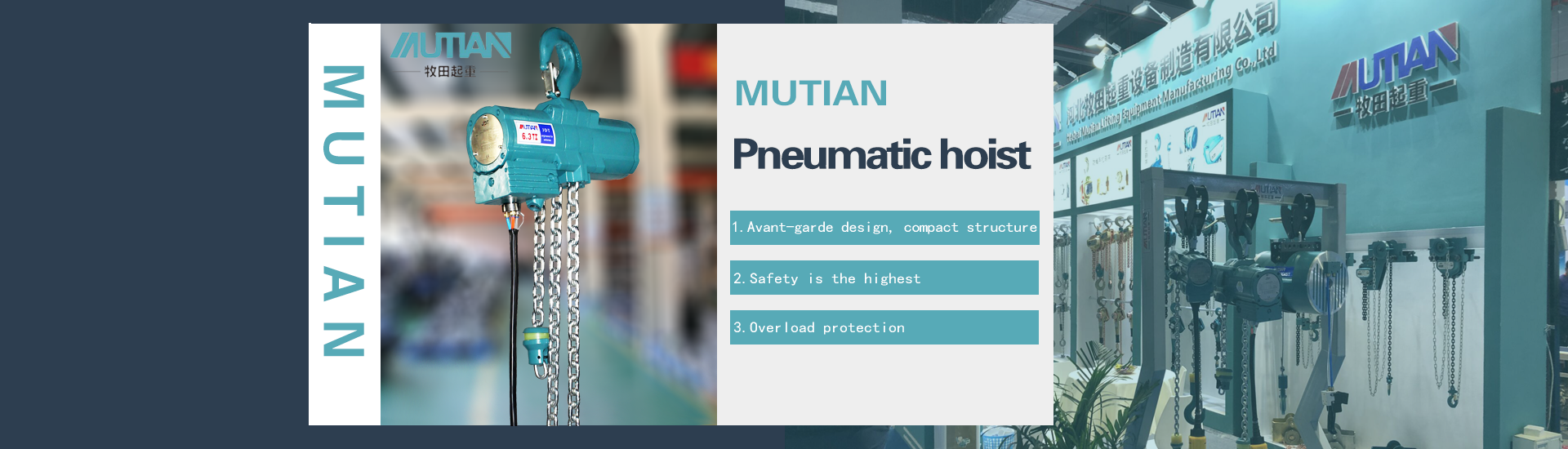
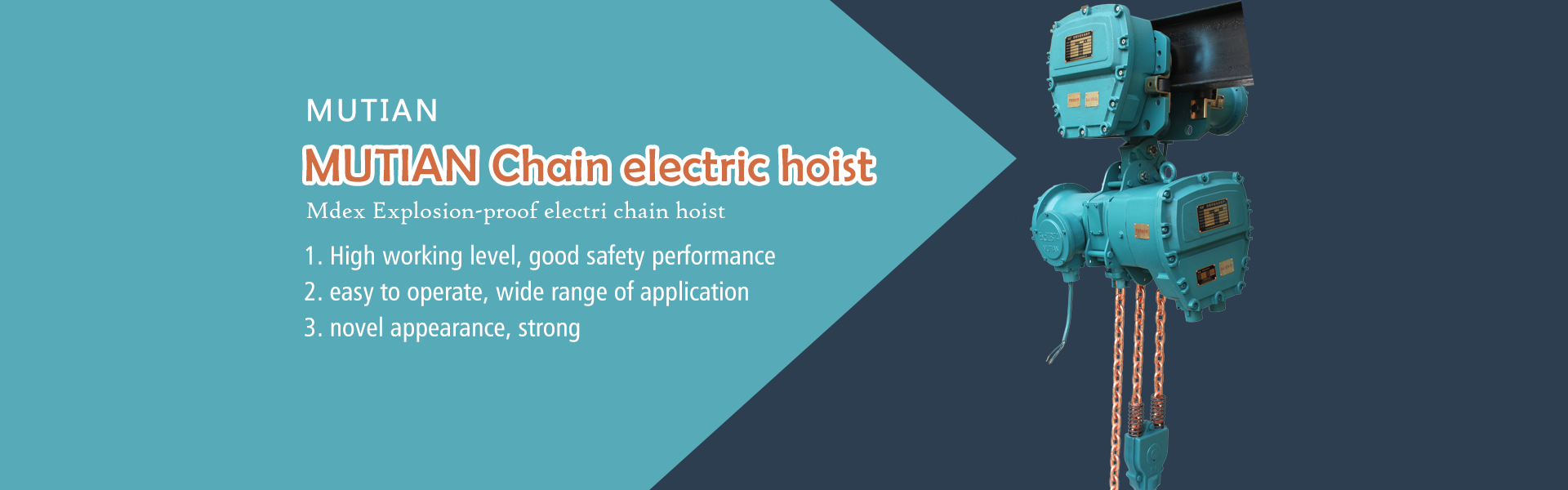
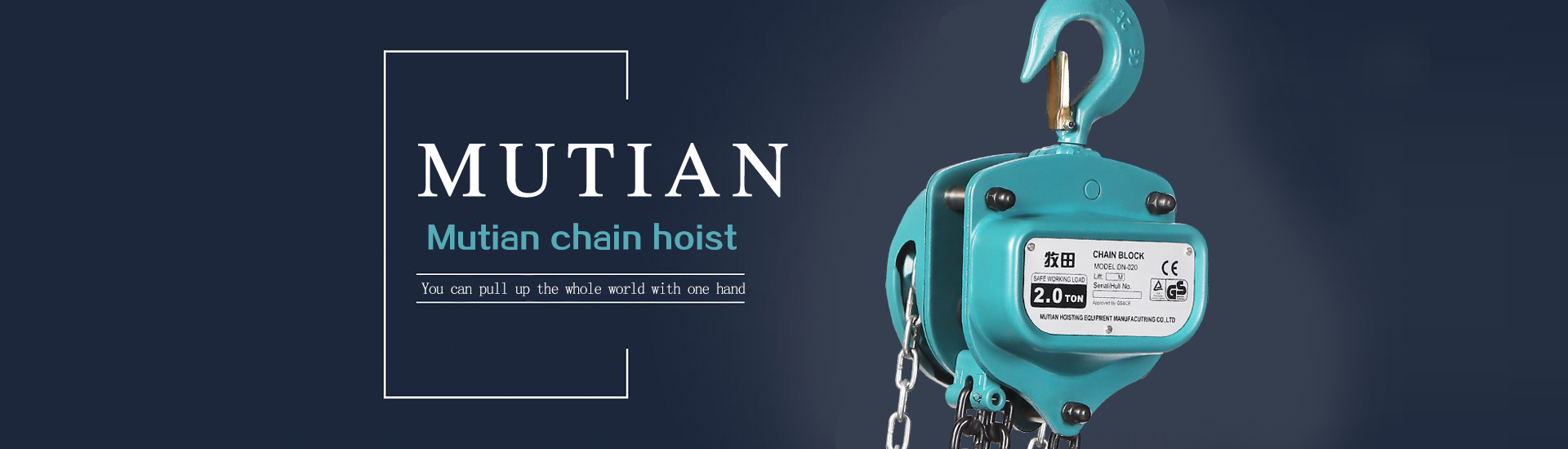
The main equipment produced by Hebei Makita: stage electric hoist, electric chian hoist, wire rope electric hoist,Hand chain hoist, lever hoist, pneumatic hoist and other lifting equipment
 phone
phone
 service
 message
 e-mail
