 中文版
中文版


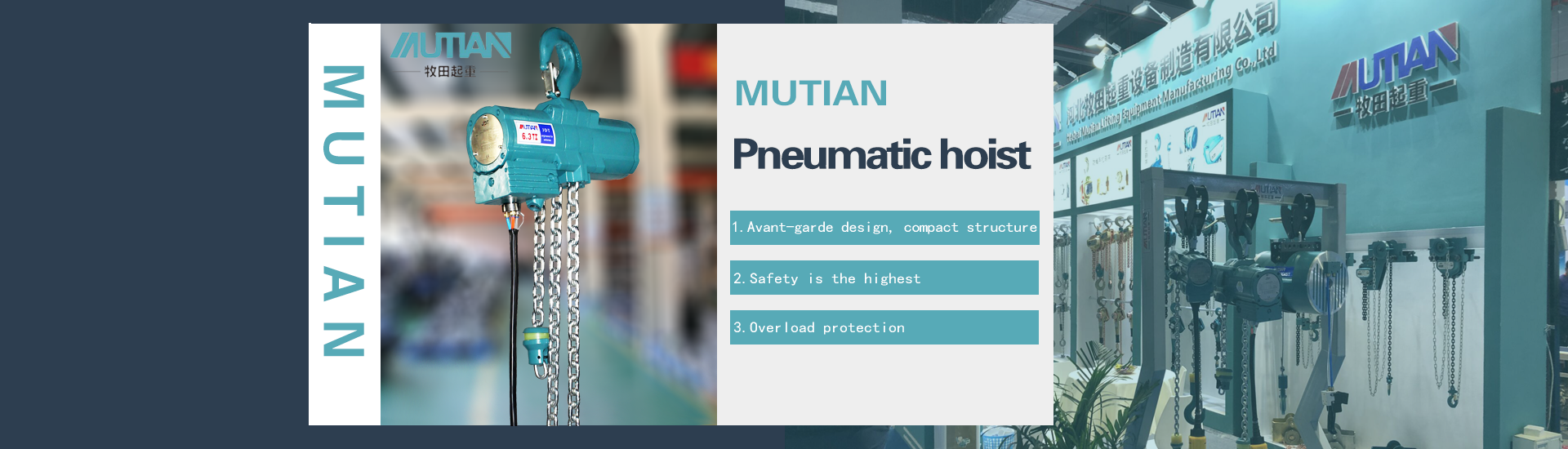




releaseTime:2025-10-20 08:53:32source:Mu TiannumberOfPageViews:0
When operating pneumatic hoists, ensuring safety, efficiency, and longevity requires attention to several key aspects. Here’s a structured breakdown of critical considerations:
1. Pre-Operation Checks
Component Inspection:
Air Supply: Verify air pressure meets the hoist’s requirements (typically 6–8 bar). Check for leaks in hoses, fittings, or the hoist body.
Chain/Rope: Inspect for cracks, kinks, or excessive wear. Replace if damaged.
Hooks and Attachments: Ensure hooks open/close smoothly and have no deformation. Check shackles, slings, or grippers for wear.
Controls: Test pendant buttons or levers for responsiveness. Ensure emergency stop functions work.
Environmental Assessment:
Clear obstacles in the operating area.
Ensure adequate lighting and ventilation.
Check for flammable materials (if operating in hazardous zones).
2. Load Management
Capacity Compliance:
Never exceed the hoist’s rated load. Use load cells or markings to verify weight.
Distribute loads evenly to avoid tilting or side loading, which can strain the hoist.
Attachment Security:
Use proper rigging techniques (e.g., balanced slings, correct hitches).
Double-check that hooks engage fully and safety latches are in place.
3. Safe Operation Practices
Starting/Stopping:
Avoid abrupt starts or stops. Gradually accelerate/decelerate to reduce stress on components.
Use the hoist’s speed control (if available) for precision.
Movement Control:
Keep the load stable during lifting/lowering. Avoid swinging or jerking.
Maintain a safe distance from the load and other personnel.
Obstruction Avoidance:
Ensure the load path is clear of obstacles, including overhead structures.
Use spotters in crowded or blind-spot areas.
4. Air Supply Management
Pressure Regulation:
Adjust air pressure to the manufacturer’s specification. Over-pressurization can damage seals or valves.
Use filters/regulators to prevent contaminants from entering the system.
Hose Handling:
Avoid kinking or crushing air hoses. Route them away from sharp edges or heat sources.
Secure hoses to prevent tripping hazards.
5. Environmental Considerations
Temperature:
Operate within the hoist’s temperature range (typically -20°C to +70°C). Extreme cold can stiffen seals; heat may degrade lubricants.
Corrosion Protection:
In humid or corrosive environments, use stainless steel components or protective coatings.
Wipe down the hoist after use to remove moisture or chemicals.
Hazardous Zones:
Use explosion-proof hoists in flammable atmospheres. Ensure air supplies are non-contaminated.
6. Emergency Preparedness
Emergency Stop:
Know the location of the E-stop button. Test it regularly.
Failure Response:
If the hoist stalls or makes unusual noises, lower the load safely and inspect.
Have a backup plan (e.g., manual hoists or additional personnel) for critical lifts.
First Aid:
Keep a first-aid kit nearby and train operators in basic injury response.
7. Post-Operation Procedures
Load Lowering:
Never leave a suspended load unattended. Lower it to a designated safe zone.
Hoist Shutdown:
Turn off the air supply and release residual pressure.
Store the hoist in a dry, secure location away from traffic.
Reporting:
Document any issues (e.g., leaks, unusual sounds) for maintenance follow-up.
8. Operator Training and Compliance
Certification:
Ensure operators are trained and certified for pneumatic hoist use.
Safety Protocols:
Enforce PPE requirements (gloves, safety glasses, hard hats).
Prohibit unauthorized modifications to the hoist.
Continuous Learning:
Stay updated on manufacturer guidelines and regulatory changes (e.g., OSHA, ANSI).
9. Maintenance Coordination
Scheduled Inspections:
Align operation schedules with maintenance intervals (e.g., lubrication, chain replacement).
Spare Parts:
Keep critical spares (e.g., chains, seals) on-site for quick repairs.
The main equipment produced by Hebei Makita: stage electric hoist, electric chian hoist, wire rope electric hoist,Hand chain hoist, lever hoist, pneumatic hoist and other lifting equipment
 phone
phone
 service
 message
 e-mail
