 中文版
中文版






releaseTime:2025-07-19 09:47:44source:Mu TiannumberOfPageViews:0
When using a forklift, it is necessary to strictly control six core aspects: safe operation, equipment inspection, cargo management, environmental adaptation, personnel training, and maintenance. Specific precautions are as follows:
1. Safety operation specifications
Check before startup
Personnel protection: Operators must wear safety helmets, reflective vests, and anti-slip safety shoes, and long hair needs to be tied up.
Vehicle status: Check whether the brakes, steering, lights, horn, and hydraulic system are functioning properly; confirm that the forks are free of cracks, the chains are not loose, and the tire pressure is sufficient.
Environment confirmation: Observe the work area for any obstacles, personnel, or flammable and explosive materials, and ensure that the passageway is unobstructed.
Regulations during driving
Speed limit control: The driving speed within the factory area shall not exceed 10km/h, and it shall be reduced to 5km/h when turning or when visibility is obstructed. Rapid acceleration or sudden braking is prohibited.
Vision management: After loading goods, if the vision is obstructed, it is necessary to drive in reverse or have a specially-assigned person to guide; when reversing, turn on the reversing lights and sound the horn for warning.
Prohibited behaviors: It is strictly prohibited to drive with passengers, operate with overload, use forks to lift personnel for high-place operations, or operate with a single fork, or transport with tilted loads.
Loading and unloading specifications
Fork adjustment: Adjust the spacing between forks according to the size of the cargo, ensuring that the center of gravity of the cargo is located at the center of the two forks; the insertion depth of the forks should exceed 2/3 of the length of the cargo.
Gantry operation: When lifting goods, the gantry should be tilted backward to its limit position; when lowering, it should be done slowly and steadily to avoid the goods impacting the ground.
Stacking requirements: When stacking, the forks must be fully retracted before lowering them. It is prohibited to lower the forks while simultaneously moving backwards. The height of the stacked goods must not obstruct the driver's view.
II. Equipment status management
Daily checklist
Hydraulic system: Check the hydraulic oil level and observe for any signs of oil leakage; operate the fork lifting test to assess the sensitivity of the hydraulic response.
Braking system: Press the brake pedal and confirm that the braking distance meets the standard (no-load braking distance ≤ 4m).
Electrical system: Check the battery electrolyte level and ensure that the terminal blocks are not loose or corroded; test the functionality of lights and horn.
Exception handling process
Immediate shutdown: If hydraulic oil leakage, brake failure, abnormal noise, or unusual odor is detected, immediately stop operation and report for maintenance.
Fault identification: Set up warning signs around the faulty forklift to prohibit others from operating it and avoid secondary accidents.
III. Key points of goods management
Stability of goods
Center of gravity control: Ensure that the center of gravity of the cargo is located at the center of the forklift's load-bearing capacity to avoid rollover caused by uneven loading; long cargo items need to be secured with straps.
Stacking restrictions: The height of goods stacking must not exceed the rated load curve of the forklift, and a safe distance must be maintained (e.g., shelf spacing ≥ 0.5m).
Handling of special cargo
Fragile goods: Use special pallets or cushioning materials, and reduce the lifting speed of the forks.
Dangerous goods: When transporting flammable and explosive materials, it is necessary to turn off the engine and take fire prevention measures to avoid generating sparks.
IV. Environmental adaptation measures
Planning of work area
Channel design: The width of the main channel should be ≥ the maximum width of the forklift + 1m, and the turning radius should meet the minimum turning requirements of the forklift.
Lighting requirements: The illumination level in the nighttime operation area must be ≥50lux to ensure that drivers can clearly observe the cargo and the surrounding environment.
Response to severe weather
Rainy and snowy weather: Reduce driving speed and avoid sharp turns; use anti-slip chains or increase counterweight on wet and slippery ground.
High temperature environment: Regularly check the battery electrolyte level to prevent damage to the battery caused by water evaporation; avoid prolonged continuous operation.
V. Personnel Training and Qualifications
Operation qualification
Operators must hold a "Special Equipment Operator Certificate" (Forklift Driver N1 Certificate) issued by the Market Supervision and Administration Bureau, and participate in regular reviews.
New employees must pass the internal safety training (including theoretical examination and practical assessment) before they can operate independently.
emergency drill
Regularly organize emergency drills for accidents such as forklift rollovers and cargo falls, to ensure that operators master escape techniques and first aid methods.
VI. Maintenance Plan
Regular maintenance cycle
Routine maintenance: Clean the forklift after each shift, and check the oil level, water level, and tire pressure.
Level 1 maintenance: Conducted every 100 hours of operation, including oil change, cleaning of the air filter, and inspection of the brake system.
Level 2 maintenance: It is conducted every 500 hours of operation, involving disassembly and inspection of core components such as the engine, transmission, and hydraulic system.
Record and trace
Establish a forklift maintenance archive to record each maintenance session's time, content, replaced parts, and repair personnel information, facilitating the tracking of equipment status.
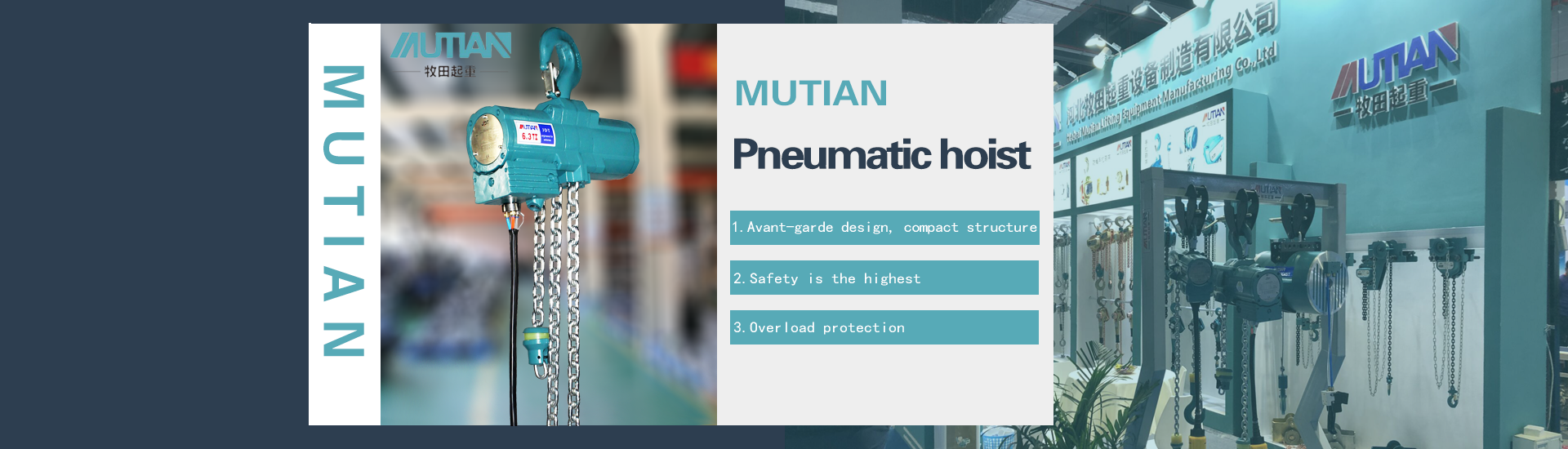
The main equipment produced by Hebei Makita: stage electric hoist, electric chian hoist, wire rope electric hoist,Hand chain hoist, lever hoist, pneumatic hoist and other lifting equipment
 phone
phone
 service
 message
 e-mail
