 中文版
中文版





releaseTime:2026-01-04 08:46:16source:Mu TiannumberOfPageViews:0
Leverage chain lifting equipment is a mechanical device that utilizes the principle of leverage and chain transmission to achieve vertical or horizontal movement of heavy objects, and belongs to an important category of lifting machinery. The following is a systematic analysis from the aspects of definition, structure, working principle, purpose, type, advantages and disadvantages, and safety precautions:
Definition and Classification
Definition: According to the Safety Management Regulations for Lifting Machinery, lever chain lifting equipment belongs to the category of "light and small lifting equipment", with a rated lifting capacity of usually ≥ 0.5 tons (for elevators) or ≥ 1 ton and a lifting height of ≥ 2 meters (for cranes). Its core function is to amplify the driving force through chains, pulley systems, and lever structures to achieve the lifting, movement, or hoisting of heavy objects.
Classification: According to the power source, it can be divided into manual lever chain cranes (powered by manpower, such as lever hoists and chain hoists) and electric lever chain cranes (driven by motors, such as electric hoists); According to their structure, they can be divided into single-stage levers, multi-stage levers (such as three-stage lever amplification mechanisms), and chain transmission systems.
structural composition
Core components: including levers (long arms/short arms), chains (lifting chains/transmission chains), sprockets, slides, hooks, brakes, brackets, and gearboxes. For example, in a multi-stage lever system, the ratio of the long arm length to the short arm length of the first stage lever directly affects the amplification factor, and the maximum force amplification effect can be achieved when the long arm length of the second stage lever is about 55mm.
Auxiliary structure: supporting legs, supporting wheels, rotating mechanism (adjusting horizontal position), and control system (manual or electric operation).
working principle
Mechanics principle: based on the labor-saving effect of leverage (torque balance formula: F × L ₁=G × L ₂, F is the driving force, G is the weight of the heavy object, L ₁/L ₂ is the force arm ratio) and the multiplier effect of pulley system (n-section load-bearing rope can reduce the driving force to 1/n of the weight of the object). For example, a manual lever crane can lift heavy objects by the operator pulling one end of the lever and amplifying the driving force using the force arm ratio.
Power transmission: The chain wheel is driven by human or motor to rotate, which drives the chain (or wire rope) to tighten/release, achieving the lifting and lowering of the hook; The rotating mechanism adjusts the horizontal position, and the hydraulic system or mechanical linkage controls the angle of the arm.
Purpose and Scenario
Main applications: construction sites (lifting of building materials and equipment), warehouses (loading and unloading of goods), factories (equipment maintenance, component assembly), shipbuilding (segmented lifting), power repair (outdoor operations), and small-scale projects (such as furniture manufacturing, renovation of old buildings).
Market potential: According to QYResearch data, the global manual lever crane market is expected to reach $X billion in 2023 and $X billion by 2030, with a compound annual growth rate of approximately X%. This is particularly evident in the Asia Pacific region (China, India) due to significant growth in manufacturing and infrastructure demand.
Type and Characteristics
Manual lever crane: Low cost, easy operation, strong adaptability, suitable for lightweight tasks (such as lifting 0.5-5 tons), no need for power supply, low maintenance cost, but limited lifting capacity, requiring manual operation.
Electric lever chain crane: with a larger lifting capacity (up to 32 tons), high efficiency, suitable for frequent operations, but with higher costs, requiring power support, and stricter maintenance requirements.
Special design: such as foldable portable (outdoor/narrow space), self-locking (safety locking), explosion-proof (hazardous environment), and high-strength alloy materials (lightweight).
Pros and Cons Analysis
Advantages: Simple structure, low cost, flexible operation, easy maintenance, and relatively low safety risks (such as manual type without complex electrical systems).
Disadvantages: Manual lifting capacity is limited and prone to fatigue; Electric models rely on electricity and have high maintenance costs; The chain may have the risk of jamming or breakage; Overloading or improper operation can easily lead to accidents.
Safety precautions
Pre operation inspection: Confirm that the chain has no broken joints/cracks, the brake is reliable, the hanging rope is stable, the support beam is sturdy, and overloading is avoided.
Operation standard: The zipper direction should be consistent with the sprocket to prevent chain jamming; When operating with multiple people, follow the standard for the number of zippers (such as 1-2 people for 3-5 tons); When heavy objects are suspended in the air, the hand zipper should be fastened to the lifting chain to prevent self-locking failure.
Maintenance and upkeep: Regularly lubricate rotating components, check for chain rust, and discard severely corroded/broken chains; Regularly conduct safety inspections to ensure compliance with standards such as GB/T 20776-2023.
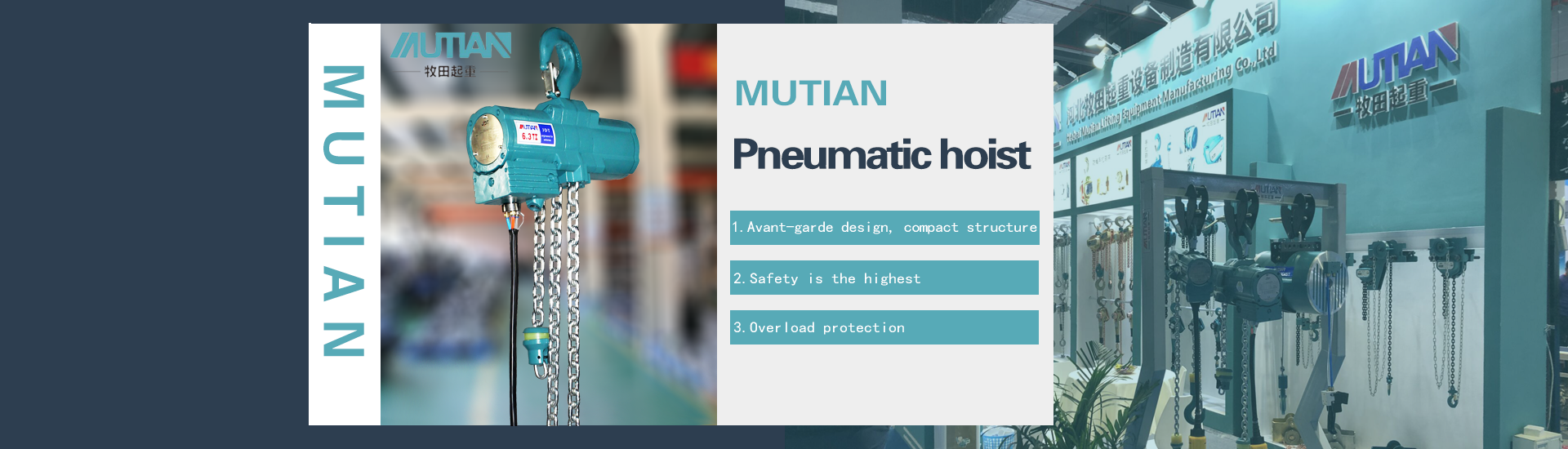
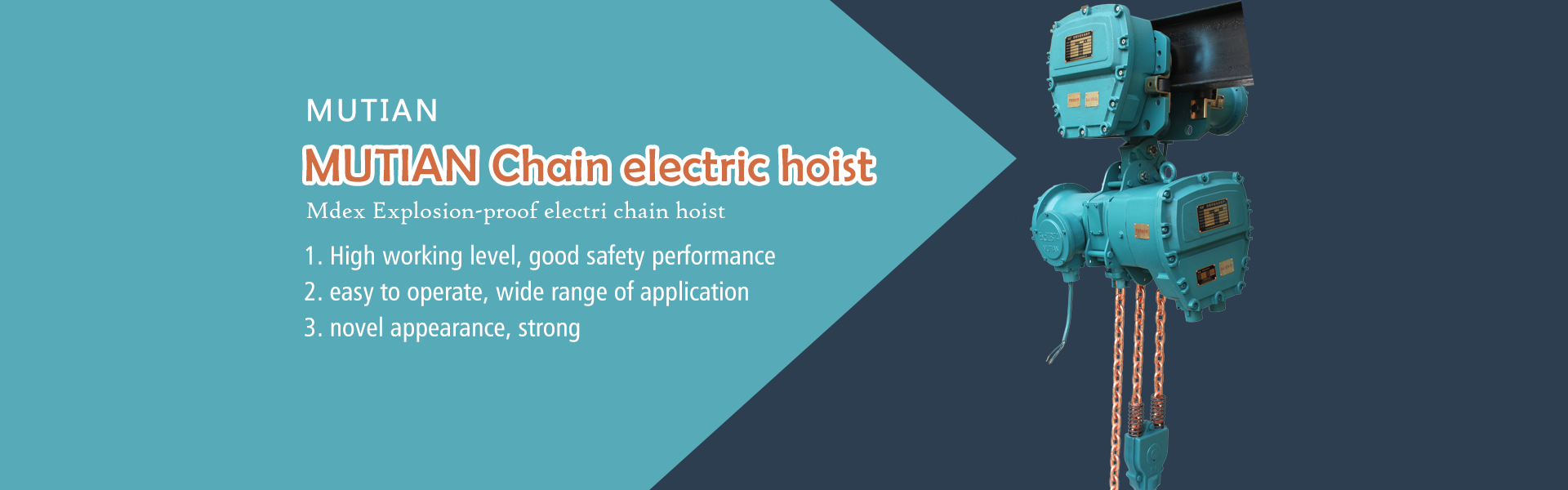
The main equipment produced by Hebei Makita: stage electric hoist, electric chian hoist, wire rope electric hoist,Hand chain hoist, lever hoist, pneumatic hoist and other lifting equipment
 phone
phone
 service
 message
 e-mail
