 中文版
中文版





releaseTime:2025-10-22 08:31:15source:Mu TiannumberOfPageViews:0
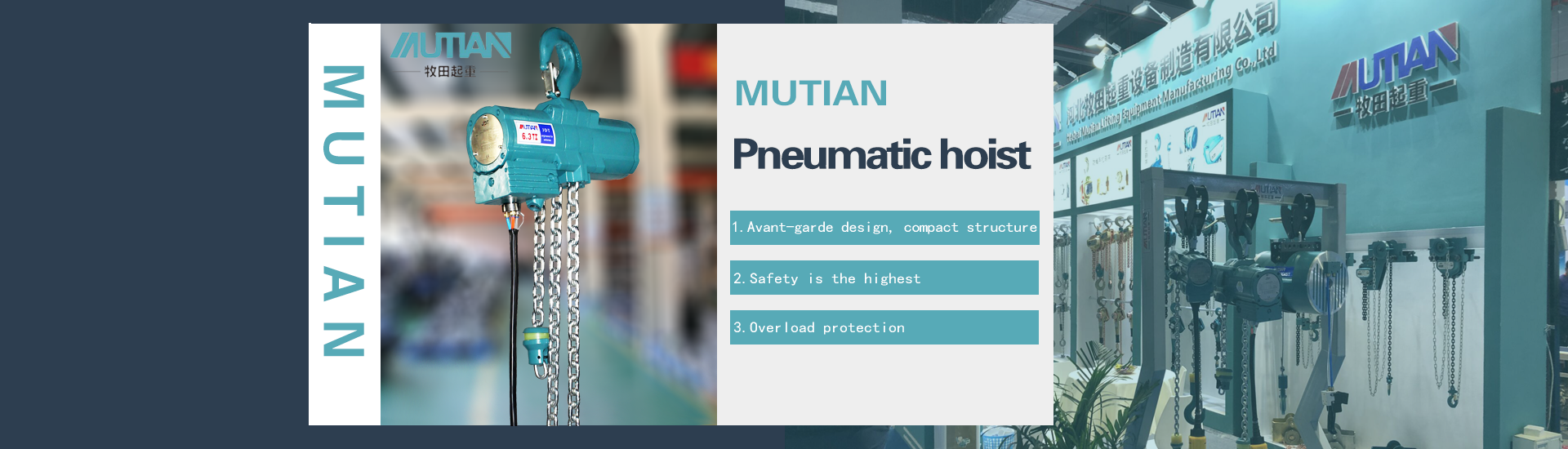
When operating a pneumatic hoist, comprehensive consideration should be given to five core dimensions: equipment status, operating standards, environmental factors, maintenance and safety protection. The specific contents are as follows:
1、 Equipment status check
Compressed air supply
Air quality: Ensure that compressed air is clean, dry, and free of oil stains, avoiding impurities from entering the pneumatic system and causing wear or failure.
Pressure and Flow: Check if the capacity of the air compressor meets the cubic feet per minute (CFM) requirement of the hoist. Insufficient pressure can lead to performance degradation.
Connecting components: Clean the air supply components (such as hoses and fittings) of dirt, reduce airflow restrictions, and prevent leaks.
Hulu body status
Braking system: Regularly adjust the brake to ensure its sensitivity and reliability, and prevent accidental load slippage.
Hanging and connecting components: Check for wear or cracks in chains, ropes, hooks, and other components, and replace damaged parts in a timely manner.
Lubrication maintenance: Use specialized lubricants (such as non corrosive lubricants) for regular maintenance to reduce friction and extend service life.
2、 Execution of operational standards
Load management
Rated load: Overloading is strictly prohibited. The load weight must be confirmed by weighing or referring to the equipment nameplate.
Load fixation: Ensure that the load is securely tied to prevent tipping due to scattered objects or center of gravity deviation.
Dynamic load: Pneumatic hoists are designed for static loads and should avoid impact or vibration loads.
operating procedure
Pre start inspection: Confirm that there are no obstacles within the operating range and that personnel are away from hazardous areas.
Direction control: Accurately control the lifting direction through a handle or remote control to avoid sudden start or stop.
Limit device: The limit switch should not be used as a conventional stopping means and should only be used in emergency situations.
3、 Adaptation to environmental factors
natural environment
Extreme weather: stop operation in strong wind, rainstorm, lightning or low temperature (which may lead to icing) to prevent equipment from losing control or structure damage.
Temperature range: Ensure that the ambient temperature is within the allowable range of the equipment, avoiding lubrication failure caused by high temperatures or material embrittlement caused by low temperatures.
working environment
Space restrictions: When working in narrow or high-altitude areas, it is necessary to plan a safe path and set up a warning zone.
Dangerous area: Keep away from high-voltage lines, flammable and explosive materials, or underground pipelines to prevent electric shock, explosion, or pipeline rupture.
Lighting and noise: Ensure sufficient lighting in the work area and that noise does not interfere with communication among operators.
4、 Maintenance Plan
routine inspection
Visual inspection: Check the appearance, chain tension, and braking performance of the hoist before daily operation.
Function test: Run the hoist under no-load condition to confirm that the lifting and braking functions are normal.
regular maintenance
Professional maintenance: Conduct in-depth maintenance according to the manufacturer's recommended cycle (such as quarterly or semi annual), including replacing worn parts and cleaning internal structures.
Lubrication plan: Develop a lubrication schedule based on frequency of use and use recommended lubricants.
5、 Safety protection measures
personnel qualification
Operation training: Only professionally trained and certified personnel are allowed to operate pneumatic hoists.
Health status: Personnel who are fatigued, drinking alcohol, or taking drugs that affect their judgment are prohibited from operating equipment.
emergency preparedness
Emergency plan: Develop response procedures for unexpected events such as equipment failures and load drops, and conduct regular drills.
Warning signs: Set up clear signs in hazardous areas, such as "No Entry" and "High Voltage Danger".
auxiliary equipment
Safety rope: Use a safety rope for suspended loads to prevent accidental detachment.
Protective device: Install anti fall devices or limiters to reduce the risk of high-altitude operations.
The main equipment produced by Hebei Makita: stage electric hoist, electric chian hoist, wire rope electric hoist,Hand chain hoist, lever hoist, pneumatic hoist and other lifting equipment
 phone
phone
 service
 message
 e-mail
